
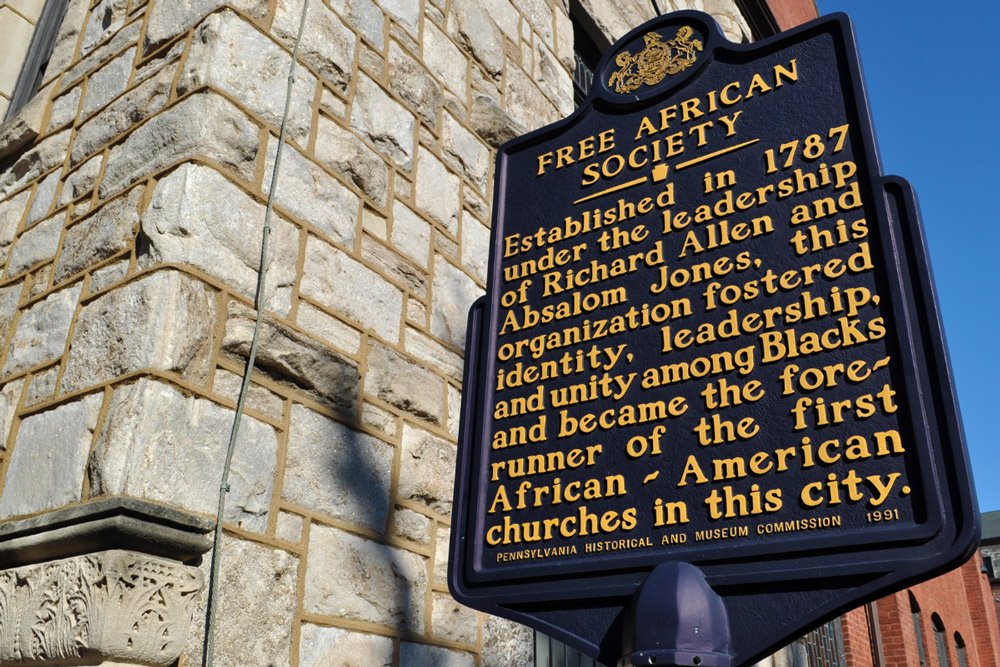
Philadelphia, April 12, 1787. Just a few blocks away from where delegates from states were crowding into Independence Hall to debate and draft the Constitution, a group of free Black men gathered in an unnamed room. Among them were Richard Allen and Absalom Jones, both formerly enslaved but freed through their own endeavors. Also in attendance were Samuel Baston, Cato Freedman, Caesar Cranchell, among others. No one was taking notes for history. They were discussing something immediate: What if one of us gets sick and can’t work? What if someone dies and leaves a family? Who covers the burial costs?
Each man put in a shilling. That was the Free African Society.
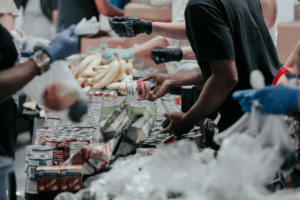
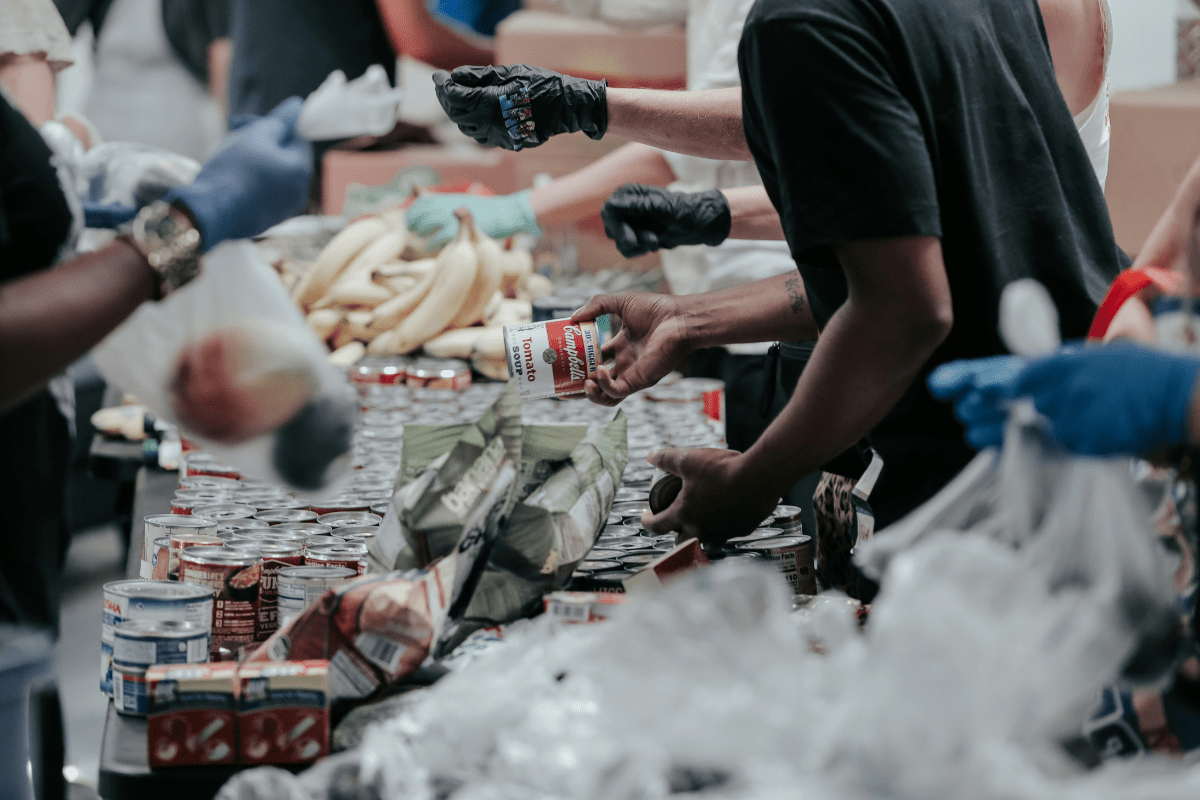
This was mutual aid before anyone called it that; it was built by the people who understood that waiting for help that wasn’t coming was not a strategy.
Amy Jane Cohen has spent years researching and walking the Philadelphia neighborhoods where this history unfolded, as she explained to NPQ. She doesn’t oversell it: “It was the first Black organization of its kind. By 1838, when Philadelphia was established as kind of the unofficial capital of free Black life, there were more than a hundred mutual aid societies similar to that original Free African Society.”
One group, then one hundred. All of them tracing back to one room and one shilling.
The work itself wasn’t glamorous. If someone got sick, it was the fund that helped. If someone died, it was the society that covered the burial and checked on the widow. Children who needed a trade got placed in apprenticeships. They highly encouraged literacy. This was mutual aid before anyone called it that; it was built by the people who understood that waiting for help that wasn’t coming was not a strategy.
The burial aspect deserves a moment. In an interview with NPQ, Cohen explains what free Black Philadelphians were actually dealing with: “Because even though Black people could worship in some White churches, like the Methodist church, they couldn’t be buried there…there was a whole problem of body snatching.” Medical students needed cadavers. The potter’s field at Washington Square, where many Black Philadelphians were buried, was an easy target. Families took turns standing guard over fresh graves. The Free African Society pushed for a dedicated section within Washington Square, which was a modest request that carried enormous weight. It made the difference between a community that could bury its dead with some dignity and one that couldn’t.
All of this was happening while the Constitutional Convention met a few blocks away. The delegates debated who counted as a person, who got the vote, which compromises were worth making to keep the new nation together. Allen, Jones, and the others, on the other hand, did the unglamorous work of sustaining their community. They did not wait to be included in “We the People.” They were building their own, one shilling at a time.
And when the Constitution was finished, they used it. In 1794, Allen and Jones secured what historian Richard S. Newman identifies as the first federal copyright ever obtained by African Americans—for their Yellow Fever pamphlet, which detailed what Black Philadelphians carried out during the 1793 epidemic, nursing the sick while much of the White population fled the city. They cited Article One, Section 8, the copyright clause, to protect their own account of their community’s work. The framers wrote that clause for themselves. Allen and Jones read it and decided it applied to them as well.
Jessica Gordon Nembhard, whose book Collective Courage tells the essential history of Black cooperative economics in America, put the broader significance directly in an interview with NPQ: “Black people will not just wait around to be emancipated or helped. We can and will do it for ourselves.”
That sentence was true in 1787. It was true in 1794. It is true now.
For nonprofit workers and mutual aid organizers in 2026, the Free African Society is not a feel-good origin story to cite in grant applications. It is a working example of what community infrastructure looks like when official systems do not show up.
Sign up for our free newsletters
Subscribe to NPQ's newsletters to have our top stories delivered directly to your inbox.
By signing up, you agree to our privacy policy and terms of use, and to receive messages from NPQ and our partners.
Richard Allen and Absalom Jones eventually went separate ways, as Richard S. Newman documents in his biography of Allen. Allen stayed committed to Methodist worship—which was expressive, participatory, and full of singing—and found the Free African Society’s Quaker-influenced structure too constraining. Meetings opened with fifteen minutes of compulsory silence. The clerk and treasurer were required to be Quakers. Allen left the Free African Society while Jones stayed and became its president, and when the membership leaned toward the Episcopal tradition, he followed them and founded St. Thomas African Episcopal Church. Allen went on to establish Mother Bethel and eventually the entire African Methodist Episcopal denomination.
Two men with one shared starting point resulted in two lasting institutions. Richard S. Newman, who wrote the definitive biography of Allen, frames what they built together: “[T]he [Free African Society] was much more than a philanthropic group. It was indeed a precursor of what may be called non-profit work in the Black community—the idea that a community group had a ‘mission driven’ existence….In many ways, the truly long civil rights movement began in the 1780s with the formation of the [Free African Society]. That is a powerful legacy indeed.”
For nonprofit workers and mutual aid organizers in 2026, the Free African Society is not a feel-good origin story to cite in grant applications. It is a working example of what community infrastructure looks like when official systems do not show up.
That is the real accountability measure. Not metrics or mission statements, but whether the people you serve would feel your absence in their actual lives. The FAS would have been felt. Mother Bethel would be felt.
It also comes with a warning. When Haitian refugees arrived in Philadelphia in 1792, White abolitionists who had collaborated with the city’s Black community raised far more funds for the Haitian refugees than they ever did for their city’s Black residents. Cohen’s analysis of this historical moment is telling: When a threat hit closer to home, the Pennsylvania Abolition Society changed its focus. The lesson for coalition builders today is not that allies are useless. It is that your own institutional foundation cannot depend on what allies decide to prioritize next year.
Carolyn C. Cavaness became the 53rd pastor of Mother Bethel in 2024—the first woman to hold that position in the church’s 237-year history. When asked about the FAS’s legacy, she answered with a question she said every organization should ask itself: “If Mother Bethel were to close, would it matter to anybody? Would anybody not be served? What story would not be told if you’re not present?”
That is the real accountability measure. Not metrics or mission statements, but whether the people you serve would feel your absence in their actual lives. The Free African Society would have been felt. Mother Bethel would be felt. The question for every mutual aid network, every community land trust, every nonprofit reading this is whether the same is true of them.
The official America 250 celebrations will be large and loud. There will be readings of the Constitution and reenactments of the signing and a great deal of discussion about what the founders intended. Almost none of it will mention the room where free Black Philadelphians pooled their shillings four blocks away on the same April day.
But those shillings built Mother Bethel, which still stands near Independence Hall. They established a model of community self-sufficiency that mutual aid organizers during the COVID-19 pandemic rediscovered without always knowing its name. They started something that survived the end of slavery, Jim Crow, redlining, and every subsequent attempt to make Black community institutions unnecessary or invisible.
The first steps of American democracy were not taken only in grand halls by men with quill pens. Some of the most consequential ones were taken in an unnamed room by men who understood that a shilling a month, given reliably, by people who trusted each other, could hold a community together when nothing else would.
The society disbanded around 1791. What it started is still running.