logo logo
Fund the truth. #Wethecivic giving banner
Donate
    • Membership
    • Donate
  • Social Justice
    • Racial Justice
    • Climate Justice
    • Disability Justice
    • Economic Justice
    • Food Justice
    • Health Justice
    • Immigration
    • LGBTQ+
  • Civic News
  • Nonprofit Leadership
    • Board Governance
    • Equity-Centered Management
    • Finances
    • Fundraising
    • Human Resources
    • Organizational Culture
    • Philanthropy
    • Power Dynamics
    • Strategic Planning
    • Technology
  • Columns
    • Ask Rhea!
    • Ask a Nonprofit Expert
    • Gathering in Support of Democracy
    • Hope in the Dark
    • Humans of Nonprofits
    • Inside the States
    • In Defense of Civil Society
    • The Myth of Heroic Leadership
    • The New Harvest Project
    • Notes from the Frontlines
    • Notes from the Long Arc
    • Reimagining Philanthropy
    • The Unexpected Value of Volunteers
    • We Stood Up
  • Newsletters
  • NPQ Online Events
    • Premium Webinars
    • Learn Out Loud
    • Partner Events
    • On Demand
  • Leading Edge Membership

Open Letter from the Nonprofit World to Tech Giants

Vu Le and Josh Sattely
July 19, 2018
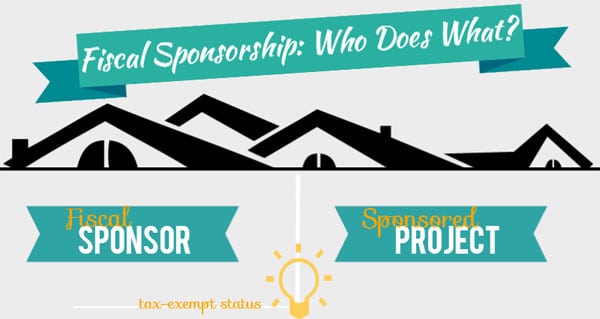
Cropped from the infographic “Fiscal Sponsorship: Who Does What?” from the National Council of Nonprofits.

Dear Google for Nonprofits, Amazon Smile, Facebook, Slack, Microsoft, and others,

We would like to extend our gratitude for all you contribute to creating a better world. In particular, the products and services you make available at low or no-cost to nonprofits are deployed to tackle some of the most urgent and complex problems of our time and we thank you for being partners in creating stronger communities!

However, as nonprofit practitioners, we need raise an issue near and dear to many community organizations. We are writing to ask you to change one practice that would make a tremendous difference to thousands of well-vetted and impactful charitable initiatives operating all over the US. When allotting (or directing TechSoup to allot) donated licenses to nonprofits, we ask that you accept initiatives hosted by public charity fiscal sponsors so that thousands more nonprofit groups can benefit from the valuable tools and services you provide.

Our understanding is that your companies have historically relied on independent 501c3 status to verify donor eligibility. However, many charitable programs have no independent EIN/501c3-status. This is because they choose to be fiscally sponsored by another 501c3 public charity. Under this model, the fiscal sponsor charity serves as the legal host to one or more mission-aligned initiatives, providing them with critical infrastructure and back-office supports. This innovative and well-recognized approach allows these groups to focus on their important work while critical back-office and compliance functions are managed by their trusted partner. Professional fiscal sponsor charities, in turn, adhere to the highest standards in nonprofit management and best practices in fiscal sponsorship established by the National Network of Fiscal Sponsors. As a result, charitable initiatives partnering with competent fiscal sponsors are generally more effective and stable than the average small nonprofit.

While nearly anyone can simply file a 1023-EZ and become a 501c3 (including documented hate groups)—thereby granting them immediate access to your donations—impactful initiatives led by people of color, LGBTQ, women, and people with disabilities increasingly embrace the fiscal sponsorship model as the one that allows them to best advance their missions. Thus, a disproportionate number of groups negatively impacted by your current practices are those led by folks that have been systematically denied equitable access to just about everything else in our society.

Sign up for our free newsletters

Subscribe to NPQ's newsletters to have our top stories delivered directly to your inbox.

By signing up, you agree to our privacy policy and terms of use, and to receive messages from NPQ and our partners.

Community-facing nonprofits are reliable stewards of our core societal values and deserve the best the tech world has to offer regardless of how they meet their back-office needs, so long as done so in a legally appropriate manner. Who you choose to include and exclude when you donate your products speaks volumes about your values, and we urge you to consider a more inclusive approach.

We look forward to your response and welcome the opportunity to discuss solutions. Thank you again for all that you contribute to nonprofits and our communities.

Sincerely,

Vu Le, Executive Director, Rainier Valley Corps, NonprofitAF.com

Josh Sattely, Esq., Director of Legal Affairs, TSNE MissionWorks

Our Voices Are Our Power.

Journalism, nonprofits, and multiracial democracy are under attack. At NPQ, we fight back by sharing stories and essential insights from nonprofit leaders and workers—and we pay every contributor.

Can you help us protect nonprofit voices?

Your support keeps truth alive when it matters most.
Every single dollar makes a difference.

Donate now
logo logo logo logo logo
About the authors
Vu Le

Vu Le (“voo lay”) writes the blog NonprofitAF.com. He is the former executive director of RVC, a nonprofit in Seattle that promotes social justice by supporting leaders of color, strengthening organizations led by communities of color, and fostering collaboration among diverse communities and is a founding board member of Community-Centric Fundraising.

Josh Sattely

Josh Sattely is a member of the Business & Community Lending Team at the New Hampshire Community Loan Fund and is Special Counsel to Social Impact Commons.

More about: Fiscal SponsorshipNonprofit NewsPhilanthropy
See comments

Sidebar-WTC
You might also like
Philanthropy’s Role in Reparations and Building a Culture of Racial Repair
Aria Florant, Tonyel Edwards, Cora Daniels, Alexandra Williams, Maurice Asare and Vikas Maturi
“Change, Not Charity”: The Rise of Progressive Philanthropy
David Callahan
Philanthropy for a Multiracial Democracy: How Investing in Pluralism Can Open the Aperture for Democracy Funders
Farai Chideya, Lyell Sakaue and Liz Jain
How Can Conservation Programs Better Connect to Farmers?
Jaycie Thomsen
How America’s Independence from England Revolutionized US Philanthropy
Amanda Moniz
The Boardroom Belongs to the Community
Kristin Lincoln

Upcoming Webinars

Group Created with Sketch.
July 16, 2:00 pm ET

Readying for the 2026 Midterms

How 501(c)(3)s Can Educate and Advocate During this Election Season

Register
Group Created with Sketch.
August 13, 2:00 pm ET

Building Narrative Power for Equity and Solidarity

Register

    
You might also like
A Black family walks down a path in park, with the father carrying his daughter on his shoulders with her arms outstretched. The mother hold’s the daughter’s hand.
Philanthropy’s Role in Reparations and Building a Culture...
Aria Florant, Tonyel Edwards, Cora Daniels, Alexandra Williams, Maurice Asare and Vikas Maturi
A sign on the side of a building reading, “Let’s Change”
“Change, Not Charity”: The Rise of Progressive...
David Callahan
Philanthropy for a Multiracial Democracy: How Investing in...
Farai Chideya, Lyell Sakaue and Liz Jain

Like what you see?

Subscribe to the NPQ newsletter to have our top stories delivered directly to your inbox.

See our newsletters

By signing up, you agree to our privacy policy and terms of use, and to receive messages from NPQ and our partners.

  • About
  • Advertise
  • Careers
  • Contact
  • Copyright
  • Donate
  • Funders
  • Editorial Policy
  • Media Relations
  • Privacy Policy
  • Submissions

We are using cookies to give you the best experience on our website.


Nonprofit Quarterly | Civic News. Empowering Nonprofits. Advancing Justice.
Powered by  GDPR Cookie Compliance
Privacy Overview

This website uses cookies so that we can provide you with the best user experience possible. Cookie information is stored in your browser and performs functions such as recognising you when you return to our website and helping our team to understand which sections of the website you find most interesting and useful.

Strictly Necessary Cookies

Strictly Necessary Cookie should be enabled at all times so that we can save your preferences for cookie settings.