logo logo
Donate
    • Membership
    • Donate
  • Social Justice
    • Racial Justice
    • Climate Justice
    • Disability Justice
    • Economic Justice
    • Food Justice
    • Health Justice
    • Immigration
    • LGBTQ+
  • Civic News
  • Nonprofit Leadership
    • Board Governance
    • Equity-Centered Management
    • Finances
    • Fundraising
    • Human Resources
    • Organizational Culture
    • Philanthropy
    • Power Dynamics
    • Strategic Planning
    • Technology
  • Columns
    • Ask Rhea!
    • Ask a Nonprofit Expert
    • Gathering in Support of Democracy
    • Hope in the Dark
    • Humans of Nonprofits
    • Inside the States
    • In Defense of Civil Society
    • The Myth of Heroic Leadership
    • Notes from the Frontlines
    • Notes from the Long Arc
    • Reimagining Philanthropy
    • The Unexpected Value of Volunteers
    • We Stood Up
  • Newsletters
  • NPQ Online Events
    • Learn Out Loud
    • Premium Webinars
    • Partner Events
    • On Demand
  • Leading Edge Membership

The Big “But” in Skills-Based Volunteerism

Danielle Holly
May 15, 2018
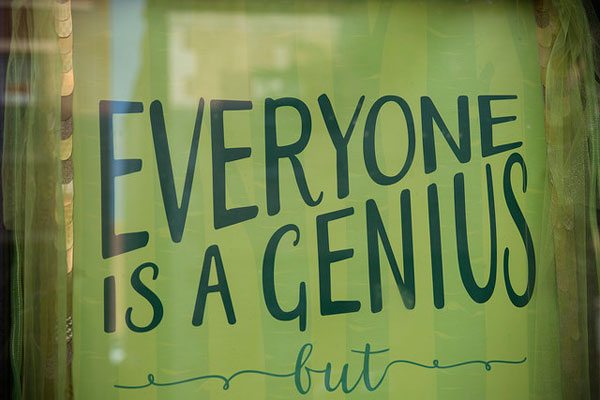
Credit: Lorie Schaull

May 8, 2018; Kellogg Insight

Kellogg’s School of Management released a podcast last week on the increasing desire and opportunity for professionals and their companies to move past traditional philanthropy and lend their expertise to nonprofits in need of their specific skill sets, popularly known as skills-based volunteerism. Professional skill sets can be of enormous benefit to a sector that has limited funds for overhead spending, given funders’ eagerness to keep administrative costs to a minimum. That overhead—the strategic planning, leadership development, technology, finance, and marketing functions—is what enables organizations to thrive and scale effectively. Corporate and professional skills-based volunteering can play an effective and critical role in these precise areas, if done right.

Megan Kashner, the director of social impact at Kellogg, puts it simply:

When I think about a professional—Jan in accounting or Chris in marketing—and I think about that person wondering, “What can I do?” The very first thing I think is, “Well, you’re an accountant. You’re a marketer.” The nonprofit sector and startup social entrepreneurs are hungry for help, for pro bono support, for project work, for skills-based volunteering from people who have hard skills that they’re willing to bring over and help a nonprofit by using.

While it has, according to the presenters, gained new popularity among companies in recent years, skills-based volunteering is a longstanding model in volunteer engagement. Nonprofit intermediaries like Executive Service Corps and Common Impact have been matching professionals to nonprofits for decades and supporting them in navigating these delicate cross-sector marriages.

Sign up for our free newsletters

Subscribe to NPQ's newsletters to have our top stories delivered directly to your inbox.

By signing up, you agree to our privacy policy and terms of use, and to receive messages from NPQ and our partners.

But, there’s a “but.” Kashner and Kellogg Insight podcast producer Fred Schmalz go on to discuss the importance of nonprofits pushing back or saying no to pro bono volunteers or a company when the project’s not right or the work isn’t done well.

“Not all pro bono is the pro bono you need. Just because someone’s offering it, you don’t have to say yes,” Kashner states.

And while this is true, there is often a catch. Access to a company’s employee talents often comes when an existing, and often grant-making, partnership is already in place. It can be challenging for nonprofits to act as an equal partner or, better yet, a client when there are significant funder-grantee power dynamics in place.

More than 50 percent of companies now have some type of formal pro bono program in which they’re funneling their employees into capacity-building projects at nonprofit organizations. At its best, of course, this could provide a badly needed resource, but at its worst it provides a tangle of retraining, relationship management, and fit issues that create a return on investment that’s not so positive. This is yet one more idea that’s just off-base enough to cause more angst than payoff in many situations. Expecting nonprofits to just “buck up” and say no when needed ignores deeply embedded sector dynamics that haven’t yet been untangled.—Danielle Holly

Disclaimer: Danielle Holly is the CEO of Common Impact.

Our Voices Are Our Power.

Journalism, nonprofits, and multiracial democracy are under attack. At NPQ, we fight back by sharing stories and essential insights from nonprofit leaders and workers—and we pay every contributor.

Can you help us protect nonprofit voices?

Your support keeps truth alive when it matters most.
Every single dollar makes a difference.

Donate now
logo logo logo logo logo
About the author
Danielle Holly

Danielle Holly is dedicated to strengthening the capacity and leadership of the nonprofit sector through meaningful, value-driven partnerships. Over the past two decades, Danielle has worked with hundreds of nonprofits and companies to support the conception, design and implementation of cross-sector approaches that address community challenges. She is a frequent contributor to several social sector publications on nonprofit capacity building, governance and corporate social responsibility, as well as a member of the NationSwell Council and host of the Pro Bono Perspectives podcast. Currently, Danielle is the CEO of Common Impact, an organization that designs skills-based volunteer, pro bono and corporate community engagement programs. She has served on the Board of the Young Nonprofit Professionals Network and Net Impact NYC, and most recently as a fellow with the Presidio Cross-Sector Leadership initiative. Danielle lives in Brooklyn, NY and loves to explore the nooks and crannies of NYC’s endless neighborhoods, and end the days cooking with her husband and two children.

More about: Equity-Centered ManagementNonprofit NewsVolunteer Management
See comments

Sidebar-WTC
You might also like
The Wobbly Toilet Problem: Avoidance, Supervision, and Early Intervention
Jenna Collins
When Disruption Hits: Making Hidden Risks Visible to Meet the Moment and Move Our Missions Forward
Dax-Devlon Ross
Older Adults and Volunteerism: A Vital Social Justice Issue
Jan Masaoka
For Every $100 Foundations Give, Only 19 Cents Go to Volunteer Support
Jan Masaoka
Facebook and Volunteerism: What Are Some Tricks of the Trade?
Jan Masaoka
Rethinking Nonprofit Survival: Why Partnership Is the New Leadership
Michael Anderson, Rumbidzai Mufuka and Adelaide Rohrssen

Upcoming Webinars

Group Created with Sketch.
September 17, 2:00 pm ET

Collaborating with the Enemy

How to Work with People You Don't Agree with or Like or Trust

Register
Group Created with Sketch.
September 22, 2:00 pm ET

Modernizing Your Nonprofit Accounting System

Building Infrastructure That Supports Mission and Financial Sustainability

Register
Group Created with Sketch.
October 14, 2:00 pm ET

Values-Based Cash & Investment Management

Guidance for Justice-Centered Leaders and Board Committees

Register
Group Created with Sketch.
October 29, 2:00 pm ET

Leading Edge Event

Fundraising Trends and Emerging Practices

Register

    
You might also like
A hand drawn illustration of protest signs against pollution in South Tucson, against a desert background.
When the News Disappears, So Does Environmental Justice
Peter Bruk, Mia Smotritsky, Maria Capellua, Tae Hong and Duaa Alzouby
An illustration of two women: a blonde woman wearing a clerical shirt and standing in front of a church, while people tend to the gardens in front of the church. The other woman is a Black woman with cropped hair standing with her arms crossed. Around her are people tending to community gardens and seated at a table enjoying a meal.
Filling the Fiscal Gap: Why the Private Sector Must Anchor...
Haydn Smith, Aileen Ayala, Sophia Sung and Bella Pires
A solitary white toilet in an empty room.
The Wobbly Toilet Problem: Avoidance, Supervision, and Early...
Jenna Collins

Like what you see?

Subscribe to the NPQ newsletter to have our top stories delivered directly to your inbox.

See our newsletters

By signing up, you agree to our privacy policy and terms of use, and to receive messages from NPQ and our partners.

  • About
  • Advertise
  • Careers
  • Contact
  • Copyright
  • Donate
  • Funders
  • Editorial Policy
  • Media Relations
  • Privacy Policy
  • Submissions

We are using cookies to give you the best experience on our website.


Nonprofit Quarterly | Civic News. Empowering Nonprofits. Advancing Justice.
Powered by  GDPR Cookie Compliance
Privacy Overview

This website uses cookies so that we can provide you with the best user experience possible. Cookie information is stored in your browser and performs functions such as recognising you when you return to our website and helping our team to understand which sections of the website you find most interesting and useful.

Strictly Necessary Cookies

Strictly Necessary Cookie should be enabled at all times so that we can save your preferences for cookie settings.