logo logo
Fund the truth. #Wethecivic giving banner
Donate
    • Membership
    • Donate
  • Social Justice
    • Racial Justice
    • Climate Justice
    • Disability Justice
    • Economic Justice
    • Food Justice
    • Health Justice
    • Immigration
    • LGBTQ+
  • Civic News
  • Nonprofit Leadership
    • Board Governance
    • Equity-Centered Management
    • Finances
    • Fundraising
    • Human Resources
    • Organizational Culture
    • Philanthropy
    • Power Dynamics
    • Strategic Planning
    • Technology
  • Columns
    • Ask Rhea!
    • Ask a Nonprofit Expert
    • Gathering in Support of Democracy
    • Humans of Nonprofits
    • The Impact Algorithm
    • Living the Question
    • Nonprofit Hiring Trends & Tactics
    • Notes from the Frontlines
    • Parables of Earth
    • Reimagining Philanthropy
    • State of the Movements
    • We Stood Up
    • The Unexpected Value of Volunteers
  • Newsletters
  • NPQ Online Events
    • Premium Webinars
    • Learn Out Loud
    • Partner Events
    • On Demand
  • Leading Edge Membership

Gates Foundation G4S Divestment Gives Activists a West Bank “Win”

Rick Cohen
June 2, 2014


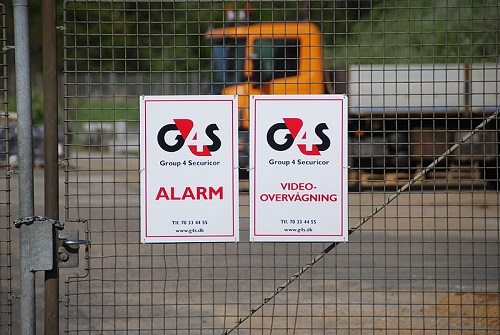
G4S

May 29, 2014; Mondoweiss

This has to be the least publicized foundation action in a long time. Although picked up by a number of overseas news sources, it seems no one in the mainstream U.S. press noticed that the Bill & Melinda Gates Foundation quietly began divesting from G4S, the huge British security company that had been providing security systems and other services to Israeli prisons and equipment for Israeli checkpoints in the occupied West Bank. Divesting from G4S had been one of the consistent targets of Boycott Divestment Sanctions (BDS) advocates.

Sign up for our free newsletters

Subscribe to NPQ's newsletters to have our top stories delivered directly to your inbox.

By signing up, you agree to our privacy policy and terms of use, and to receive messages from NPQ and our partners.

Several sources report that Gates had sold the bulk of its holdings in G4S, which purportedly may have amounted to around $167 million. In the U.K., entities that own 3 percent or more of a publicly traded company’s stock are required to notify and disclose British regulatory bodies. In this case, the Foundation filed a statement that its holdings in G4S had dipped below the 3 percent public disclosure threshold. How much of a divestment Gates is making is unclear. In 2013, it had purchased a 3.17 percent stake in G4S, so it could well be that the Foundation still holds a solid piece of the firm.


Ha’aretz reported that G4S provides electronic surveillance equipment to Israeli prisons that hold significant numbers of Palestinian prisoners, including facilities at Ofer, Zetziot, and Megiddo. However, it isn’t necessarily certain that the Gates Foundation took this action pursuant to the demands of the BDS movement. G4S apparently has a contractual relationship with the U.S. Department of Homeland Security for border security services, much like it does with British immigration services. The Gates Foundation has faced calls to divest from firms that bolster the currently lackluster immigration policies of the Obama administration and its conservative opposition in Congress. For all we know, the divestment action might have been in response to the advocacy of immigration activists.

Nonetheless, by all appearances, the Gates Foundation is reducing stake in a firm that a number of domestic and international advocates find to be noxious, whether on immigration issues or Israeli/Palestinian dynamics. For someone, that’s a victory.—Rick Cohen


Our Voices Are Our Power.

Journalism, nonprofits, and multiracial democracy are under attack. At NPQ, we fight back by sharing stories and essential insights from nonprofit leaders and workers—and we pay every contributor.

Can you help us protect nonprofit voices?

Your support keeps truth alive when it matters most.
Every single dollar makes a difference.

Donate now
logo logo logo logo logo
About the author
Rick Cohen

Rick joined NPQ in 2006, after almost eight years as the executive director of the National Committee for Responsive Philanthropy (NCRP). Before that he played various roles as a community worker and advisor to others doing community work. He also worked in government. Cohen pursued investigative and analytical articles, advocated for increased philanthropic giving and access for disenfranchised constituencies, and promoted increased philanthropic and nonprofit accountability.

More about: ActivismFoundationsImmigrationNonprofit NewsPolicySocial Enterprise
See comments

Sidebar-WTC
You might also like
The Hidden 100-Year Legacy of Latina Labor Activism in Texas
Alysse Rodriguez
Thousands of Species Wait for Protection as Delays Grow Under Endangered Species Act
Rajeev Tyagi
Community Benefit Agreements: A Tool for Building Stronger Democracies
Sameera Fazili, Pronita Gupta and Doug Bloch
A Letter of Gratitude to Kim Klein and Stephanie Roth
angélique nguyễn green
Fundraising as Democracy: Honoring a Legacy, Claiming Our Moment
angélique nguyễn green
On the Heels of ICE Raids, Minnesota Also Fights to Save a Wilderness
Cinnamon Janzer

Upcoming Webinars

Group Created with Sketch.
June 25, 2:00 pm ET

Reframing Organizational Risk

Register
Group Created with Sketch.
July 16, 2:00 pm ET

Readying for the 2026 Midterms

How 501(c)(3)s Can Educate and Advocate During this Election Season

Register

    
You might also like
A colorful mural depicting various Mexican woman–young and elder–in various stages of activism. Two have their fists up in protest, one speaks into a microphone, one wears a balaclava, one smiles, and one gazes intensely.
The Hidden 100-Year Legacy of Latina Labor Activism in Texas
Alysse Rodriguez
Close-up of a red wolf lying still on wood chips, head down, gaze turned away from the camera.
Thousands of Species Wait for Protection as Delays Grow...
Rajeev Tyagi
Community members seated at a public meeting, one attendee holding an open notebook and pen on their lap, ready to take notes.
Community Benefit Agreements: A Tool for Building Stronger...
Sameera Fazili, Pronita Gupta and Doug Bloch

Like what you see?

Subscribe to the NPQ newsletter to have our top stories delivered directly to your inbox.

See our newsletters

By signing up, you agree to our privacy policy and terms of use, and to receive messages from NPQ and our partners.

  • About
  • Advertise
  • Careers
  • Contact
  • Copyright
  • Donate
  • Editorial Policy
  • Privacy Policy
  • Funders
  • Submissions

We are using cookies to give you the best experience on our website.


Nonprofit Quarterly | Civic News. Empowering Nonprofits. Advancing Justice.
Powered by  GDPR Cookie Compliance
Privacy Overview

This website uses cookies so that we can provide you with the best user experience possible. Cookie information is stored in your browser and performs functions such as recognising you when you return to our website and helping our team to understand which sections of the website you find most interesting and useful.

Strictly Necessary Cookies

Strictly Necessary Cookie should be enabled at all times so that we can save your preferences for cookie settings.