logo logo
Donate
    • Membership
    • Donate
  • Social Justice
    • Racial Justice
    • Climate Justice
    • Disability Justice
    • Economic Justice
    • Food Justice
    • Health Justice
    • Immigration
    • LGBTQ+
  • Civic News
  • Nonprofit Leadership
    • Board Governance
    • Equity-Centered Management
    • Finances
    • Fundraising
    • Human Resources
    • Organizational Culture
    • Philanthropy
    • Power Dynamics
    • Strategic Planning
    • Technology
  • Columns
    • Ask Rhea!
    • Ask a Nonprofit Expert
    • Economy Remix
    • Gathering in Support of Democracy
    • Humans of Nonprofits
    • The Impact Algorithm
    • Living the Question
    • Nonprofit Hiring Trends & Tactics
    • Notes from the Frontlines
    • Parables of Earth
    • Re-imagining Philanthropy
    • State of the Movements
    • We Stood Up
    • The Unexpected Value of Volunteers
  • CONTENT TYPES
  • Leading Edge Membership
  • Newsletters
  • Webinars

Navajo Nation Protests Lack of Aid following Mine Spill

Shafaq Hasan
September 9, 2015

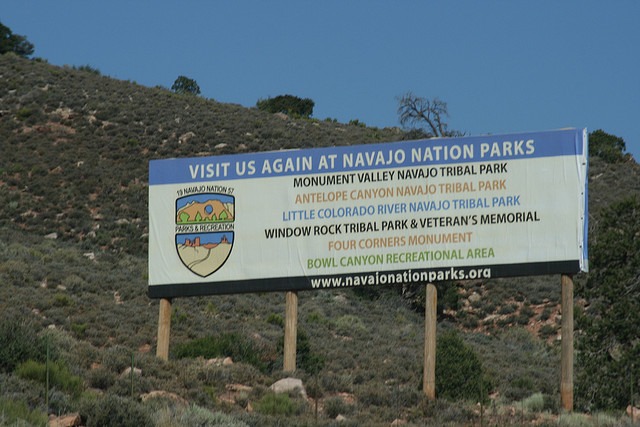
Navajo Nation Parks

September 6, 2015; KOB-TV (Albuquerque, NM)

On the heels of announcing their pursuit of legal action against the Environmental Protection Agency, the Navajo Nation is now responding to FEMA’s refusal to provide assistance following the disastrous mine spill in Colorado that contaminated the Animas River in the Southwest and the San Juan River, a major waterway for the reservation.

As NPQ had reported, Navajo Nation president Russell Begaye asked FEMA to provide a disaster coordinator who could oversee the relief operations following a spill that officials say has handicapped the primarily agricultural society. However, FEMA has apparently declined to offer its services.

In a joint statement, Begaye and Vice President Jonathon Nez said:

Sign up for our free newsletters

Subscribe to NPQ's newsletters to have our top stories delivered directly to your inbox.

By signing up, you agree to our privacy policy and terms of use, and to receive messages from NPQ and our partners.

We are extremely frustrated with the news that both FEMA and the U.S. EPA have declined our urgent requests to continue assistance to the Navajo Nation. U.S. EPA caused this entire disaster; they have harmed the people, the water and the land. I appreciated the fact U.S. EPA took responsibility and I was hoping for the U.S. EPA to prove to the Navajo Nation they are willing to hold themselves accountable. This action clearly shows otherwise. For years, we have consistently been at the receiving end of toxic spills and contamination with no adequate relief as the United States Government and Private Companies became wealthy off of the natural resources of the Navajo Nation. This is not the end but the beginning, as I will continue to fight for my people.

The situation at the reservation has not gone unnoticed by the media and activists. Erin Brockovich, an environmental activist who famously helped win a class action lawsuit against electric company PG&E for polluting the water in Hinkley, California, visited the Navajo Nation and some of the reservation’s high schools this past Tuesday. Brockovich accused the EPA for hiding the truth about the mine spill, which, the agency alleged, released 3 million gallons of pollutants into the water. Brockovich questioned whether this was a true estimate of the contamination in the water. (Previously, the EPA believed 1 million gallons were released, but this figure was amended to 3 million gallons.)

The EPA is currently investigating the spill, but regardless of the extent of the contamination, the Navajo Nation, which, like other tribal reservations, is already fraught with economic instability, undoubtedly requires further aid to sustain their society, which the nonprofit sector can provide.

Moving forward, as more information sheds light on the situation as it unfolds following the spill, it would behoove the nonprofit sector to consider where it fits into the equation. It might take a cue from Darlene Arviso, “The Water Lady,” a very nice woman who drives to 250 towns in the Navajo Nation each month to bring the residents clean water.—Shafaq Hasan


Our Voices Are Our Power.

Journalism, nonprofits, and multiracial democracy are under attack. At NPQ, we fight back by sharing stories and essential insights from nonprofit leaders and workers—and we pay every contributor.

Can you help us protect nonprofit voices?

Your support keeps truth alive when it matters most.
Every single dollar makes a difference.

Donate now
logo logo logo logo logo
About the author
Shafaq Hasan

Shafaq Hasan is a Community Builder at NPQ. She is a graduate of Brandeis University where she majored in Art History and spent most of her time working in the office of the student newspaper as the Opinions editor, and later, as an Associate editor. As an undergraduate, she was also a research assistant for the Justice Brandeis Law Project at the Schuster Institute for Investigative Journalism from 2011 to 2014.

More about: Climate JusticeClimate PolicyIndigenous CommunitiesNonprofit NewsPolicy
See comments

You might also like
After Years of Waiting, She Wanted to Start Gender-Affirming Care. Politics Interfered.
Orion Rummler
Understanding AI’s Thirst for Water: An Explainer
Jay Shah
In the Face of Authoritarianism, Connection Is Resistance
EJ Juárez
Investing Your Values in the New Age of AI Civil Rights
Whitney Shepard
Who Holds Narrative Authority? Reflections from “Reframing Resistance”
Shilpi Chhotray
Nonprofits Can Help Fight Trump’s Persecution of Immigrants
Matthew Rozsa

Upcoming Webinars

Group Created with Sketch.
March 19th, 2:00 pm ET

Open Board Search

How Casting a Wide Net Transforms Nonprofit Governance

Register
Group Created with Sketch.
March 26, 2:00 pm ET

Learn Out Loud

How Every Philanthropy, Nonprofit, and Community Member Can Leverage Power in Our Fight Against ICE

Register

    
You might also like
A person holding up a hand-painted sign reading, “Make Trans Healthcare Accessible”
After Years of Waiting, She Wanted to Start Gender-Affirming...
Orion Rummler
A typical cold aisle configuration with server rack fronts facing each other and cold air distributed through a raised floor. A graphic of sloshing water is superimposed in the foreground.
Understanding AI’s Thirst for Water: An Explainer
Jay Shah
A blonde woman and Black bearded man look each other directly in the eye. The background is split into white and black panels, emphasizing contrast.
In the Face of Authoritarianism, Connection Is Resistance
EJ Juárez

Like what you see?

Subscribe to the NPQ newsletter to have our top stories delivered directly to your inbox.

See our newsletters

By signing up, you agree to our privacy policy and terms of use, and to receive messages from NPQ and our partners.

  • About
  • Advertise
  • Careers
  • Contact
  • Copyright
  • Donate
  • Editorial Policy
  • Funders
  • Submissions

We are using cookies to give you the best experience on our website.


Nonprofit Quarterly | Civic News. Empowering Nonprofits. Advancing Justice.
Powered by  GDPR Cookie Compliance
Privacy Overview

This website uses cookies so that we can provide you with the best user experience possible. Cookie information is stored in your browser and performs functions such as recognising you when you return to our website and helping our team to understand which sections of the website you find most interesting and useful.

Strictly Necessary Cookies

Strictly Necessary Cookie should be enabled at all times so that we can save your preferences for cookie settings.