
logo logo
Fund the truth. #Wethecivic giving banner
Donate
    • Membership
    • Donate
  • Social Justice
    • Racial Justice
    • Climate Justice
    • Disability Justice
    • Economic Justice
    • Food Justice
    • Health Justice
    • Immigration
    • LGBTQ+
  • Civic News
  • Nonprofit Leadership
    • Board Governance
    • Equity-Centered Management
    • Finances
    • Fundraising
    • Human Resources
    • Organizational Culture
    • Philanthropy
    • Power Dynamics
    • Strategic Planning
    • Technology
  • Columns
    • Ask Rhea!
    • Ask a Nonprofit Expert
    • Gathering in Support of Democracy
    • Hope in the Dark
    • Humans of Nonprofits
    • Inside the States
    • In Defense of Civil Society
    • The Myth of Heroic Leadership
    • Notes from the Frontlines
    • Notes from the Long Arc
    • Reimagining Philanthropy
    • The Unexpected Value of Volunteers
    • We Stood Up
  • Newsletters
  • NPQ Online Events
    • Premium Webinars
    • Learn Out Loud
    • Partner Events
    • On Demand
  • Leading Edge Membership

Powerful Philanthropist Steps Down—sort of—from SF Fine Arts Museums

Ruth McCambridge
July 27, 2016
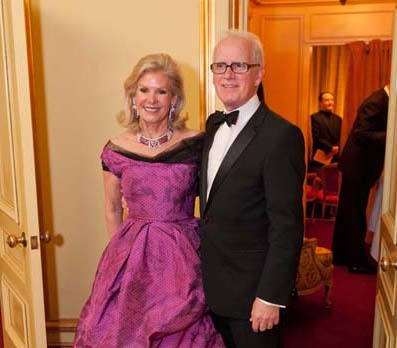
Dede Wilsey, Helgi Tomasson
San Francisco Ballet 2011 Opening Night Gala – Dede Wilsey, Helgi Tomasson / Viva Vivanista

July 25, 2016; New York Times

When the headlines screamed that Dede Wilsey was stepping down from her role as head of the board and CEO of the Fine Arts Museums of San Francisco, we could hardly believe it. Wilsey, who—to judge from photographs—arguably has a better formalwear wardrobe than anyone we’ve ever written about, has been making headlines for a while for her tendency to treat the museums’ assets as fully under her control. In 2014, she ordered almost a half-million dollars in severance for a former employee and husband of another employee known to do her plenty of favors. Presumably, in her mind, as board chair and CEO, she had that right, only presenting the board with the required resolution to sign after the fact.

Did we forget to mention that the Fine Arts Museums have a special provision that allows the board president to hold that office for life? In a 2013 article in Muckety, Wilsey was described as “something of a potentate,” as “having too much clout,” and at one and the same time the museums’ “savior and potential destroyer.”

Sign up for our free newsletters

Subscribe to NPQ's newsletters to have our top stories delivered directly to your inbox.

By signing up, you agree to our privacy policy and terms of use, and to receive messages from NPQ and our partners.

But then came the palace revolt. The DeYoung Museum’s CFO, Maria Gutierrez, accused the socialite of neglecting to get board approval before that severance package was cut despite telling her that she had it, thus placing Gutierrez in the bad position of cutting an unauthorized check. In return for her good citizenship, Gutierrez was immediately placed on leave. But the story does not end there, of course; Gutierrez has just been awarded a $2 million settlement on top of a severance package in return for her agreement not to bring a wrongful termination suit.

In the usual unsatisfying way of these statements about resignations in the midst of scandal, Fine Arts Museums spokesperson Ken Garcia told the San Francisco Chronicle that “after several years of serving as president and CEO, and with a competent director of museums in place, [Wilsey] believes it will serve the museums better for her to now focus on other areas where her skills and expertise will have a positive impact.”

The attorney general, who is still in the middle of an investigation into the situation, suggests that that the “for-life” provision for board leadership be removed. Nevertheless, Dede Wilsey isn’t really going anywhere; she remains on the board.—Ruth McCambridge


Our Voices Are Our Power.

Journalism, nonprofits, and multiracial democracy are under attack. At NPQ, we fight back by sharing stories and essential insights from nonprofit leaders and workers—and we pay every contributor.

Can you help us protect nonprofit voices?

Your support keeps truth alive when it matters most.
Every single dollar makes a difference.

Donate now
logo logo logo logo logo
About the author
Ruth McCambridge

Ruth is Editor Emerita of the Nonprofit Quarterly. Her background includes forty-five years of experience in nonprofits, primarily in organizations that mix grassroots community work with policy change. Beginning in the mid-1980s, Ruth spent a decade at the Boston Foundation, developing and implementing capacity building programs and advocating for grantmaking attention to constituent involvement.

More about: Arts and CultureBoard GovernanceEquity-Centered ManagementNonprofit NewsScandals
See comments

Sidebar-WTC
You might also like
Who Gets Remembered as American? Vietnamese Refugees and the Fight for Public Memory Through Art (Commentary)
Ngoc-Tran Vu
Reparations Movements Have a Narrative Problem: Why Policy Alone Cannot Prepare the Public for Repair
Christopher Rudd
The Wobbly Toilet Problem: Avoidance, Supervision, and Early Intervention
Jenna Collins
Addressing the Gravest Crime Against Humanity: Ritual, Remembrance, and Repair
Joanne M. Braxton
When Disruption Hits: Making Hidden Risks Visible to Meet the Moment and Move Our Missions Forward
Dax-Devlon Ross
The Boardroom Belongs to the Community
Kristin Lincoln

Upcoming Webinars

Group Created with Sketch.
July 16, 2:00 pm ET

Readying for the 2026 Midterms

How 501(c)(3)s Can Educate and Advocate During this Election Season

Register
Group Created with Sketch.
August 13, 2:00 pm ET

Building Narrative Power for Equity and Solidarity

Register

    
You might also like
A closeup of conical hats hanging from a line overhead. Journey of Light: A 1975 Memory Field, temporary installation by Ngoc-Tran Vu, 2025.
Who Gets Remembered as American? Vietnamese Refugees and the...
Ngoc-Tran Vu
A Black person lies on the floor of a stage with a birdcage around their head. The cage has a chain attached and a spotlight lights the scene.
Reparations Movements Have a Narrative Problem: Why Policy...
Christopher Rudd
A solitary white toilet in an empty room.
The Wobbly Toilet Problem: Avoidance, Supervision, and Early...
Jenna Collins

Like what you see?

Subscribe to the NPQ newsletter to have our top stories delivered directly to your inbox.

See our newsletters

By signing up, you agree to our privacy policy and terms of use, and to receive messages from NPQ and our partners.

  • About
  • Advertise
  • Careers
  • Contact
  • Copyright
  • Donate
  • Funders
  • Editorial Policy
  • Media Relations
  • Privacy Policy
  • Submissions

We are using cookies to give you the best experience on our website.


Nonprofit Quarterly | Civic News. Empowering Nonprofits. Advancing Justice.
Powered by  GDPR Cookie Compliance
Privacy Overview

This website uses cookies so that we can provide you with the best user experience possible. Cookie information is stored in your browser and performs functions such as recognising you when you return to our website and helping our team to understand which sections of the website you find most interesting and useful.

Strictly Necessary Cookies

Strictly Necessary Cookie should be enabled at all times so that we can save your preferences for cookie settings.