
logo logo
Donate
    • Membership
    • Donate
  • Social Justice
    • Racial Justice
    • Climate Justice
    • Disability Justice
    • Economic Justice
    • Food Justice
    • Health Justice
    • Immigration
    • LGBTQ+
  • Civic News
  • Nonprofit Leadership
    • Board Governance
    • Equity-Centered Management
    • Finances
    • Fundraising
    • Human Resources
    • Organizational Culture
    • Philanthropy
    • Power Dynamics
    • Strategic Planning
    • Technology
  • Columns
    • Ask Rhea!
    • Ask a Nonprofit Expert
    • Gathering in Support of Democracy
    • Hope in the Dark
    • Humans of Nonprofits
    • Inside the States
    • In Defense of Civil Society
    • The Myth of Heroic Leadership
    • Notes from the Frontlines
    • Notes from the Long Arc
    • Reimagining Philanthropy
    • The Unexpected Value of Volunteers
    • We Stood Up
  • Newsletters
  • NPQ Online Events
    • Learn Out Loud
    • Leading Edge Webinars
    • Partner Events
    • On Demand
  • Leading Edge Membership

Why Every Nonprofit Has a New Job Title: Publisher

Joe Waters
April 23, 2012

Type

steveball / Shutterstock.com

Nonprofit employees have always had to wear a lot of hats: fundraiser, marketer, grant writer, etc. Here’s one more you need to get used to wearing: publisher. Fortunately, this additional job has a real benefit, as it engages current and potential supporters with useful, interesting and credible information that directly drives donor support.

Don’t confuse publishing with advertising. I’m not talking about one-way communication that people view as a “salesy.” Publishing is about producing blog posts, video, e-mail newsletters, e-books, white papers, free reports and other types of content. For example, the American Cancer Society (ACS) created a blog site called MoreBirthdays.com meant to educate and inspire cancer patients, survivors and caretakers—a resource that connects the cancer community with the cause and ultimately strengthens giving.

ACS and many other large nonprofits understand the key role published content has in their success. Smaller nonprofits are beginning to see the importance of publishing, but many still see this hat as an optional one. It’s not. Here are the three main reasons why every nonprofit needs to be generating useful content that informs, educates and inspires.

1. It’s part of being a top nonprofit brand. Charity: Water, Share Our Strength, March of Dimes and Make-A-Wish are all publishers. They actively create content that engages supporters, and I’m talking about a lot more than a quarterly print newsletter. While you may not see yourself in the same league as these organizations, you share their need to build community around your cause and to be a credible resource for those interested in your subject area.

Sign up for our free newsletters

Subscribe to NPQ's newsletters to have our top stories delivered directly to your inbox.

By signing up, you agree to our privacy policy and terms of use, and to receive messages from NPQ and our partners.

Mark Horvarth at Invisiblepeople.tv has gotten national attention by filming the stories of the largely “invisible” homeless from Los Angeles to Washington, D.C. Horvarth’s nonprofit is small, but his videos have spread the news of his work and caught the attention of many large companies, including GMC and Hanes. You might not be big, but you can be a top brand, even if it’s just in your community.

2. You need to stand out. According to the National Center for Charitable Statistics (NCCS), more than 1.5 million nonprofit organizations are registered in the U.S. According to one study, 7,306 nonprofits were registered in just tiny Rhode Island last year. With more and more nonprofits coming online each year, content is a key tool in separating your nonprofit from the pack. This is especially important as people search for your nonprofit on Google, Bing and Yahoo. Several factors are important in how search engines rank and deliver search results, but one thing is clear: if you don’t produce high quality content and links, online searchers won’t find you. Period.

3. You can’t just do good work anymore. Nearly every day, I meet nonprofits that are making the world a better place. But it’s not enough. It’s like the days when there were only five or six television stations to watch. It was easier for these early networks to stand out and get viewers. These days, there are hundreds of stations to choose from and the competition is brutal. It’s the same with nonprofits. The Salvation Army, American Red Cross and St. Jude Children’s Research Hospital were all lucky to build their brands during simpler times. Charities that have quickly gained ground over the last decade have been largely celebrity-driven (e.g., U2’s Bono for Product Red and Lance Armstrong for Livestrong).

Unless you have a star in your pocket, start learning to publish online and how to tell your nonprofit’s story with text, pictures and video. Focus on being compelling, useful and credible. Publishing is your path to stardom.

Joe Waters blogs on cause marketing and social media at Selfishgiving.com. He’s the co-author of Cause Marketing for Dummies.


Our Voices Are Our Power.

Journalism, nonprofits, and multiracial democracy are under attack. At NPQ, we fight back by sharing stories and essential insights from nonprofit leaders and workers—and we pay every contributor.

Can you help us protect nonprofit voices?

Your support keeps truth alive when it matters most.
Every single dollar makes a difference.

Donate now
logo logo logo logo logo
About the author
Joe Waters

Joe Waters is co-founder and CEO of Capita, a nonpartisan ideas lab working to positively change the future for children and families.

More about: Equity-Centered ManagementFundraisingOrganizational Culture
See comments

Stuffing-1
You might also like
Why the good offers seem to go to others
Rhea Wong
Can a deck of cards interrupt bias in grantmaking?
Devyn Taylor
Wisdom workers: The capacity nonprofits must learn to recognize and preserve
James A. Lomastro
The tax-subsidized shrug: How foundation leaders threaten democracy and the nonprofit sector
Aparna Rae
Make the ask before the holiday chaos
Rhea Wong
Naming what we carry: A tool for the first step toward transformation
Dominique Samari

Upcoming Webinars

Group Created with Sketch.
December 3, 2:00 pm ET

After the Midterms

What’s Next for Nonprofits?

Register
Group Created with Sketch.
January 28, 2:00 pm ET

Democratic Staff Structures

Weaving Shared Leadership and Union Practice in Nonprofits

Register
You might also like
A woman of color looks into the camera with a serious expression. She is sandwiched by a white female and Asian female coworker.
Why the good offers seem to go to others
Rhea Wong
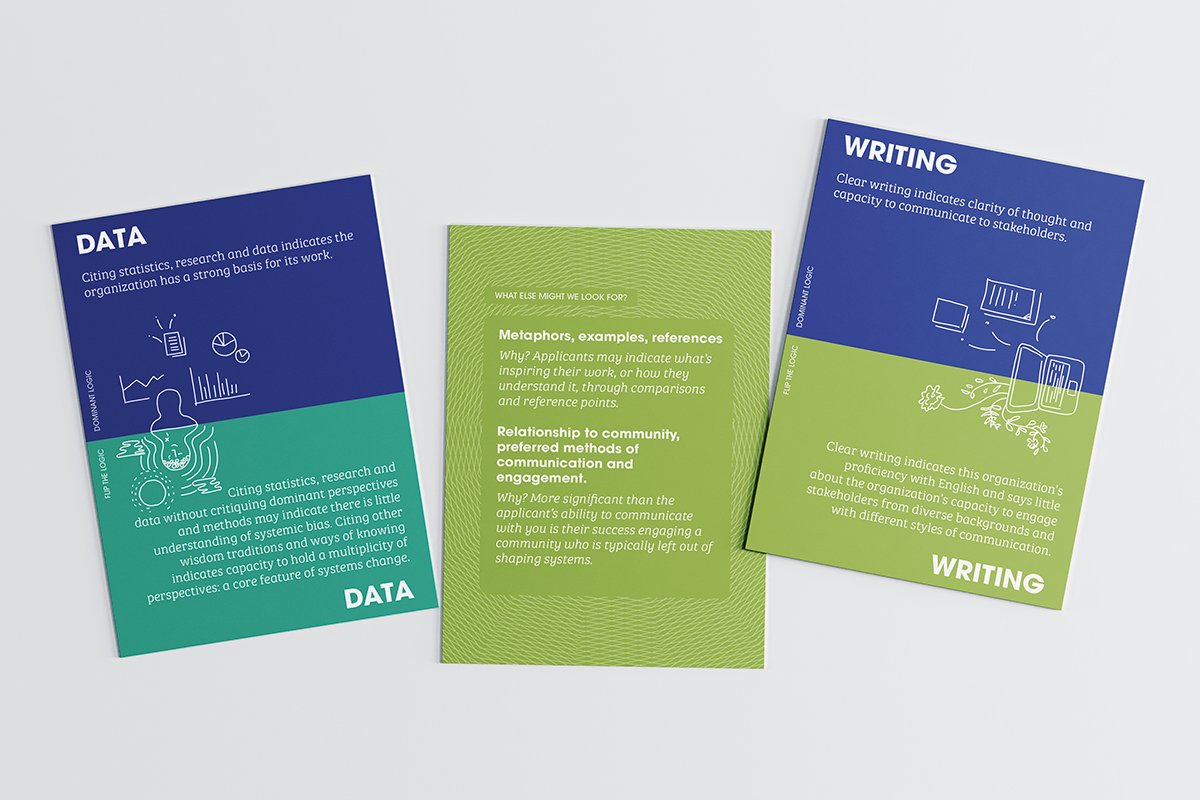
“Flippin’ Logics Cards” identify eight “dominant logics,” or recurring assumptions and ways of thinking that can shape how reviewers interpret an application.
Can a deck of cards interrupt bias in grantmaking?
Devyn Taylor
A Black woman with natural gray hair smiles and sits at a table with a computer in front of her, as she talks to a younger coworker.
Wisdom workers: The capacity nonprofits must learn to...
James A. Lomastro

Like what you see?

Subscribe to the NPQ newsletter to have our top stories delivered directly to your inbox.

See our newsletters

By signing up, you agree to our privacy policy and terms of use, and to receive messages from NPQ and our partners.

  • About
  • Advertise
  • Careers
  • Contact
  • Copyright
  • Donate
  • Funders
  • Editorial Policy
  • Media Relations
  • Privacy Policy
  • Submissions

We are using cookies to give you the best experience on our website.


Nonprofit Quarterly | Civic News. Empowering Nonprofits. Advancing Justice.
Powered by  GDPR Cookie Compliance
Privacy Overview

This website uses cookies so that we can provide you with the best user experience possible. Cookie information is stored in your browser and performs functions such as recognising you when you return to our website and helping our team to understand which sections of the website you find most interesting and useful.

Strictly Necessary Cookies

Strictly Necessary Cookie should be enabled at all times so that we can save your preferences for cookie settings.