In the wake of the end of the lunchtime philanthropy discussions convened by the Hudson Institute’s Bradley Center for Philanthropy and Civic Renewal, the Alliance for Justice addresses the still-underutilized concept of mission investing with its first Foundation Program Speaker Series event last month. The three speakers discussed different ways that foundations use their endowments to change corporate behavior:
- Ellen Dorsey, executive director of the Wallace Global Fund, offered a strong analysis of the movement for divesting from fossil fuels.
- Ernest Tollerson, interim executive director of the Nathan Cummings Foundation, discussed his foundation’s engagement in a specific shareholder initiative.
- Kate Ahern, a vice president of the Case Foundation, pitched what seemed to be investment in social enterprise. Since Case is not an endowed foundation, Ahern’s inclusion on the panel was a bit odd. AOL’s Steve Case and his wife Jean fund the foundation when they want to invest, making it unrelated to the bulk of the discussion, which was aimed at getting foundations to mobilize the 95 percent of their endowed assets that aren’t doled out in grants and related expenses every year.
In any case, Dorsey, and to a lesser extent Tollerson, raised issues that address how foundations might mobilize their tax-exempt endowed investment capital for social good, several of which relate to concerns in the news right now.
Choosing Where to Divest: Why the Focus on Fossil Fuels?
As the Economist points out, divestment is hardly a new idea, drawing on a history that includes the powerful anti-apartheid campaign in the 1980s, which Nelson Mandela and Desmond Tutu both credited with playing an important role in weakening support for South Africa’s white-led regime. The Economist reports that 220 cities and institutions around the world have divested from fossil fuels, with Norway’s sovereign wealth fund’s decision to sell $9 billion in companies that mine coal and tar sands among the latest and certainly the largest divestment actions in the recent campaign. Dorsey is a member of the Steering Committee of Divest-Invest Philanthropy, which is doing organizing within philanthropy to get foundations to pledge to eliminate fossil fuels from foundation investment portfolios. (The pledge is here.) One hundred and three foundations are listed as signatories on the Divest-Invest Philanthropy page, and last week, Europeans for Divest Invest, the European counterpart to Divest-Invest Philanthropy in the U.S., announced that 100 philanthropic institutions there had now pledged to divest.
Despite the potentially wide-ranging topic and a varied list of potential divestment possibilities listed on the program flier, the AFJ discussion focused on fossil fuel to the exclusion of all others. This disregards the other divestment campaigns that are picking up steam. Last month, for example, Columbia University became the first U.S. college to divest from private prison companies. The Robert Wood Johnson Foundation and the Henry J. Kaiser Family Foundation are among several institutions that have divested from tobacco stocks. Everyone on the AFJ panel steered clear of the Boycott Divest Sanctions (BDS) movement, which most recently succeeded in a vote by the United Church of Christ to divest from companies that profit from the Israeli occupation of the West Bank or make products in Israeli settlements there.
Divest-Invest could just as easily, in theory, push for divestments from companies that produce tobacco or military weapons, manage private prisons or benefit from prison labor, might have been responsible for the mortgage foreclosures depriving tens of millions of Americans of homeownership, support Israel’s occupation of the West Bank, or engage in other kinds of activities that some investors find objectionable. Why the focus on fossil fuels? The perspective voiced at the AFJ program was that divesting from fossil fuels is a campaign that crosses ideological boundaries and unites tax-exempt institutions that otherwise might diverge politically or ideologically around an issue that threatens the survivability of the planet. Moreover, in the structure of the Divest-Invest movement, pulling out of investment in fossil fuels still leaves tax-exempt investors with productive investment alternatives in clean energy. For example, foundations that pull their moneys out of coal and oil companies can shift to attractive investments in solar, wind, and water, industries that have shown that they can yield profits and social benefits.
It may also be that divestment from fossil fuels, abetted by national and international policies pushing against coal and oil, is an idea whose time has come. While there are some troglodytes who deny the reality of man-made climate change, including a few major politicians, most of the world gets it. Not long after the AFJ program, no less than Pope Francis weighed in with his encyclical Laudato Si, basically putting the Catholic Church on the side of foundations like Wallace Global and other Divest-Invest members on the issue of fossil fuels.
That isn’t to say that the Divest-Invest movement has swept through philanthropy. The 100 foundations on the Divest-Invest list aren’t the largest foundations by any stretch of the imagination, nor is that a large percentage of the 100,000 or so foundations that exist today. A Center for Effective Philanthropy survey of 60 foundation CEOs found a surprisingly small number engaged in “negative screening,” that is, excluding specific companies or organizations from their investment portfolios. (Examples offered by CEP added nuclear energy, alcohol, gambling, animal testing, and adult entertainment to the more typical divestment categories of tobacco, prisons, and fossil fuels, but omitted any reference to Israel and Palestine.) As much as the nonprofit sector and the public at large may be coming around to the need to reduce or eliminate the use of fossil fuels, 100 medium-sized and small foundations don’t add up to victory over ExxonMobil and Chevron. There’s a long way to go.
Campaigning for Divestment in Foundations
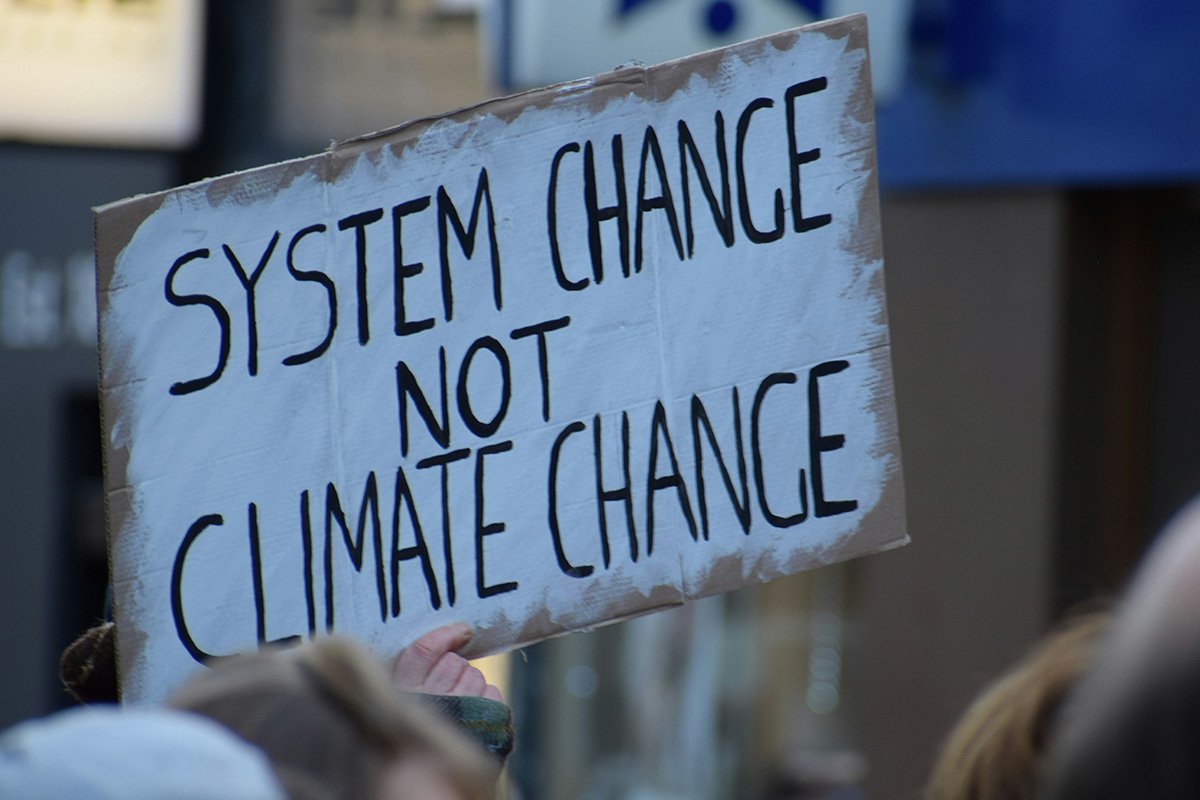
When it comes to universities and cities, the campaigners for fossil fuel divestment are loud and demonstrative. When it comes to foundations, the divestment campaigns are quiet, behind the scenes. As Dorsey pointed out, the foundation tactic is persuasion, not what she called “naming and shaming.” So how do activists move multibillion-dollar foundations?
The foundation of current controversy is the biggest one of all: the Bill and Melinda Gates Foundation, whose total assets are basically equal to those of the next four largest independent foundations, the hardly small Ford, Kellogg, Robert Wood Johnson, and Hewlett foundations, combined. Bill Gates recently announced $2 billion in renewal energy technologies but has rejected fossil fuel divestment for the foundation despite a campaign spearheaded by the Guardian targeting the Gates Foundation and the UK’s Wellcome Trust. According to the Guardian, $1.4 billion of the Gates Foundation’s $37 billion in assets are in fossil fuels, including a chunk invested in BP, which recently agreed to an $18.7 billion settlement with the U.S. government and five state governments for the destruction in caused in the Gulf of Mexico after the explosion of the Deepwater Horizon offshore drilling rig. Wellcome’s rejection of the campaign is that engagement with oil and gas companies constitutes important pressure on them to change their policies and practices, while the Gates position appears to be that disinvestment would have negligible impact, but investment in innovative technologies is the answer.
Gates is ignoring what Wallace Global and other disinvesting foundations know well, as expressed in a primer issued by Emma Howard of the Guardian:
Sign up for our free newsletters
Subscribe to NPQ's newsletters to have our top stories delivered directly to your inbox.
By signing up, you agree to our privacy policy and terms of use, and to receive messages from NPQ and our partners.
“The heart of the impact of the fossil fuel divestment movement…is not to bankrupt the industry financially, but to do so morally and politically. As research by Oxford University pointed out, the financial loss of the divestment campaign—the fastest growing in history—will not be felt through the shares sold but through the reputation lost by these companies by being stigmatized. But the fossil fuel divestment campaign does not only make a moral assertion; it makes an economic one. Shares invested in fossil fuel companies are invested in a business model that is completely incompatible with international agreements on mitigating climate change. If governments abide by them, such investments will become worthless—so pulling them out now makes good financial sense too.”
Why not organize around foundation endowments the way activists occupied the office of the president of Tufts University, rallied at the University of Massachusetts at Amherst, camping outside the administrative offices of the University of California at Berkeley, and as alumni diverted donations to the Dartmouth annual fund to the Multi-School Fossil Free Divestment Fund? What makes foundations special?
Despite all the calls for philanthropic transparency in the foundation sector, philanthropy still operates very much behind the scenes. To some extent, the notion that pressure on foundations should come from peers operating quietly and collegially is not atypical of efforts to promote foundation change. Some nonprofits, such as the National Committee for Responsive Philanthropy (where, full disclosure, this author was executive director of NCRP from 1999 to 2006), took leadership roles in public campaigns for foundation change years ago in an effort to mandate higher foundation grants payouts. More recently, there has been NCRP’s effort to get foundations to sign on to its criteria for “Philanthropy at Its Best.” Still, there is little question that foundations aren’t comfortable with external pressure. As Dorsey told a reporter for the Atlantic, echoing a statement she made at the AFJ program, “Peers organize their peers better.”
Dorsey made the point that divestment efforts energize foundation trustees who come to recognize that investment managers working or advising the foundations work for them, not the other way around. But it isn’t just the trustees’ money that is at issue. Foundations’ tax-exempt investments are tax-exempt because of a decision made by the American public through its elected representatives. Otherwise, those dollars would have been captured as tax revenues. The limited typical organizing campaigns aimed at foundations, such as they are, emphasize the foundations’ grant dollars, the five percent, not the investment dollars, the much larger 95 percent. To the extent that the nonprofits see foundation grantmaking as a legitimate area of inquiry and exploration in the public arena, the same holds true for foundation investments.
Militating against successful organizing on the issue of foundation endowments is the miserable condition of foundation reporting of investments on their Form 990s. The investment portions of the 990s are just about unintelligible, are presented differently from foundation to foundation and, of course, due to the IRS’s lassitude, are not machine-readable. The grants part of the 990 is at least somewhat clearer, with all grants supposed to be listed by recipient and amount. For effective organizing around foundation investments, the presentation of foundation investment data has to be fixed. Otherwise, the private behind-the-scenes persuasion among foundation peers will be the only mechanism for pressuring for divestment, because nonprofit organizers won’t be able to know with much specificity in what areas foundations do or do not invest in.
Moving Forward: The Challenges of Divestment
In the area of fossil fuels, while there is much to be done, there is momentum. Last fall, the Rockefeller Brothers Fund announced a two-stage plan to divest its investments from fossil fuels, recognizing that to make a clean break is no easy task given investments in commingled investment funds and in diversified energy companies. Getting a foundation established by the founder of Standard Oil to plan an investment future free of fossil fuels reflects an important achievement within philanthropy.
But the tasks aren’t limited to tallying the foundations that have chosen to take the fossil fuel disinvestment pledge. The big foundations are still on the sidelines. (New coverage of RBF’s divestment plans typically confuses the relatively small Rockefeller Brothers Fund, with $871 million in assets, with the Rockefeller Foundation and its assets of $3.696 billion.) Even if Dorsey is right that peers do best organizing among their peers, it seems that they have yet to get traction with the nation’s biggest foundations. The insouciant denunciation of fossil fuels disinvestment by Gates might be better examined in light of the foundation’s past backing of investments that ended up supporting the government of Sudan. Initially, Gates’s investment people rejected the notion of disinvestment, suggesting that the foundation does greater good with the income it earns from investment than whatever it might achieve by disinvesting. However, eventually it was public pressure, not inter-foundation persuasion, which got the Gates Foundation to quietly dump its Sudan-positive stock portfolio. Similarly, on Palestinian issues, it most certainly wasn’t peer pressure that got to Gates; public criticism Gates encountered pushed the foundation to reconsider its investments in security companies that were helping the Israeli government with its occupation of the West Bank. The time for public pressure on big foundations to speed up their willingness and timetables to disgorge their fossil fuel stocks is undoubtedly now. The climate change clock is ticking.
The other issue that didn’t get addressed in the brief AFJ program was what actually constituted effective divestment. Not long after the Norwegian sovereign wealth fund made its fossil fuels divestment announcement, critics revealed that the fund had actually quietly increased its investments in coal. The critics’ report, Still Dirty, Still Dangerous, demonstrated that Norway had disinvested from coal mining to some extent but then increased its investments in coal burning, particularly in India and China.
“There is meaningful divestment and there is pretend divestment,” said Heffa Schücking, the author of the report. “With the Norwegian government pension fund, they simply moved all the money from coal mining companies to coal burning companies, so you don’t know if there is actual divestment at the end of the day.”
Dorsey was quoted in agreement:
“While it is positive that the GPF (the Norwegian Government Pension Fund) has taken a strong stand against coal investments and reduced their overall investments in coal production, their leadership on this issue is being squandered when it is revealed that they have purchased new coal securities,” she said in an email. “It is so crucial that institutional investors are transparent about their investment strategies and holdings, across the board.”
Tallying pledges is fine, but examination of the comprehensive investment portfolios of foundations is necessary to distinguish real from pretend divestments.
Finally, it is important to note that other issues that might be similarly important considerations for disinvestment have narrower constituencies than the advocates around climate change issues. No one should discount in any way the crucial importance of climate change and the need to make a statement about fossil fuel investments, as the AFJ program did so well. But less popular issues, ranging from Palestine to forced labor, are also important. They cannot and should not be dismissed as secondary simply because it is politically easier and potentially consensual to make headway on fossil fuel disinvestment. The political and moral statement of foundations’ using, investing, and disinvesting the trillion dollars they warehouse in tax-exempt endowments extends to issues beyond fossil fuels. Their investment decisions, much like their grant allocations, involving tax-exempt dollars, should be in the public sphere for disclosure, review, analysis, and debate.