

Article updated on March 15, 2024.
Ashoka is a global organization that believes in the importance of investing in social entrepreneurs to create change and innovation. Currently, the organization invests in over 3,800 social entrepreneurs (otherwise known as Ashoka Fellows) in over 90 countries worldwide, with more than 270 fellows in the United States.
More recently, Ashoka has been intentionally learning about innovations in the US South, home to some of the country’s deepest inequalities. The organization started listening tours to learn from leaders in North Carolina, Georgia, Alabama, Mississippi, Louisiana, and other Southern states about how changemakers are working to address inequality and what resources are needed to amplify this work.
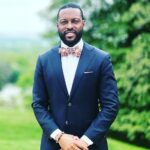
NPQ spoke with Marc Carr, the director of venture and partnerships for Ashoka’s “Equity Now” portfolio about the tour’s goals, the first stop in Durham, NC, and how funders can help.
Rebekah Barber: Why was it crucial for Ashoka to learn from Southern changemakers?
Marc Carr: Ashoka is an organization that is really big on system change and finding new ideas to elevate this change. In 2016, we looked at our portfolio of fellows and found that most came from four states: New York, San Francisco, Boston, DC. Most of them were disproportionately White and came from Ivy League schools.
“The South is often at the vanguard of social impact—not just in the country but in the world.”
To broaden our network, we launched a strategy to identify leading innovations and ideas for systems change all throughout the country. In this era that we’re in now, I’m pushing an approach that deepens our inclusivity and our understanding of racial and ethnic caste in this country.
In every part of the world, there are innovators grappling with structural inequities at the intersection of race, ethnicity, and caste. Here in the United States, taking a close look at the South, where they remain most poignant, was an obvious starting point for our team.
“We want to tell stories that position the South in its rightful place in history, particularly around changing systems, innovation, leading the charge in human rights, and changing the culture of this nation.”
RB: What are your goals for the tour?
MC: We are seeking to shift the narrative of the South. The South is often at the vanguard of social impact—not just in the country, but in the world. The Civil Rights movement reverberated around the world and inspired other movements in places like South Africa and India.
We want to go and listen and find stories of what’s needed and what’s working. We want to find stories that we think should be elevated. We want to understand how we can support social entrepreneurs in the region. We want to tell stories that position the South in its rightful place in history, particularly around changing systems, innovation, leading the charge in human rights, and changing the culture of this nation from one of exclusion and oppression to a place where more opportunities are afforded to more people irrespective of their background.
We haven’t quite reached that goal, but I think it was the citizens of the South who pushed us in that direction. We want to ask what’s happening today and what can we learn from the South that will push us even more toward the direction of equality.
Sign up for our free newsletters
Subscribe to NPQ's newsletters to have our top stories delivered directly to your inbox.
By signing up, you agree to our privacy policy and terms of use, and to receive messages from NPQ and our partners.
RB: Durham, NC, was the first stop on your tour. As someone who lives in Durham, I’m interested in what you learned here. Can you share any takeaways?
MC: My first meeting was with Erin Worsham. She is the director of CASE, Duke University’s social impact program. She shared a lot about the importance of coming together. They bring together corporate folks, students, and nonprofits to learn and support each other in creating social impact, particularly around social entrepreneurship. She emphasized the importance of finding a middle ground to create impact together.
I also met with Ebonie Alexander, the founder of the Black Family Land Trust. She shared how, particularly as we are in this era where there is a backlash against DEI [diversity, equity, and inclusion], it is important to create policies that speak to the nuances of inequality. She shared how, in her efforts to support Black farmers—because it’s often unpopular to mention race in policy measures—she created policies specific to smallholder farmers, and 95 percent of Black farmers fall in that category. She also mentioned how important it is for Black farmers to acquire additional resources—not only to make their lands profitable but to conserve the land. She talks about the importance of land ownership, but many young people whose family owns land don’t see the value in it, so she is working to shift the narrative.
I also met with Kay Jowers from Duke University’s Environmental Justice Lab. She shared about her background of growing up in rural Alabama and how, at a young age, she realized there was a social hierarchy in Alabama. She talked about some of the environmental injustices we see today [that] exist because we still have not gotten rid of that hierarchy.
I also met with Will Jackson, an Ashoka Fellow, and the founder of Village of Wisdom, an organization that seeks to have Black parents involved more in their child’s education and curriculum. He pointed out how important ecosystems are. He named how the research institutions in the area and the faculty and students they bring are critical to the Durham ecosystem. He mentioned how it was critical to build credibility when he first moved to North Carolina. He spent a lot of time speaking with the small grassroots nonprofits and getting to know them and the environment.
“We know that only 3 percent of philanthropic dollars flow to the South, and only a fraction of that flows to communities of color—and only a fraction of that flows to rural communities.”
Finally, I met with Dr. Sandy Darity and Dr. Gwendolyn Wright at the Samuel DuBois Cook Center. What stood out from this conversation is how important research institutions are and how the research can provide ammunition to the movement. Darity shared his research on the racial wealth gap and universal basic income. He noted that funders oftentimes don’t realize how important academic research is in helping fuel movement and giving it validation.
RB: You spoke with academics, those working to uplift educational equity, those working to uplift environmental justice. Why do you think it was important to take this broad, intersectional approach to looking at innovation in the South?
MC: We took a broad approach but had a specific focus because we were looking for ways to address racial, economic, and environmental injustice.
We also went broad because we are a systems change-oriented organization. We support systems change leaders and have robust criteria to assess whether or not someone is creating systems change.
RB: Given what you are learning, what are you hoping for funders to do?
MC: We know that only 3 percent of philanthropic dollars flow to the South, and only a fraction of that flows to communities of color—and only a fraction of that flows to rural communities.
We know that the South is a hotbed of innovation and talent, and it has been for generations, but it needs to get the visibility and support it deserves. We are looking for funders to join us because we can’t do it alone. Some of the disparities are deep and multigenerational, so it will take a collective impact approach to even put a dent in these issues. As Dr. Darity said, we need bold policy changes, which require resources.