logo logo
giving banner
Donate
    • Membership
    • Donate
  • Social Justice
    • Racial Justice
    • Climate Justice
    • Disability Justice
    • Economic Justice
    • Food Justice
    • Health Justice
    • Immigration
    • LGBTQ+
  • Civic News
  • Nonprofit Leadership
    • Board Governance
    • Equity-Centered Management
    • Finances
    • Fundraising
    • Human Resources
    • Organizational Culture
    • Philanthropy
    • Power Dynamics
    • Strategic Planning
    • Technology
  • Columns
    • Ask Rhea!
    • Ask a Nonprofit Expert
    • Economy Remix
    • Gathering in Support of Democracy
    • Humans of Nonprofits
    • The Impact Algorithm
    • Living the Question
    • Nonprofit Hiring Trends & Tactics
    • Notes from the Frontlines
    • Parables of Earth
    • Re-imagining Philanthropy
    • State of the Movements
    • We Stood Up
    • The Unexpected Value of Volunteers
  • CONTENT TYPES
  • Leading Edge Membership
  • Newsletters
  • Webinars

Public Annoyance Grows with Showy Philanthropic (and Other) Excesses

Ruth McCambridge
January 25, 2019
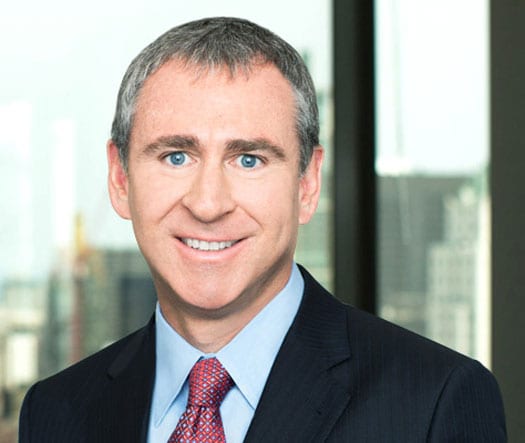
Paul Elledge [CC BY-SA 3.0], via Wikimedia Commons

January 24, 2019; New York Times

Readers may recall the flap around Kenneth Griffin’s 2014 gift to Harvard University, where you have to go way out of your way to log in a “biggest ever” contribution. Harvard, of course, has the biggest endowment of any university in the country, so, as was observed by Matthew Yglesias, Slate’s business and economics correspondent and author of The Rent is Too Damn High, the gift stunk of over-the-top wealth ostentation. As Yglesias wrote:

Let’s say I was feeling inspired to give someone $1,500 tomorrow. Who should I give it to? That’s a difficult question to answer. Should I give it to Kenneth Griffin? Nope! That’s a really easy question to answer. You don’t give extra money to Kenneth Griffin because Kenneth Griffin is already really rich. And guess what: Harvard is already really rich.

Now, Griffin, the founder and chief executive of the global investment firm Citadel has captured himself a second “biggest-ever” title by laying out a record $238 million for a residential property—in this case, an as-yet-unbuilt penthouse in Manhattan. Where will he stay until the residence, which required the eviction of dozens of tenants from formerly rent-stabilized apartments, is finished? Maybe he can camp out in his $60 million home in Miami or trot across to his $122 million mansion in London. Does Griffin’s philanthropy make up for his flagrant hoarding of the world’s resources, even if it tends to focus on elite institutions in education or art?

Reporters Nikita Stewart and David Gelles call Griffin’s abandoned display provocatively tone-deaf in the face of public sentiment.

Sign up for our free newsletters

Subscribe to NPQ's newsletters to have our top stories delivered directly to your inbox.

By signing up, you agree to our privacy policy and terms of use, and to receive messages from NPQ and our partners.

“The plutocrats continue brazenly flaunting the excesses that have enraged much of humanity,” said Anand Giridharadas, author of Winners Take All, and a critic of wealthy philanthropists. “They’re displaying very little awareness of the moment that we are in.”

On Thursday, economic advisers to Senator Elizabeth Warren, who is running for president, said that she would propose introducing a new “wealth tax” on the richest Americans.

Mayor Bill de Blasio has long pushed for a tax on millionaires earning more than a certain amount of money, but legislators in Albany have not supported that plan. On Thursday, he called for an expansion of the mansion tax. Currently, buyers of homes that sell for $1 million or more are required to pay a 1 percent tax. The tax, the mayor said, needs to be adjusted to “explicitly” target “high-value purchases” to generate extra revenue that could be used to create affordable housing.

The article also features a small argument among observers about whether Griffin is a celebrated philanthropist to be eagerly courted or simply reprehensibly greedy. It’s a half-hearted choice at best, since most of us have long since understood that the two designations are often found together.

Meanwhile, the wealth gap is beginning to annoy ever-increasing numbers of people. In that fertile ground, proposals for taxes on the unreasonably rich are proliferating, starting with Rep. Alexandria Ocasio-Cortez and her recent proposal for a 70 percent graduated tax rate for incomes over $10 million.—Ruth McCambridge


Our Voices Are Our Power.

Journalism, nonprofits, and multiracial democracy are under attack. At NPQ, we fight back by sharing stories and essential insights from nonprofit leaders and workers—and we pay every contributor.

Can you help us protect nonprofit voices?

Your support keeps truth alive when it matters most.
Every single dollar makes a difference.

Donate now
logo logo logo logo logo
About the author
Ruth McCambridge

Ruth is Editor Emerita of the Nonprofit Quarterly. Her background includes forty-five years of experience in nonprofits, primarily in organizations that mix grassroots community work with policy change. Beginning in the mid-1980s, Ruth spent a decade at the Boston Foundation, developing and implementing capacity building programs and advocating for grantmaking attention to constituent involvement.

More about: Corporations and InequalityNonprofit NewsPhilanthropy
See comments

You might also like
Palestine at the Center: Donor Organizing as Movement Work
Deborah Sagner
Holding the Line Together: Civil Society and the First Year of the Trump Administration
Genevieve Nadeau and Ellinor Heywood
S.O.S.—Nonprofits Need Funding for “Staff Operating Support”
Rusty Stahl
For Movements to Win, Organize People and Money
Farhad Ebrahimi
Blue-State Pensions Are Subsidizing the Billionaire Takeover: This Must Stop!
Sara Myklebust and Aditi Sen
For Every $100 Foundations Give, Only 19 Cents Go to Volunteer Support
Jan Masaoka

Upcoming Webinars

Group Created with Sketch.
January 29th, 2:00 pm ET

Participatory Decision-making

When & How to Apply Inclusive Decision-making Methods

Register
Group Created with Sketch.
February 26th, 2:00 pm ET

Understanding Reduction in Force (RIF) Law

Clear Guidance for Values-centered Nonprofits

Register

    
You might also like
A painted panel of the the Palestine/Israel separation wall., reading “Until justice rolls like water and righteousness like a mighty stream”
Palestine at the Center: Donor Organizing as Movement Work
Deborah Sagner
People walking in protest together down a street during daytime.
Holding the Line Together: Civil Society and the First Year...
Genevieve Nadeau and Ellinor Heywood
S.O.S.—Nonprofits Need Funding for “Staff Operating...
Rusty Stahl

Like what you see?

Subscribe to the NPQ newsletter to have our top stories delivered directly to your inbox.

See our newsletters

By signing up, you agree to our privacy policy and terms of use, and to receive messages from NPQ and our partners.

  • About
  • Advertise
  • Careers
  • Contact
  • Copyright
  • Donate
  • Editorial Policy
  • Funders
  • Submissions

We are using cookies to give you the best experience on our website.


Nonprofit Quarterly | Civic News. Empowering Nonprofits. Advancing Justice.
Powered by  GDPR Cookie Compliance
Privacy Overview

This website uses cookies so that we can provide you with the best user experience possible. Cookie information is stored in your browser and performs functions such as recognising you when you return to our website and helping our team to understand which sections of the website you find most interesting and useful.

Strictly Necessary Cookies

Strictly Necessary Cookie should be enabled at all times so that we can save your preferences for cookie settings.