logo logo
giving banner
Donate
    • Membership
    • Donate
  • Social Justice
    • Racial Justice
    • Climate Justice
    • Disability Justice
    • Economic Justice
    • Food Justice
    • Health Justice
    • Immigration
    • LGBTQ+
  • Civic News
  • Nonprofit Leadership
    • Board Governance
    • Equity-Centered Management
    • Finances
    • Fundraising
    • Human Resources
    • Organizational Culture
    • Philanthropy
    • Power Dynamics
    • Strategic Planning
    • Technology
  • Columns
    • Ask Rhea!
    • Ask a Nonprofit Expert
    • Economy Remix
    • Gathering in Support of Democracy
    • Humans of Nonprofits
    • The Impact Algorithm
    • Living the Question
    • Nonprofit Hiring Trends & Tactics
    • Notes from the Frontlines
    • Parables of Earth
    • Re-imagining Philanthropy
    • State of the Movements
    • We Stood Up
    • The Unexpected Value of Volunteers
  • CONTENT TYPES
  • Leading Edge Membership
  • Newsletters
  • Webinars

Pope Cites 15 Leadership Failures We Should All Reflect Upon

Michael Wyland
December 24, 2014


Pope

December 22, 2014;Washington Post

Pope Francis met with the leaders of the Curia, the Vatican bureaucracy, for an annual pre-Christmas event. Instead of the usual pre-holiday goodwill and fellowship, Francis took the opportunity to criticize the cardinals and bishops for weaknesses and shortcomings which can affect “any administrative organization, community, congregation, parish, ecclesial movement, etc., and can strike at both the individual and the corporate level.”

The list of 15 “ailments of the Curia” may be familiar to nonprofit staffs and volunteer leaders looking at their own organizations. Francis sees some leaders as seeing themselves as immortal and indispensible and working without coordination (what some would call “working in silos”). Several of the ailments are related to a loss of sense of mission: becoming “spiritually and mentally hardened,” having “spiritual Alzheimer’s,” “existential schizophrenia,” and seeking worldly profit and recognition.

Here are some of the 15 ailments as he describes them. Each is worth considering when reflecting on our own practice:

#6. Having “spiritual Alzheimer’s.” “We see it in the people who have forgotten their encounter with the Lord…in those who depend completely on their here and now, on their passions, whims and manias, in those who build walls around themselves and become enslaved to the idols that they have built with their own hands.”

Sign up for our free newsletters

Subscribe to NPQ's newsletters to have our top stories delivered directly to your inbox.

By signing up, you agree to our privacy policy and terms of use, and to receive messages from NPQ and our partners.

#8. Suffering from “existential schizophrenia.” “It’s the sickness of those who live a double life, fruit of hypocrisy that is typical of mediocre and progressive spiritual emptiness that academic degrees cannot fill. It’s a sickness that often affects those who, abandoning pastoral service, limit themselves to bureaucratic work, losing contact with reality and concrete people.”

#9. Committing the “terrorism of gossip.” “It’s the sickness of cowardly people who, not having the courage to speak directly, talk behind people’s backs.”

#12. Having a “funereal face.” “In reality, theatrical severity and sterile pessimism are often symptoms of fear and insecurity. The apostle must be polite, serene, enthusiastic and happy and transmit joy wherever he goes.”

#14. Forming “closed circles” that seek to be stronger than the whole. “This sickness always starts with good intentions but as time goes by, it enslaves its members by becoming a cancer that threatens the harmony of the body and causes so much bad—scandals—especially to our younger brothers.”

Given the centuries-old fame of the Curia for intrigue, one of the most interesting criticisms in the list is “the terrorism of gossip.” Francis is direct in referring to engaging in gossip as the cowardice of people afraid to speak with each other directly.

It’s no secret that the Pope has had problems with the Vatican bureaucracy, and that the Curia has been in need of reform for some time. (An investigative report on the Curia awaited Francis when he became Pope because his predecessor, Pope Benedict XVI, felt the report’s recommendations would take a long time to implement.) Francis presented his list in the hope that the Vatican leaders would reflect upon it over the Christmas holiday. How many other nonprofit organizations would benefit from a forthright discussion of similar concerns related to their leaders’ dedication to mission and the temptation to allow personal weaknesses to get in the way of the organization and its service to the community?—Michael Wyland


Our Voices Are Our Power.

Journalism, nonprofits, and multiracial democracy are under attack. At NPQ, we fight back by sharing stories and essential insights from nonprofit leaders and workers—and we pay every contributor.

Can you help us protect nonprofit voices?

Your support keeps truth alive when it matters most.
Every single dollar makes a difference.

Donate now
logo logo logo logo logo
About the author
Michael Wyland

Michael L. Wyland currently serves as an editorial advisory board member and consulting editor to The Nonprofit Quarterly, with more than 400 articles published since 2012. A partner in the consulting firm of Sumption & Wyland, he has more than thirty years of experience in corporate and government public policy, management, and administration.

More about: Equity-Centered ManagementLeadershipNonprofit NewsPolicyReligious / Faith-Based
See comments

Call to action
You might also like
Social Enterprise: Lessons from Down Under
Vicki Pozzebon
If Farm School NYC Closes, What Will the City Lose?
Farm School NYC and Iris M. Crawford
GivingTuesday: Mobilizing Grassroots Donors
Isaiah Thompson
Indigenous Leaders, Grassroots Groups Fight for Real Change at COP30
Alison Stine
Reconciling Future-Back and Present-Forward in Strategy
Nick Takamine
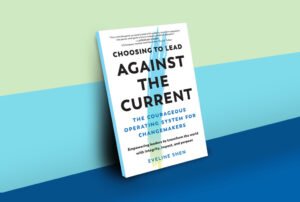
Leading “Against the Current”: A Conversation with Eveline Shen
Isaiah Thompson and Eveline Shen

Upcoming Webinars

Group Created with Sketch.
January 29th, 2:00 pm ET

Participatory Decision-making

When & How to Apply Inclusive Decision-making Methods

Register
Group Created with Sketch.
February 26th, 2:00 pm ET

Understanding Reduction in Force (RIF) Law

Clear Guidance for Values-centered Nonprofits

Register

    
You might also like
A protest sign reading, “No Business on a dead planet”, emphasizing how the wellbeing of our planet is more important than profit.
Social Enterprise: Lessons from Down Under
Vicki Pozzebon
Participants growing garlic at the Farm School NYC. 2025.
If Farm School NYC Closes, What Will the City Lose?
Farm School NYC and Iris M. Crawford
A red heart, formed by a group of people with painted hand palms, symbolizing solidarity in giving among the many.
GivingTuesday: Mobilizing Grassroots Donors
Isaiah Thompson

Like what you see?

Subscribe to the NPQ newsletter to have our top stories delivered directly to your inbox.

See our newsletters

By signing up, you agree to our privacy policy and terms of use, and to receive messages from NPQ and our partners.

  • About
  • Advertise
  • Careers
  • Contact
  • Copyright
  • Donate
  • Editorial Policy
  • Funders
  • Submissions

We are using cookies to give you the best experience on our website.


Nonprofit Quarterly | Civic News. Empowering Nonprofits. Advancing Justice.
Powered by  GDPR Cookie Compliance
Privacy Overview

This website uses cookies so that we can provide you with the best user experience possible. Cookie information is stored in your browser and performs functions such as recognising you when you return to our website and helping our team to understand which sections of the website you find most interesting and useful.

Strictly Necessary Cookies

Strictly Necessary Cookie should be enabled at all times so that we can save your preferences for cookie settings.