logo logo
Fund the truth. #Wethecivic giving banner
Donate
    • Membership
    • Donate
  • Social Justice
    • Racial Justice
    • Climate Justice
    • Disability Justice
    • Economic Justice
    • Food Justice
    • Health Justice
    • Immigration
    • LGBTQ+
  • Civic News
  • Nonprofit Leadership
    • Board Governance
    • Equity-Centered Management
    • Finances
    • Fundraising
    • Human Resources
    • Organizational Culture
    • Philanthropy
    • Power Dynamics
    • Strategic Planning
    • Technology
  • Columns
    • Ask Rhea!
    • Ask a Nonprofit Expert
    • Gathering in Support of Democracy
    • Humans of Nonprofits
    • The Impact Algorithm
    • Living the Question
    • Nonprofit Hiring Trends & Tactics
    • Notes from the Frontlines
    • Parables of Earth
    • Reimagining Philanthropy
    • State of the Movements
    • We Stood Up
    • The Unexpected Value of Volunteers
  • Newsletters
  • NPQ Online Events
    • Premium Webinars
    • Learn Out Loud
    • Partner Events
    • On Demand
  • Leading Edge Membership

African Artist Networks and Artistic Sovreignty

Jennifer Amanda Jones
June 19, 2013

Art

June 12, 2013; New York Times

In a quest for artistic sovereignty, there is a growing movement in Africa toward regional artist networks. This is a marked shift away from the antiquated perception of Europe and the United States as the primary sources of artistic inspiration and philanthropic dollars. Fueled by Western financial crises and Africa’s emerging civil society, these efforts focus on African-based exchanges, trainings, and collaboration.

African Digital Art (ADA) is one such organization. Founded by Kenyan artist Jepchumba, ADA boasts more than 700 members from almost 40 countries. Artists collaborate and support one another online and in person through a myriad of subgroups, such as African Animators, Photoshop Addicts, Afro-Exotic Invitations, and African Filmmakers.

The ARTerial Network, another organization that connects artists throughout the continent, argues on its website that in Africa, art is “distinctive and a part of daily life.” ARTerial Network’s activities combat what they perceive as “a lack of lobby activities to give culture a more prominent place on national political agendas.”

This is a natural progression. Civil society in Africa, significantly more so than in the West, has long been associated with political revolution. The primary fight was often that of survival—both literally, as millions of people starved, and figuratively, as political and social agendas were commandeered. Today, as the economic and political landscapes of Africa stabilize somewhat, the voices of artists are better able to project through organizations like ADA and the ARTerial Network.

Sign up for our free newsletters

Subscribe to NPQ's newsletters to have our top stories delivered directly to your inbox.

By signing up, you agree to our privacy policy and terms of use, and to receive messages from NPQ and our partners.

{loadmodule mod_banners,Date Today}

Arts and cultural funding for Africa is also shifting. Instead of providing traditional sorts of financial support vis-à-vis commissions to individual artists, such organizations as the Triangle Network and Art Moves Africa now support professional development related travel (within the African continent) and the use of grant dollars to incubate the development of local organizations and networks. This shift can be seen as an attempt to create artist-friendly environments and to develop international collaborations that do not require a European or American visa. It can also be seen as a hopeful reemergence of a democratic, grass-roots discourse in the nonprofit sector.

For more than thirty years, nonprofit organizations in the United States and abroad have struggled to nurture what Angela Eikenberry has described as “democratic discourse” in the face of rising market-oriented philanthropic dollars. Trans-local artist networks like the ones emerging in Africa are, perhaps, the epitome of civil society’s democratic core.

Margaret Wheatley’s Berkana Institute coined the term “trans-local learning” to describe a process wherein members of community travel to share their successes and lessons learned with other communities. Ideas and innovation are shared, with an emphasis on the learning process while allowing for culturally and geographically specific adaptions. Juxtaposed with traditional scale-up business models, trans-local learning promotes locally generated solutions influenced gently by successful neighbors.

The Center for Contemporary Art in Lagos, founded in 2007, is a key player in the African artists’ movement and a prime example of trans-local learning. Its International Arts Program serves as a “roaming campus” to unite artists and curators from across Africa. Each session, which includes a series of workshops and seminars, is held in a different country and encourages artists to focus on local influences, be they economic, cultural, or social. C.C.A has also published books highlighting artists from Nigeria and Western Africa. The C.C.A. Lagos Facebook page boasts a meager 750+ fans; however, their impact on the ground is impressive.

Though it is hard to say what effect the movement might have overall, it has the potential to inspire and shape the greater civic society, both in Africa and beyond.—Jennifer Amanda Jones


Our Voices Are Our Power.

Journalism, nonprofits, and multiracial democracy are under attack. At NPQ, we fight back by sharing stories and essential insights from nonprofit leaders and workers—and we pay every contributor.

Can you help us protect nonprofit voices?

Your support keeps truth alive when it matters most.
Every single dollar makes a difference.

Donate now
logo logo logo logo logo
About the author
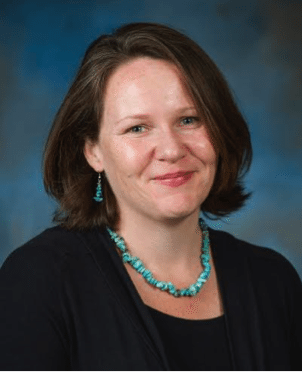
Jennifer Amanda Jones

Jennifer Amanda Jones, Ph.D. is the Assistant Professor of Nonprofit Management and Leadership at the University of Florida. Her research interests include nonprofit management, philanthropic giving, and social enterprise initiatives. She is a member of Nu Lambda Mu, the international honor society for nonprofit scholars. Prior to her academic career, Dr. Jones was involved in research projects benchmarking the nonprofit sector in San Diego and in the State of California. Additionally, Dr. Jones has spent more than 15 years working with nonprofit organizations of various types and sizes. She also served on the board of directors for a community foundation.

More about: Global IssuesNonprofit NewsPolicy
See comments

Sidebar-WTC
You might also like
Custodians
Yahia Lababidi
The New Counterterrorism State
Darakshan Raja
As Surveillance of Immigrant Communities Expands, How Can Nonprofits Respond?
María Constanza Costa
Founder Outsider: Running a Women-led Nonprofit in Mizoram
Rebek Lalruatdiki Khiangte
Trump’s Threat to Afterschool Funding—and What’s Emerging to Meet It
Lauren Girardin
How to Undermine Authoritarian Control: On Empowering Parallel Institutions
Gretchen Goldman and Saul Levin

Upcoming Webinars

Group Created with Sketch.
June 25, 2:00 pm ET

Reframing Organizational Risk

Register
Group Created with Sketch.
July 16, 2:00 pm ET

Readying for the 2026 Midterms

How 501(c)(3)s Can Educate and Advocate During this Election Season

Register

    
You might also like
A view of The Tomb of David in 1903, taken on film.
Custodians
Yahia Lababidi
An photograph of an active car bombing scene with army tanks and civilian vehicles nearby.
The New Counterterrorism State
Darakshan Raja
A group of surveillance cameras are mounted in different directions on a single pole against a clear blue sky.
As Surveillance of Immigrant Communities Expands, How Can...
María Constanza Costa

Like what you see?

Subscribe to the NPQ newsletter to have our top stories delivered directly to your inbox.

See our newsletters

By signing up, you agree to our privacy policy and terms of use, and to receive messages from NPQ and our partners.

  • About
  • Advertise
  • Careers
  • Contact
  • Copyright
  • Donate
  • Editorial Policy
  • Funders
  • Media Relations
  • Privacy Policy
  • Submissions

We are using cookies to give you the best experience on our website.


Nonprofit Quarterly | Civic News. Empowering Nonprofits. Advancing Justice.
Powered by  GDPR Cookie Compliance
Privacy Overview

This website uses cookies so that we can provide you with the best user experience possible. Cookie information is stored in your browser and performs functions such as recognising you when you return to our website and helping our team to understand which sections of the website you find most interesting and useful.

Strictly Necessary Cookies

Strictly Necessary Cookie should be enabled at all times so that we can save your preferences for cookie settings.