
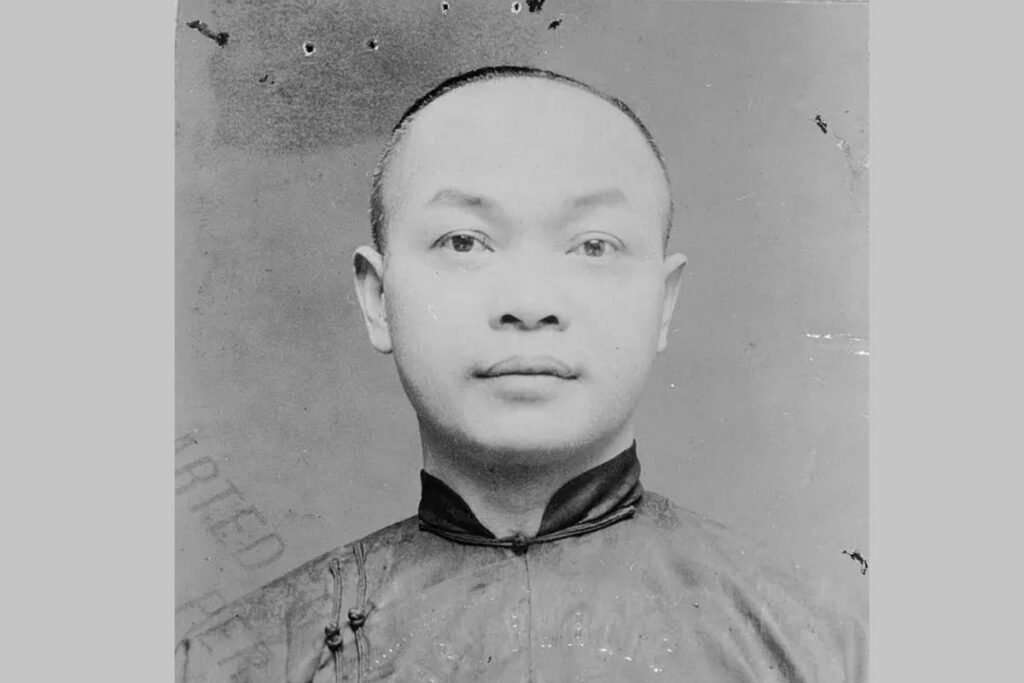
Wong Kim Ark, a Chinese-American born in San Francisco in 1873, was after a trip abroad on the grounds that he was not an American citizen. His case found its way to the Supreme Court, where the 1898 ruling affirmed that under the Citizenship Clause the 14th Amendment guaranteed citizenship to all people born on US soil.
What many people forget is the organizational infrastructure behind Ark’s case—the network of community leaders in San Francisco who spent their days doing work that rarely appears in constitutional history books. The Chinese Consolidated Benevolent Association (CCBA), also known as the Chinese Six Companies Association, helped win birthright citizenship simply by transforming a single person’s legal challenge into a collective defense of belonging in the country.
A Community Under Exclusion
The Chinese Consolidated Benevolent Association (CCBA), also known as the Chinese Six Companies, helped win birthright citizenship simply by transforming a single person’s legal challenge into a collective defense of belonging in the country.
Ark’s detainment happened during a time of strong anti-Chinese sentiment, under the Chinese Exclusion Act. Approved on May 2, 1882, 14 years before Ark’s detention, this was one of the first significant laws that restricted immigration into the country. The act, signed by President Chester A. Arthur, banned Chinese laborers from immigrating to the United States for 10 years. The act was supposed to prevent the endangerment of the “good order of certain localities.” To enter the country, non-laborers were required to obtain certification from the Chinese government confirming their eligibility to immigrate.
The law also imposed new requirements for Chinese persons who were already in the country. Individuals were only allowed to re-enter the country if they obtained specific certifications from China. Adding to this, courts refused to grant citizenship to Chinese residents, yet the courts could still deport them. Ark was one of many affected by this law, except his circumstances were different being born in the United States.
By 1880, more than 100,000 Chinese lived in United States as a result of the earlier California Gold Rush in the 1840s. But hostility toward Chinese people from the government through discriminatory immigration laws and from locals made life difficult. To help the Chinese community, the CCBA was officially established in 1882 and consisted of six major clans and district groups from Guangdong province, a coastal area in Southern China, and stood as communal support network that evolved to advocate for the rights of the Chinese community.
The CCBA is an example of how, when people are largely excluded from formal political power, they can use the power of the community to create external mechanisms to meet their needs.
The 14th Amendment states, “All persons born or naturalized in the United States, and subject to the jurisdiction thereof, are citizens of the United States and of the State wherein they reside.”
Wong Kim Ark’s Detention Becomes a Community Fight
Ark was 21 years old at the time of his detainment. When barred from re-entry in 1895, he was arrested and confined to the ship on which he traveled. According to NBC News, customs collector John H. Wise refused to recognize Ark’s status as an American despite being born in San Francisco to parents who had permanent domicile and residence in the country.
The CCBA stepped in to file a writ of habeas corpus, which argued that Ark had been unlawfully detained as a “native-born citizen under the Fourteenth Amendment.” The 14th Amendment states, “All persons born or naturalized in the United States, and subject to the jurisdiction thereof, are citizens of the United States and of the State wherein they reside.” In Ark’s case, the clause “subject to the jurisdiction” was the focal point of the argument. In a 6-to-2 decision, the Supreme Court ruled that Ark was an American citizen, as his parents were “not employed in any diplomatic or official capacity under the Emperor of China.”
Sign up for our free newsletters
Subscribe to NPQ's newsletters to have our top stories delivered directly to your inbox.
By signing up, you agree to our privacy policy and terms of use, and to receive messages from NPQ and our partners.
But it was with the CCBA’s support that Ark’s case was pushed to the Supreme Court, a time when no similar cases had gone before.
Mel Lee, a longtime leader of the association, shared that the “civil rights victories of Wong Kim Ark and others were made possible by lawyers brought in by CCBA.” Lee added, “We share in that history today.”
Without the CCBA, Ark’s case might have never reached the Supreme Court because there were no other institutions at the time to support it.
The Civic Infrastructure Behind a Constitutional Right
By the time of Ark’s legal victory, the organization had already spent years functioning as a civic institution for Chinese immigrants. Its services extended beyond the courtroom and into the everyday life of San Francisco’s Chinatown. It served as a platform for peaceful mediation of disputes, it represented community interests, and helped newcomers find housing.
Ark’s case reveals that while constitutional protections might be written into law, they only truly become meaningful when communities organize to defend them, and that birthright citizenship is not simply granted but rather organized into recognition by community institutions like the CCBA.
Later in 1905, the CCBA established a school in Chinatown to teach children Chinese culture and language. In many ways, the CCBA acted as a bridge between the Chinese immigrant community and the broader legal systems that they were largely excluded from.
Ark’s case is the perfect example of how civic infrastructure was created to meet and work for the needs of not one individual but the collective. The association raised funds and implemented a legal strategy that reached the country’s highest court. The CCBA is an example of how communities excluded from traditional power can create their own institutions to undo extreme injustices. While the Supreme Court might have been the one to establish the legal precedent, it was through the support of a community network that made that precedent possible.
The outcome was more than Ark. It was about the thousands of other Chinese immigrants and their American-born children belonging to the country. Ark’s case reveals that while constitutional protections might be written into law, they only truly become meaningful when communities organize to defend them, and that birthright citizenship is not simply granted but rather organized into recognition by community institutions like the CCBA.