logo logo
Donate
    • Membership
    • Donate
  • Social Justice
    • Racial Justice
    • Climate Justice
    • Disability Justice
    • Economic Justice
    • Food Justice
    • Health Justice
    • Immigration
    • LGBTQ+
  • Civic News
  • Nonprofit Leadership
    • Board Governance
    • Equity-Centered Management
    • Finances
    • Fundraising
    • Human Resources
    • Organizational Culture
    • Philanthropy
    • Power Dynamics
    • Strategic Planning
    • Technology
  • Columns
    • Ask Rhea!
    • Ask a Nonprofit Expert
    • Gathering in Support of Democracy
    • Hope in the Dark
    • Humans of Nonprofits
    • Inside the States
    • In Defense of Civil Society
    • The Myth of Heroic Leadership
    • Notes from the Frontlines
    • Notes from the Long Arc
    • Reimagining Philanthropy
    • The Unexpected Value of Volunteers
    • We Stood Up
  • Newsletters
  • NPQ Online Events
    • Learn Out Loud
    • Premium Webinars
    • Partner Events
    • On Demand
  • Leading Edge Membership

Nonprofit Newswire | Nonprofit Uses Social Media to Track Oil Spill Fallout

James David Morgan
May 5, 2010

May 4, 2010; Source: Justmeans | As clean-up efforts rush to alleviate the impact of BP’s oil spill in the Gulf of Mexico, a nonprofit called The Louisiana Bucket Brigade is using social media to track health, job, and water quality reports from people living in areas most directly affected. The group is gathering data from several sources, including e-mail, text messages, and mobile video, to present the eyewitness accounts in real time. Crowdsourcing, the term applied to work such as the Bucket Brigade’s, is an increasingly popular tactic employed by crisis responders to best target their resources. In fact, the Brigade has modeled its work after Ushahidi’s crisis mapping of the post-election violence in Kenya, and post-earthquake relief in Haiti.

Sign up for our free newsletters

Subscribe to NPQ's newsletters to have our top stories delivered directly to your inbox.

By signing up, you agree to our privacy policy and terms of use, and to receive messages from NPQ and our partners.

We’ve wondered aloud before about the benefits of these kinds of tools, and explored their potential as fundraisers, awareness raising tools, even extensions of government bureaucracy. In the disaster context, though, it’s worth stepping cautiously into the conversation. A strategy that wholly embraces crowdsourcing will find itself short on data when it lacks the necessary infrastructure, as is unfortunately likely in the case of a crisis. Still, we are no Luddites, and join in the chorus of praise for relief workers like the Bucket Brigade, who we trust will explore the benefits and pitfalls of progress.—James David Morgan


Our Voices Are Our Power.

Journalism, nonprofits, and multiracial democracy are under attack. At NPQ, we fight back by sharing stories and essential insights from nonprofit leaders and workers—and we pay every contributor.

Can you help us protect nonprofit voices?

Your support keeps truth alive when it matters most.
Every single dollar makes a difference.

Donate now
logo logo logo logo logo
See comments

Sidebar-WTC
You might also like
What Is a Climate Diet?
Anmol Irfan
For Many Black Women, the Target Boycott Is Not Over. It May Never Be.
Chabeli Carrazana
Facebook and Volunteerism: What Are Some Tricks of the Trade?
Jan Masaoka
#WeTheCivic: “America’s” Stories Can’t Be Told Without Us 
Sara Hudson
In Hortman Killing, an Opportunity for Right-Wing Disinformation
Isaiah Thompson
REI Co-op Members Back Workers, Reject Board-Imposed Candidate Slate
Bernadette King Fitzsimons

Upcoming Webinars

Group Created with Sketch.
October 14, 2:00 pm ET

Values-Based Cash & Investment Management

Guidance for Justice-Centered Leaders and Board Committees

Register
Group Created with Sketch.
October 29, 2:00 pm ET

Leading Edge

Fundraising Trends and Emerging Practices

Register

    
You might also like
A hand drawn illustration of protest signs against pollution in South Tucson, against a desert background.
When the News Disappears, So Does Environmental Justice
Peter Bruk, Mia Smotritsky, Maria Capellua, Tae Hong and Duaa Alzouby
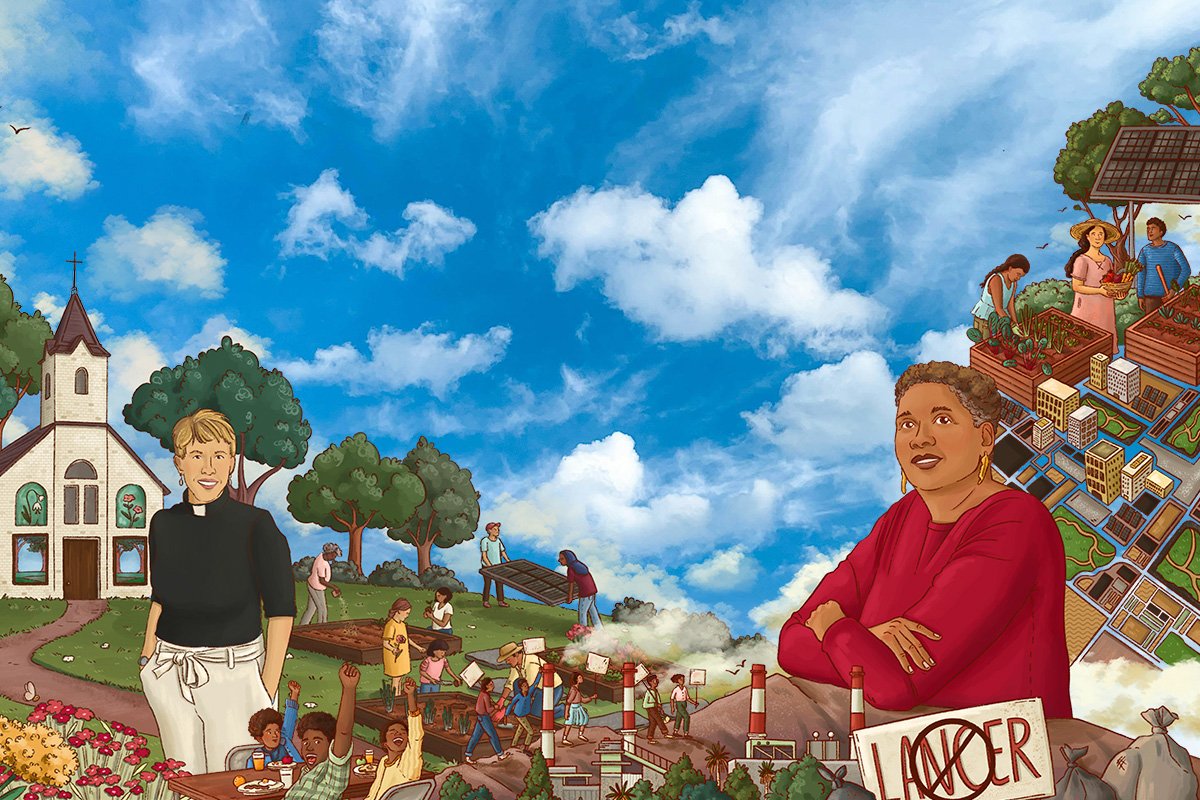
An illustration of two women: a blonde woman wearing a clerical shirt and standing in front of a church, while people tend to the gardens in front of the church. The other woman is a Black woman with cropped hair standing with her arms crossed. Around her are people tending to community gardens and seated at a table enjoying a meal.
Filling the Fiscal Gap: Why the Private Sector Must Anchor...
Haydn Smith, Aileen Ayala, Sophia Sung and Bella Pires
Hands water young seedlings in starter pots inside a weathered wooden raised bed at a community garden, a green trowel and watering can nearby.
What Is a Climate Diet?
Anmol Irfan

Like what you see?

Subscribe to the NPQ newsletter to have our top stories delivered directly to your inbox.

See our newsletters

By signing up, you agree to our privacy policy and terms of use, and to receive messages from NPQ and our partners.

  • About
  • Advertise
  • Careers
  • Contact
  • Copyright
  • Donate
  • Funders
  • Editorial Policy
  • Media Relations
  • Privacy Policy
  • Submissions

We are using cookies to give you the best experience on our website.


Nonprofit Quarterly | Civic News. Empowering Nonprofits. Advancing Justice.
Powered by  GDPR Cookie Compliance
Privacy Overview

This website uses cookies so that we can provide you with the best user experience possible. Cookie information is stored in your browser and performs functions such as recognising you when you return to our website and helping our team to understand which sections of the website you find most interesting and useful.

Strictly Necessary Cookies

Strictly Necessary Cookie should be enabled at all times so that we can save your preferences for cookie settings.