logo logo
Donate
    • Membership
    • Donate
  • Social Justice
    • Racial Justice
    • Climate Justice
    • Disability Justice
    • Economic Justice
    • Food Justice
    • Health Justice
    • Immigration
    • LGBTQ+
  • Civic News
  • Nonprofit Leadership
    • Board Governance
    • Equity-Centered Management
    • Finances
    • Fundraising
    • Human Resources
    • Organizational Culture
    • Philanthropy
    • Power Dynamics
    • Strategic Planning
    • Technology
  • Columns
    • Ask Rhea!
    • Ask a Nonprofit Expert
    • Gathering in Support of Democracy
    • Hope in the Dark
    • Humans of Nonprofits
    • Inside the States
    • In Defense of Civil Society
    • The Myth of Heroic Leadership
    • Notes from the Frontlines
    • Notes from the Long Arc
    • Reimagining Philanthropy
    • The Unexpected Value of Volunteers
    • We Stood Up
  • Newsletters
  • NPQ Online Events
    • Learn Out Loud
    • Premium Webinars
    • Partner Events
    • On Demand
  • Leading Edge Membership

No Neutral Platforms: The Giving and Blocking of Activist Money Flows

Cyndi Suarez
August 23, 2017
“Blood Money” by Damian Gadal

August 21, 2017; Fast Company and Fortune

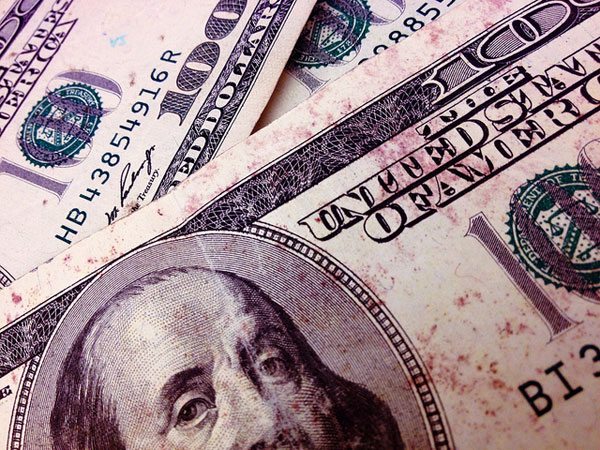
After the recent events in Charlottesville, last week, Color of Change, an online civil rights group, launched Blood Money, a website targeting major credit card companies that process funds for “white power hate groups.” This week, JPMorgan Chase announced a million-dollar donation to be split between the Southern Poverty Law Center (SPLC) and the Anti-Defamation League (ADL). The giving and the blocking of money has become a modern-day vehicle for activism, and it is now being leveraged in the U.S. fight for the public square.

Ben Painter, writing for Fast Company, called Silicon Valley’s argument for neutral platforms that absolve companies like Facebook and Twitter of responsibility for the opinions they allow to spread “an increasingly dubious stance.” Color of Change would agree. Executive Director Rashad Robinson noted that events like Charlottesville allow white power hate groups to spread their agenda, terrorize those who oppose it, and encourage donations, “often through the semi-anonymous process of online donations.” They also make money for the four major card companies—MasterCard, Visa, Discover, and American Express—and payment platforms like PayPal and ApplePay, which take about 1.4 to 3.5 percent per transaction. A recent Color of Change audit revealed that in 2014 and 2015, before Trump, “the top 20 widely recognized hate groups received over $20 million in contributions, sales, and grants.”

PayPal and ApplePay have already suspended services to white hate groups. By the end of last week, Discover, MasterCard, Visa, and American Express reported that they were taking similar action. Payment processors have already set a precedent for cutting off money flows to “nefarious organizations” like international terrorist organizations.

Robinson said,

Sign up for our free newsletters

Subscribe to NPQ's newsletters to have our top stories delivered directly to your inbox.

By signing up, you agree to our privacy policy and terms of use, and to receive messages from NPQ and our partners.

The major credit card companies that continue to allow this to happen are not bystanders, they are complicit. They are involved and they will be held responsible…Credit card companies have the power to cut off institutions that they view in violation of their terms, services, and values…the challenge has been for them to treat white terrorist organizations at terrorist organizations.

In addition to the million-dollar donation, JPMorgan CEO Jamie Dimon wrote, in a statement to employees, “There is no room for equivocation here: the evil on display by these perpetrators of hate should be condemned and has no place in a country that draws strength from our diversity and humanity.” JPMorgan will also contribute up to one million more through employee donation matches and $50,000 to the Charlottesville Area Community Foundation.

SPLC President Richard Cohen wrote, in a statement emailed to CNBC, “Now more than ever, America’s leading institutions must speak out against white supremacism. While we appreciate JPMorgan Chase’s contribution, we are even more grateful for its strong public position against hate and bigotry.”

But how much is enough? While a million is nothing to sneeze at, it’s a microscopic portion of JPMorgan Chase’s money. It is, after all, the biggest U.S. bank. While this is a good start, it’s certainly not reparations. What more should companies be doing in their move away from neutral platforms?—Cyndi Suarez


Our Voices Are Our Power.

Journalism, nonprofits, and multiracial democracy are under attack. At NPQ, we fight back by sharing stories and essential insights from nonprofit leaders and workers—and we pay every contributor.

Can you help us protect nonprofit voices?

Your support keeps truth alive when it matters most.
Every single dollar makes a difference.

Donate now
logo logo logo logo logo
About the author
Cyndi Suarez

Cyndi Suarez is the former president and editor-in-chief of NPQ (Nonprofit Quarterly). She is author of "The Power Manual: How to Master Complex Power Dynamics", in which she outlines a new theory and practice of liberatory power. Suarez has worked as a strategy and innovation consultant with a focus on networks and platforms for social movements. She has 20 years of experience in the nonprofit sector—in community-based, advocacy, organizing, consulting, infrastructure, and philanthropic organizations. She is passionate about elegant design and designing for power. Her studies were in feminist theory and organizational development for social change.

More about: FundraisingNonprofit NewsStakeholder Engagement
See comments

Sidebar-WTC
You might also like
Filling the Fiscal Gap: Why the Private Sector Must Anchor the Energy Transition
Haydn Smith, Aileen Ayala, Sophia Sung and Bella Pires
The Architecture of Environmental Justice Is in Danger—and on the Ballot
Bennett Hilberg, Katun Li, Anna Fields, Madison (Maddie) Andrea and Adaobi Iwuanyanwu
Stewardship Isn’t a Thank-You Note—It’s a System
Rhea Wong
Built From the Ground Up: Why Environmental Justice Belongs to Communities
The Environmental Justice Oral History Project
The Contradictory Work of the Nonprofit Sector: Serving at the Expense of Personal Wellbeing
Marian Urquilla
Who Gets Remembered as American? Vietnamese Refugees and the Fight for Public Memory Through Art (Commentary)
Ngoc-Tran Vu

Upcoming Webinars

Group Created with Sketch.
September 17, 2:00 pm ET

Collaborating with the Enemy

How to Work with People You Don't Agree with or Like or Trust

Register
Group Created with Sketch.
September 22, 2:00 pm ET

Modernizing Your Nonprofit Accounting System

Building Infrastructure That Supports Mission and Financial Sustainability

Register
Group Created with Sketch.
October 29, 2:00 pm ET

Fundraising Trends and Emerging Practices

Register

    
You might also like
An illustration of two women: a blonde woman wearing a clerical shirt and standing in front of a church, while people tend to the gardens in front of the church. The other woman is a Black woman with cropped hair standing with her arms crossed. Around her are people tending to community gardens and seated at a table enjoying a meal.
Filling the Fiscal Gap: Why the Private Sector Must Anchor...
Haydn Smith, Aileen Ayala, Sophia Sung and Bella Pires
An illustration of people planning and consulting over green fields, with solar panels and wind turbines surrounding a dirt-exposed hill.
The Architecture of Environmental Justice Is in Danger—and...
Bennett Hilberg, Katun Li, Anna Fields, Madison (Maddie) Andrea and Adaobi Iwuanyanwu
A neon lights sign that reads, “You Belong Here”
Stewardship Isn’t a Thank-You Note—It’s a System
Rhea Wong

Like what you see?

Subscribe to the NPQ newsletter to have our top stories delivered directly to your inbox.

See our newsletters

By signing up, you agree to our privacy policy and terms of use, and to receive messages from NPQ and our partners.

  • About
  • Advertise
  • Careers
  • Contact
  • Copyright
  • Donate
  • Funders
  • Editorial Policy
  • Media Relations
  • Privacy Policy
  • Submissions

We are using cookies to give you the best experience on our website.


Nonprofit Quarterly | Civic News. Empowering Nonprofits. Advancing Justice.
Powered by  GDPR Cookie Compliance
Privacy Overview

This website uses cookies so that we can provide you with the best user experience possible. Cookie information is stored in your browser and performs functions such as recognising you when you return to our website and helping our team to understand which sections of the website you find most interesting and useful.

Strictly Necessary Cookies

Strictly Necessary Cookie should be enabled at all times so that we can save your preferences for cookie settings.