logo logo
Donate
    • Membership
    • Donate
  • Social Justice
    • Racial Justice
    • Climate Justice
    • Disability Justice
    • Economic Justice
    • Food Justice
    • Health Justice
    • Immigration
    • LGBTQ+
  • Civic News
  • Nonprofit Leadership
    • Board Governance
    • Equity-Centered Management
    • Finances
    • Fundraising
    • Human Resources
    • Organizational Culture
    • Philanthropy
    • Power Dynamics
    • Strategic Planning
    • Technology
  • Columns
    • Ask Rhea!
    • Ask a Nonprofit Expert
    • Economy Remix
    • Gathering in Support of Democracy
    • Humans of Nonprofits
    • The Impact Algorithm
    • Living the Question
    • Nonprofit Hiring Trends & Tactics
    • Notes from the Frontlines
    • Parables of Earth
    • Re-imagining Philanthropy
    • State of the Movements
    • We Stood Up
    • The Unexpected Value of Volunteers
  • CONTENT TYPES
  • Leading Edge Membership
  • Newsletters
  • Webinars

Nonprofits Put the “Creative” into Creative Reuse

Eileen Cunniffe
February 11, 2014


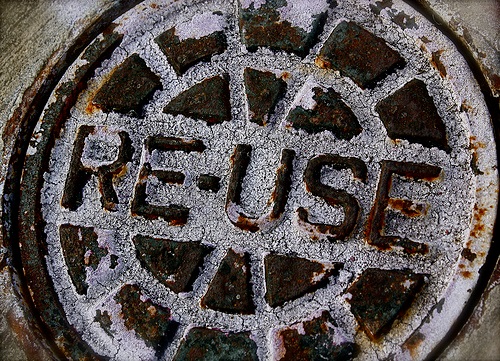
Reuse

February 3, 2014; Post and Courier

Sometimes, “win-win” sounds like just a bad cliché. Other times, it’s exactly right for describing a partnership or a fresh approach to solving a problem. In the case of Maia Moms, a newish nonprofit in Charleston, S.C., with a mission to support and educate local low-income single mothers, “win-win-win” might be more apt.

Maia Moms was founded in 2012 and recently launched a crowdfunding initiative aimed at generating seed money for what it calls a “Creative Flow Reuse Center” that would keep material out of landfills, engage local artists in working with these materials to create art, and offer workshops to the community, with the resulting creations sold in a consignment shop, some proceeds of which would support Maia Moms. Everyone wins, including the Charleston County recycling department, which has endorsed the effort.

Sign up for our free newsletters

Subscribe to NPQ's newsletters to have our top stories delivered directly to your inbox.

By signing up, you agree to our privacy policy and terms of use, and to receive messages from NPQ and our partners.

Maia Moms aims to raise $50,000 by April to get the project underway, and the organization is hopeful that some empty industrial site in North Charleston might eventually house the operation. Artists with the North Charleston Artist Guild have already pledged to volunteer at the center. In a news release, Maia Moms said, “We will be engaged in the business of collecting industrial and residential discards for creative reuse. The efforts of this Center will promote recycling, provide revenue for local artists and generate funds for the nonprofit.”

Interestingly, the crowdfunding effort is hosted on the website of the South Carolina Small Business Chamber of Commerce, which supports crowdfunding campaigns for small businesses and for nonprofits. The Columbia-based Chamber’s president and CEO, Frank Knapp, Jr., applauded the Maia Moms approach to building a sustainable business model.


Creative reuse—sometimes called “upcycling”—has been around for decades, but has been gaining traction across the U.S. in recent years, with artists and arts organizations often leading the charge. In Philadelphia, for example, the Resource Exchange was founded by a theater artist in 2009 to reduce the considerable quantity of built sets and furniture from local film, television, and stage productions that were ending up in landfills. The organization also recycles smaller items, many of which go back into the creative sector, although the center (currently in the process of moving to its third location in five years to accommodate its rapid growth) is also open to the public.

Lancaster Creative Reuse has compiled a directory of similar models, including more than 120 U.S. creative reuse organizations and more than a dozen in other countries. Many exist specifically to provide materials for use in schools, like Trash for Teaching in Los Angeles. Most in the U.S. appear to be independent nonprofit organizations, although some hybrids are in the mix, too: Materials for the Arts (MFTA) in Long Island is operated by the New York City Department of Cultural Affairs with additional support from the City’s Departments of Sanitation and of Education, in collaboration with Friends of MFTA, a “nonprofit strategic partner.” Sounds like a “win-win-win-win.”—Eileen Cunniffe


Our Voices Are Our Power.

Journalism, nonprofits, and multiracial democracy are under attack. At NPQ, we fight back by sharing stories and essential insights from nonprofit leaders and workers—and we pay every contributor.

Can you help us protect nonprofit voices?

Your support keeps truth alive when it matters most.
Every single dollar makes a difference.

Donate now
logo logo logo logo logo
About the author
Eileen Cunniffe

Eileen Cunniffe has worked in the nonprofit arts sector for more than a decade, managing board development, capacity-building consulting projects and skill-based volunteer programs. She also has deep experience in corporate public affairs, organizational communications and community relations work. In addition to writing for NPQ, Eileen also writes and publishes creative nonfiction.

More about: Climate JusticeCommunity OrganizingEntrepreneurshipEquity-Centered ManagementNonprofit NewsOrganizational CultureUpcycling and Reuse
See comments

You might also like
Of Tech Bros and Eco Collapse—Warnings from McGovern’s 99th Day
Anmol Irfan
How the NAACP Is Stopping Dirty Data
Abre’ Conner
Rotating the Clipboard Built Our Workplace Democracy
Shivank Pandey
How to Counsel for Climate Anxiety
Rebecca L. Root
Understanding AI’s Thirst for Water: An Explainer
Jay Shah
In an Era of Constant Change, Nonprofits Must Foster Learning Cultures
Jonathan Kaufman

Upcoming Webinars

Group Created with Sketch.
March 26, 2:00 pm ET

Learn Out Loud

How Every Philanthropy, Nonprofit, and Community Member Can Leverage Power in Our Fight Against ICE

Register
Group Created with Sketch.
April 23, 2:00 pm ET

Receiving & Giving Feedback

Essential Practices for Healthy Organizations and Communities

Register

    
You might also like
An illustration of a man’s hands peeling the earth as if it’s a fruit. The hands wear a men’s ring and gold watch.
Of Tech Bros and Eco Collapse—Warnings from McGovern’s...
Anmol Irfan
A composite of a Black man in a field of cut-out roses, but his eyes are covered so he cannot see the roses.
How the NAACP Is Stopping Dirty Data
Abre’ Conner
Yellow CLOSED sign hanging in a dusty shop window, conveying themes of business failure, recession, and economic downturn.
Nonprofits in Limbo as Flipcause Bankruptcy Unfolds
Lauren Girardin

Like what you see?

Subscribe to the NPQ newsletter to have our top stories delivered directly to your inbox.

See our newsletters

By signing up, you agree to our privacy policy and terms of use, and to receive messages from NPQ and our partners.

  • About
  • Advertise
  • Careers
  • Contact
  • Copyright
  • Donate
  • Editorial Policy
  • Funders
  • Submissions

We are using cookies to give you the best experience on our website.


Nonprofit Quarterly | Civic News. Empowering Nonprofits. Advancing Justice.
Powered by  GDPR Cookie Compliance
Privacy Overview

This website uses cookies so that we can provide you with the best user experience possible. Cookie information is stored in your browser and performs functions such as recognising you when you return to our website and helping our team to understand which sections of the website you find most interesting and useful.

Strictly Necessary Cookies

Strictly Necessary Cookie should be enabled at all times so that we can save your preferences for cookie settings.