logo logo
giving banner
Donate
    • Membership
    • Donate
  • Social Justice
    • Racial Justice
    • Climate Justice
    • Disability Justice
    • Economic Justice
    • Food Justice
    • Health Justice
    • Immigration
    • LGBTQ+
  • Civic News
  • Nonprofit Leadership
    • Board Governance
    • Equity-Centered Management
    • Finances
    • Fundraising
    • Human Resources
    • Organizational Culture
    • Philanthropy
    • Power Dynamics
    • Strategic Planning
    • Technology
  • Columns
    • Ask Rhea!
    • Ask a Nonprofit Expert
    • Economy Remix
    • Gathering in Support of Democracy
    • Humans of Nonprofits
    • The Impact Algorithm
    • Living the Question
    • Nonprofit Hiring Trends & Tactics
    • Notes from the Frontlines
    • Parables of Earth
    • Re-imagining Philanthropy
    • State of the Movements
    • We Stood Up
    • The Unexpected Value of Volunteers
  • CONTENT TYPES
  • Leading Edge Membership
  • Newsletters
  • Webinars

Black Lives Matter at Five: Activists Take Stock

Steve Dubb
July 16, 2018
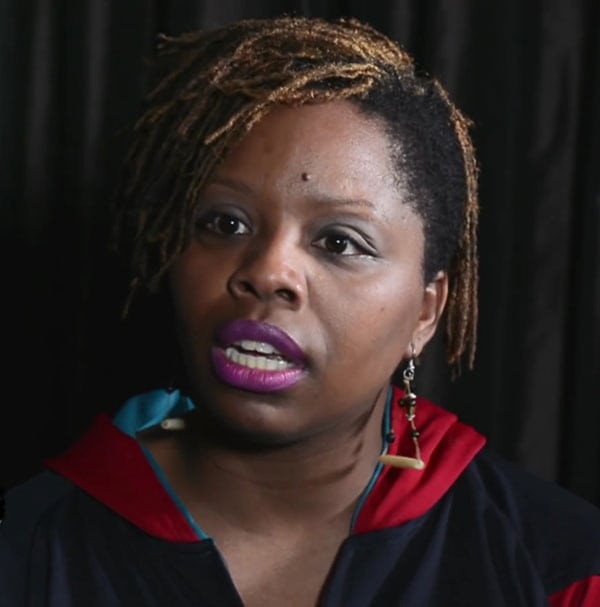
Patrisse Cullors. By The Laura Flanders Show [CC BY 3.0 ], via Wikimedia Commons

July 13, 2018; Mic, Huffington Post, and Newsweek

The acquittal of George Zimmerman in the fatal shooting of 17-year-old Trayvon Martin took place on July 13, 2013. Reaction to the acquittal led to the birth of what is now known as the Black Lives Matter movement. Chauncey Alcorn, writing in Mic, recalls the movement’s origins:

Criminal justice reform advocate Patrisse Cullors sat at the edge of her bed in a Susanville, California, motel room, staring at her Facebook timeline in shock. A jury in Sanford, Florida, had just found George Zimmerman not guilty of murder in the February 2012 shooting death of Trayvon Martin, a Black 17-year-old.

[…]

A despondent Alicia Garza—Cullors’ friend who served as special projects director at the advocacy group National Domestic Workers Alliance—posted a love letter to Black America on Facebook the same day.

“Black people, I love you,” Garza wrote. “We matter. Our lives matter.”

Cullors’ comment on Garza’s post birthed the hashtag that became a battle cry: #BlackLivesMatter. Fellow activist Opal Tometi saw both messages and helped Cullors and Garza create a communications infrastructure, Twitter and Tumblr pages that made the hashtag go viral, launching what eventually became a global protest movement.

As Cullors recalls in the Huffington Post, “We’d watched the media criminalize 17-year-old Trayvon and humiliate his family to justify his cold-blooded murder presumably because his assailant was white-presenting. Still, we were sucker-punched by the acquittal…it was clear; black people really didn’t matter and the realization was deeply painful. Then we realized something else: the acquittal could not be the end of this story.”

Sign up for our free newsletters

Subscribe to NPQ's newsletters to have our top stories delivered directly to your inbox.

By signing up, you agree to our privacy policy and terms of use, and to receive messages from NPQ and our partners.

Anniversaries are, of course, artificial markers. ACLU deputy legal director Jeff Robinson, who also serves as director of the Trone Center for Justice and Equality, notes that, “If you look at five years of work in the context of the entire struggle for racial justice in America, you’re talking about a minute that has gone by in a struggle that has literally been hundreds of years long,” Still, Robinson concedes, it has “been a very significant minute.”

Cullors and Robinson are hardly the only ones taking stock. “Five years…since the Zimmerman verdict, advocates and observers are still coming to grips with how that moment has shaped the course of American history,” writes Alcorn.

Alcorn notes that to date the movement has had major victories, but it has also faced a strong white backlash. Citing Robinson, Alcorn observes that, “For truly sustained social change to take hold in the US, America must reckon with its white supremacist roots and reinvent itself by truly changing hearts and minds on an individual and local level.”

So far, Robinson notes, while Black Lives Matter has forced the country to look itself in the mirror, “Instead of going to the gym, [white] America wants to tell the mirror it’s wrong.”

Alcorn, in his interviews, captures a range of responses. Cullors, citing not just Black Lives Matter but other movements that have emerged, such as the March to Save Lives and #MeToo, takes an optimistic view: “What our movement has been able to do in five years is galvanize a new generation to change the course of history.” Others are less upbeat. Latonya Goldsby, a cofounder of Black Lives Matter Cleveland and a cousin of 12-year-old Tamir Rice, who was shot to death by Cleveland police in 2014, remarks that the five-year anniversary is “kind of a somber moment considering the multiple of cases that have transpired since the Trayvon Martin case. We’re still hearing cases about police officers taking lives and there’s no accountability.”

Jasmen Rogers, a community organizer and Black Lives Matter activist in Broward County, Florida (near Miami), also observes that, “Five years of Black Lives Matter is bittersweet. On the one hand, it was a launch pad for a new wave of activism and organizing…on the other hand, it exploded another powder keg of racism and white supremacy.” Rogers adds that, “Our people are still hungry. Our government is still unhinged.” Still, Rogers also concedes that “five years later, there have been so many victories against state-sanctioned violence across the country.”

For his part, Hank Newsome, president of Black Lives Matter New York, contends that the backlash, while disturbing, might be part of the process of achieving progress. “No one ever said it wouldn’t get worse before it gets better,” Newsome remarks. What gives Newsome hope, he says, is that “people who are heart centered…are coming together to change this.”—Steve Dubb


Our Voices Are Our Power.

Journalism, nonprofits, and multiracial democracy are under attack. At NPQ, we fight back by sharing stories and essential insights from nonprofit leaders and workers—and we pay every contributor.

Can you help us protect nonprofit voices?

Your support keeps truth alive when it matters most.
Every single dollar makes a difference.

Donate now
logo logo logo logo logo
About the author
Steve Dubb

Steve Dubb is senior editor of economic justice at NPQ, where he writes articles (including NPQ’s Economy Remix column), moderates Remaking the Economy webinars, and works to cultivate voices from the field and help them reach a broader audience. In particular, he is always looking for stories that illustrate ways to build a more just economy—whether from the labor movement or from cooperatives and other forms of solidarity economy organizing—as well as articles that offer thoughtful and incisive critiques of capitalism. Prior to coming to NPQ in 2017, Steve worked with cooperatives and nonprofits for over two decades, including twelve years at The Democracy Collaborative and three years as executive director of NASCO (North American Students of Cooperation). In his work, Steve has authored, co-authored, and edited numerous reports; participated in and facilitated learning cohorts; designed community building strategies; and helped build the field of community wealth building. Most recently, Steve coedited (with Raymond Foxworth) Invisible No More: Voices from Native America (Island Press, 2023). Steve is also the lead author of Building Wealth: The Asset-Based Approach to Solving Social and Economic Problems (Aspen 2005) and coauthor (with Rita Hodges) of The Road Half Traveled: University Engagement at a Crossroads, published by MSU Press in 2012. In 2016, Steve curated and authored Conversations on Community Wealth Building, a collection of interviews of community builders that Steve had conducted over the previous decade.

More about: LiberationNonprofit NewsPolicyRacial Justice
See comments

Call to action
You might also like
On the Oracle Alice Wong, Disability, and Community
Alison Stine
The Deadly Combination of Pregnancy and Rural Living in the United States
Janelle Carlson
Gathering for Democracy: Dispatches from Chicago
Venu Gupta
Navigating Conflict in Movement Spaces
Dean Spade
An Artist Stands Up for Jornaleros
Nina R. Salerno
Blocking Authoritarianism: Steps Nonprofits and Foundations Must Take
Saqib Bhatti

Upcoming Webinars

Group Created with Sketch.
January 29th, 2:00 pm ET

Participatory Decision-making

When & How to Apply Inclusive Decision-making Methods

Register
Group Created with Sketch.
February 26th, 2:00 pm ET

Understanding Reduction in Force (RIF) Law

Clear Guidance for Values-centered Nonprofits

Register

    
You might also like
A sign that reads, “Community is Strength. Be Strong. Let’s look out for one another.”
On the Oracle Alice Wong, Disability, and Community
Alison Stine
A red circle overlayed on a yellow background with three multi-colored dots on each side. In the center it reads, " Isaiah Thompson: Staff Picks for 2025"
Staff Picks for 2025: Isaiah Thompson
Isaiah Thompson
A woman stands in a rural setting with her hands cradling a pregnant belly.
The Deadly Combination of Pregnancy and Rural Living in the...
Janelle Carlson

Like what you see?

Subscribe to the NPQ newsletter to have our top stories delivered directly to your inbox.

See our newsletters

By signing up, you agree to our privacy policy and terms of use, and to receive messages from NPQ and our partners.

  • About
  • Advertise
  • Careers
  • Contact
  • Copyright
  • Donate
  • Editorial Policy
  • Funders
  • Submissions

We are using cookies to give you the best experience on our website.


Nonprofit Quarterly | Civic News. Empowering Nonprofits. Advancing Justice.
Powered by  GDPR Cookie Compliance
Privacy Overview

This website uses cookies so that we can provide you with the best user experience possible. Cookie information is stored in your browser and performs functions such as recognising you when you return to our website and helping our team to understand which sections of the website you find most interesting and useful.

Strictly Necessary Cookies

Strictly Necessary Cookie should be enabled at all times so that we can save your preferences for cookie settings.