logo logo
giving banner
Donate
    • Membership
    • Donate
  • Social Justice
    • Racial Justice
    • Climate Justice
    • Disability Justice
    • Economic Justice
    • Food Justice
    • Health Justice
    • Immigration
    • LGBTQ+
  • Civic News
  • Nonprofit Leadership
    • Board Governance
    • Equity-Centered Management
    • Finances
    • Fundraising
    • Human Resources
    • Organizational Culture
    • Philanthropy
    • Power Dynamics
    • Strategic Planning
    • Technology
  • Columns
    • Ask Rhea!
    • Ask a Nonprofit Expert
    • Economy Remix
    • Gathering in Support of Democracy
    • Humans of Nonprofits
    • The Impact Algorithm
    • Living the Question
    • Nonprofit Hiring Trends & Tactics
    • Notes from the Frontlines
    • Parables of Earth
    • Re-imagining Philanthropy
    • State of the Movements
    • We Stood Up
    • The Unexpected Value of Volunteers
  • CONTENT TYPES
  • Leading Edge Membership
  • Newsletters
  • Webinars

The Sustainability Expectation for Nonprofits: This Time, at Stanford’s Press

Marian Conway
May 1, 2019
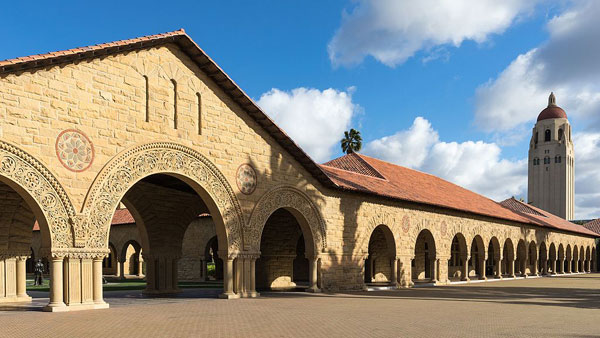
Frank Schulenburg [CC BY-SA 4.0], via Wikimedia Commons

April 26, 2019; Chronicle of Higher Education

What kind of an argument can an institution of higher learning put forward to justify cuts when they have a massive and growing endowment? If that school is Stanford, which, at $26.5 billion dollars, has the world’s third-largest endowment, how does it frame the need to cut the $1.7 million that subsidizes its university press?

Stanford, according to the Form 990 from 2017, brought in $237 million in revenue from its investments. And yet, Stanford is cutting the subsidy it provides to its scholarly publisher, Stanford University Press, which with its staff of 35 publishes work in anthropology, sociology, business, religion, and 10 other disciplines.

The elimination of the subsidy was announced at a Faculty Senate meeting and was greeted with the expected mix of indignation and confusion. “This is a reprehensible moment for one of the richest universities in the world and a diminution of intellectual inquiry. It really boggles the mind,” said Woody Powell, a Stanford sociology professor, a former member of the press’s editorial board, and a current adviser to it.

Persis Drell, the provost of Stanford, discussed the subsidy cut at a meeting of humanities and social-science chairs. The amount, which had been consistent the previous three years, might be better spent on graduate fellowships, Drell suggested. The department chairs observed that it would only cover three fellowships—not much bang for the buck. Repeating the position in a written statement, the provost “noted that it will be a very tight budget year, with an incremental payout of 2.1 percent on the endowment—which is below anticipated inflation.”

The statement went on to say, “The budget group made a very significant allocation to the press of approximately $1.7 million annually for three years in one-time funds, with the assurance from the press that this would be a bridge to a self-sustaining future.”

The director at the Stanford University Press, Alan Harvey, and an editorial-board member, law professor Richard Thompson Ford, stated that they, along with others involved in the press, would like to discuss other funding paths. The university has denied the press the ability to raise dollars as a separate entity from major donors for years. The statement mentioned that the press could utilize “modest philanthropy” to raise money but did not elaborate.

Sign up for our free newsletters

Subscribe to NPQ's newsletters to have our top stories delivered directly to your inbox.

By signing up, you agree to our privacy policy and terms of use, and to receive messages from NPQ and our partners.

Harvey reports that the press, which started the same time as the school, in 1892, brings in about $5 million in revenue with the sale of the 130-135 books it publishes annually, and older titles.

“I would put it among the very best university presses in America,” said the editorial director of the Johns Hopkins University Press, Gregory M. Britton. “It’s an incredible jewel. It’s every bit the equal of its institution” in the quality and scope of its offerings.

Some large university publishers have their own 501c3s to raise funds separately from the school, and some have significant endowments of their own. In 2016, Princeton University Press had net assets of $137 million. The presses at University of Virginia, Yale, and Harvard have endowments.

David Palumbo-Liu, a Stanford professor of comparative literature, says it is incongruent that a school that does not want to be all STEM—the “MIT of the West”—does not support its notable work in the humanities and social sciences. And, as Palumbo-Liu wrote in an email, the stakes in the Stanford-press standoff are higher than the relatively small dollar figures might convey:

If we follow the logic of the market and wish to use a financial metric, the academy is gone. Presses will publish only profitable books, graduate students will write only profitable dissertations, and tenure will be awarded based on scholarship that is profitable. Reforming a university press under the mandate that it be financially solvent and, by extension, awarding it value based on profit is a direct attack on academic freedom, free inquiry, free speech.

Support letters from the different Stanford departments are already circulating for signatures of those who disagree with the cuts or how the committee arrived at the decision. Perhaps it is time for Stanford University Press to become its own nonprofit.—Marian Conway


Our Voices Are Our Power.

Journalism, nonprofits, and multiracial democracy are under attack. At NPQ, we fight back by sharing stories and essential insights from nonprofit leaders and workers—and we pay every contributor.

Can you help us protect nonprofit voices?

Your support keeps truth alive when it matters most.
Every single dollar makes a difference.

Donate now
logo logo logo logo logo
About the author
Marian Conway

Marian Conway, the executive director of the NY Community Bank Foundation, has a Masters in Interdisciplinary Studies, Writing and a Ph.D. in Public Policy, Nonprofit Management. She has discovered that her job and education have made her a popular person with nonprofits and a prime candidate for their boards. Marian keeps things in perspective, not allowing all that to go to her head, but it is difficult to say no to a challenge, especially participating in change, in remaking a board. She is currently on eleven boards of various sizes and has learned to say no.

More about: Board GovernanceFinancial SustainabilityHigher EducationNonprofit News
See comments

You might also like
The Struggle for Long-Term Care, Nonprofits, and What Economic Justice Requires
James A. Lomastro
Nonprofit Budgeting in a Maelstrom
Isaiah Thompson
How to Build Student Movements That Last
Akin Olla
New Student Loan Forgiveness Rule Threatens Nonprofits, Sparks Two Lawsuits
Marian Conway
When I Was Dissed as an Adjunct Faculty Member, I Spoke Up
Darlene Garalde Intlekofer
How to Handle Founder’s Syndrome with Grace
Marian Urquilla

Upcoming Webinars

Group Created with Sketch.
January 29th, 2:00 pm ET

Participatory Decision-making

When & How to Apply Inclusive Decision-making Methods

Register
Group Created with Sketch.
February 26th, 2:00 pm ET

Understanding Reduction in Force (RIF) Law

Clear Guidance for Values-centered Nonprofits

Register

    
You might also like
A red circle overlayed on a yellow background with three multi-colored dots on each side. In the center it reads, " Isaiah Thompson: Staff Picks for 2025"
Staff Picks for 2025: Isaiah Thompson
Isaiah Thompson
Staff Picks for 2025: Steve Dubb
Steve Dubb
A red circle overlayed on a yellow background with three multi-colored dots on each side. In the center it reads, "Alison Stine: Staff Picks for 2025"
Staff Picks for 2025: Alison Stine
Alison Stine

Like what you see?

Subscribe to the NPQ newsletter to have our top stories delivered directly to your inbox.

See our newsletters

By signing up, you agree to our privacy policy and terms of use, and to receive messages from NPQ and our partners.

  • About
  • Advertise
  • Careers
  • Contact
  • Copyright
  • Donate
  • Editorial Policy
  • Funders
  • Submissions

We are using cookies to give you the best experience on our website.


Nonprofit Quarterly | Civic News. Empowering Nonprofits. Advancing Justice.
Powered by  GDPR Cookie Compliance
Privacy Overview

This website uses cookies so that we can provide you with the best user experience possible. Cookie information is stored in your browser and performs functions such as recognising you when you return to our website and helping our team to understand which sections of the website you find most interesting and useful.

Strictly Necessary Cookies

Strictly Necessary Cookie should be enabled at all times so that we can save your preferences for cookie settings.