
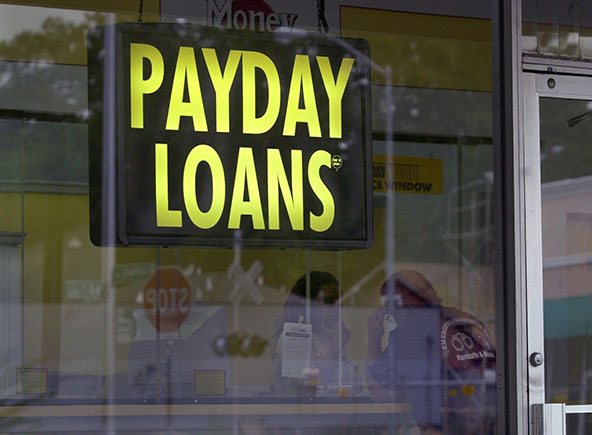
There is legalized robbery going in our communities, and foundations and nonprofits have an important role to play in the next two months to help stop it.
Payday lending, an industry that makes up for the financial sector’s large-scale neglect of poor people by offering them credit on abusive, ruinous terms, has been the target of economic justice advocates for years. The Consumer Financial Protection Bureau (CFPB) has finally proposed a new rule that will curb the payday lending industry’s ability to prey on low-income members of our communities. Comments on the proposed rule are due October 7, 2016, and they represent an opportunity for foundations that prioritize economic justice to weigh in on the side of their constituents.
I’ve reviewed some of the nearly 6,000 comments that have been submitted thus far, and it’s clear to me that the industry, not surprisingly, is orchestrating a massive effort to flood the CFPB with comments defending their predatory practices. An equally aggressive push by foundations and nonprofits is needed so that the final rule will be as strong as possible. With some concerted effort, our sector can help rein in the worst abuses of the predatory payday lending industry.
A few courageous foundations have been real leaders on this issue over the past few years:
Sign up for our free newsletters
Subscribe to NPQ's newsletters to have our top stories delivered directly to your inbox.
By signing up, you agree to our privacy policy and terms of use, and to receive messages from NPQ and our partners.
- The Silicon Valley Community Foundation leads a coalition of community foundations advocating for an end to predatory payday lending practices nationwide. As part of its grantmaking focus on economic security, the foundation’s lending reform grantees—recipients of about $3 million over several years—have secured passage of 12 local ordinances to limit the availability of payday lending in poor communities.
- The Northwest Area Foundation’s Financial Capability Policy program focuses on changing public policy and propagating better financial habits to encourage savings, increase access to financial services, expand financial education and regulate predatory lending. They have committed $3 million over three years to building community assets at the local, state and tribal levels to achieve these goals.
- The Annie E. Casey Foundation has been a key funder of several linchpin organizations in the payday lending reform space, including the Consumer Federation of America and the Appalachian Federal Credit Union. With about $2.5 million over more than a decade, the foundation has supported efforts to identify the impacts of predatory payday lending on low-income communities and study possible solutions.
- The Ford Foundation has been funding work around consumer lending and ending abusive financial practices since at least 2010, with much of the roughly $11.5 million they’ve devoted to consumer protection for low-income people going to the Center for Responsible Lending, National Consumer Law Center, and National People’s Action. The foundation’s grantmaking on this issue has focused on identifying win-win financial products that benefit both consumers and lenders.
More than 500 local, state and national organizations, staffed by Americans for Financial Reform, have banded together to form Stop the Debt Trap and coordinate their advocacy to end the abuses. The coalition and its member organizations need ongoing funding. A new rule would be a good first step, but the industry isn’t going to just roll over and give in. We need well-funded advocates to keep up the pressure so that the powerful interests behind lax payday lending policies don’t react to new regulation by developing innovative new ways to fleece poor people.
Here are three ways foundations can help:
- Submit comments to the CFPB on behalf of the foundation. The New York Times and others have argued that the proposed rule isn’t strong enough. I tend to agree. Comments should focus on the need for the CFPB to issue the strongest possible final rule.
- Ensure your grantees, when appropriate, are submitting comments and generating comments from their constituencies. If they need emergency funding to do the necessary outreach, find a way to get them money quickly.
- Invest in the ongoing work of grantees that are working to reform financial systems to ensure that our economy works for everyone, not just the rich. Fund long-term policy change and community organizing efforts that build power among affected communities, and do it with unrestricted general support.
Foundations have an important role to play in tipping the federal rule-making scales back in the direction of the communities they serve. The next two months offer a great opportunity to put a stop to economic abuse that has been sucking the life out of low-income community residents for far too long.