
April 30, 2019; ReWire
The inanity of our current political reality recalls the phenomena of absurdist theater. Theater critic Martin Esslin coined the phrase “theatre of the absurd,” in 1962 and defines it this way: “The hallmark of this attitude is its sense that the certitudes and unshakable basic assumptions of former ages have been swept away, that they have been tested and found wanting, that they have been discredited as cheap and somewhat childish illusions.”
Absurdist plays reject narrative continuity and the rigidity of logic, in an attempt to “communicate the impossible.” These plays often center on power dynamics and the difficulty of understanding beyond the dominant narrative. Waiting for Godot is the hallmark absurdist play. But you don’t have to go to the theater to see absurd drama nowadays, for it is all around us, like an inescapable fog. The recent “Bernie Sanders at She the People” fiasco is a case in point. But lest you think this is about calling out Sanders, pay attention to how these same dynamics play out in our sector.
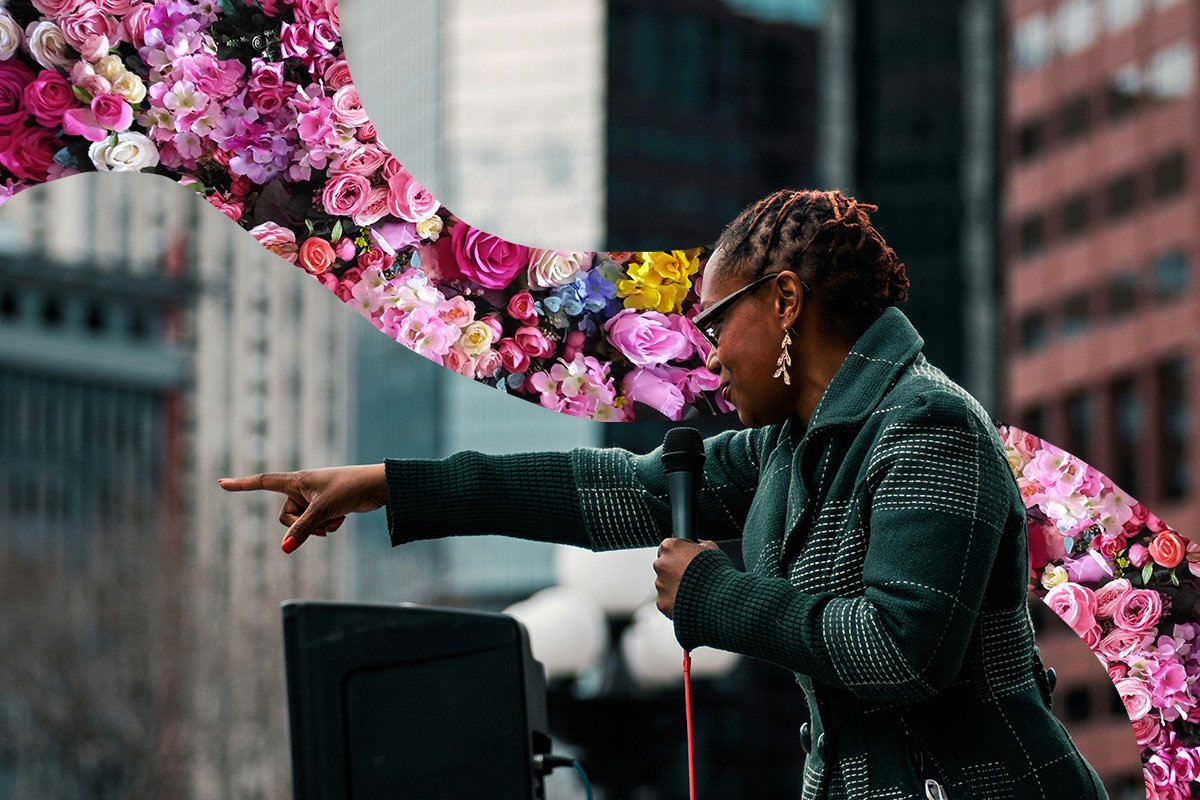
She the People is “a national network connecting women of color to transform our democracy.” Its goal is to build “an inclusive, multiracial coalition driving a new progressive political and cultural era.” But old-school progressives like Sanders aren’t helping. At the organization’s first presidential forum last month at Texas Southern University, Sanders was unable to move beyond his Civil Rights-era glory days and canned speeches to connect with the 1,700 women of color in attendance.
While Sanders entered the auditorium to thunderous applause, the mood quickly changed when he was unable to move beyond universalist language to issues that particularly matter to women of color. (Side note: While universal approaches may appear unassailable to some, they ignore uneven playing fields and often not only perpetuate, but exacerbate, inequality. A more justice-oriented alternative is designing for the margins, those most marginalized in a system. Solutions that work for them, end up working better for everybody.)
The two questions that stumped Sanders? How to engage Black women voters, and how to address white nationalism and terrorism. ReWire’s Anoa Changa observes:
Sanders gave a general response referring to Trump and demagoguery, but he went back to his standard lines about universal programs and comprehensive immigration reform, seemingly missing the purpose of the question. When [She the People founder Aimee] Allison followed up, explaining that the question was about white supremacist violence, Sanders referenced his attendance at the March on Washington in the 1960s and his support for Jesse Jackson during the 1988 presidential campaign. It was clear the audience did not appreciate his deflection, as some in the audience booed and others groaned.
Changa rightly notes: “He seems unable to move outside the comfort zone of his economic analysis when not giving his traditional stump speech.”
Sign up for our free newsletters
Subscribe to NPQ's newsletters to have our top stories delivered directly to your inbox.
By signing up, you agree to our privacy policy and terms of use, and to receive messages from NPQ and our partners.
The response appeared to cause confusion amongst some of the leaders who seemed ready to support Sanders and saw these two questions as ones that should be easy to answer. Wanda Mosley, Georgia state director of Black Voters Matter, says, “he could’ve hit a home run—just condemn the white nationalists and move on. But for whatever reason, he not only stumbled, he went in an entirely different direction.”
This alone is pretty bad for someone who has apparently been trying to understand black voters better. But it gets worse. He could have sought to understand, thanked the forum for the opportunity to sharpen his approach, and even asked them what they wanted, but no; his campaign instead turned on the women of color, accusing them of attack. (Sound familiar?)
Changa reports that at a rally the next day, “former state Sen. Nina Turner, co-chair of the Sanders campaign, mischaracterized what transpired at the forum and by doing so, blew a small moment out of proportion.” Turner, who is black, accused the She the People attendees of seeking to strip Sanders of his history. To add insult to injury, Turner made this statement before a predominately white audience.
But, as Changa, again, rightly points out, “past deeds are not an answer to the pressing matters facing our communities today—and Turner failed to address how Sanders didn’t answer a direct question about white nationalist terror and violence.”
Sadly, Kandice Webber, co-founder of Houston Rising, says she was “not surprised by the backlash. This is how America treats Black and non-Black [women of color].” And, as we can see, it sometimes enlists black women to do its bidding, inviting them to an identity feminist Mary Daly calls “token torturer.”
Changa widens the lens when she connects this absurdist drama to the world beyond the presidential election. She notes that this event,
underscores a real problem that we see across political spaces: Black people and women of color not being allowed to be their authentic selves…Framing this as 1,700 women of color not respecting Sanders’ experience is an example of Black women and women of color being forced to set aside our experiences and feelings for the sake of respectability and white fragility.
By now, I hope you are seeing how this drama plays out every day in our organizations.
White people, including progressives, must move beyond childish notions of superiority. She the People reflects a broader sentiment among women of color who are sick of the replication of hierarchies of worth in progressive movements. Webber perfectly captures the sentiment when she says, “We are not your mules. We are coming for equity.”—Cyndi Suarez