Tariffs, a diminished dollar, the defunding of PBS and NPR, massive federal job cuts, ongoing tech layoffs, and the so-called big beautiful bill have all conspired to redistribute wealth upward.
One need only look at the aptly named site WARNTracker to see what has been unleashed. The economic and cultural shocks keep on coming. Yet amid these dismal shifts, there is a bright spot—a new interest in what I call precariat power.
What’s that? It’s the appearance—or reappearance—of politicians and nonprofits who loudly support greater affordability in our cities as well as a greater media presence for the US working class, and even the beleaguered middle class. The precariat, as University of London researcher Guy Standing outlines, can be understood as a social class defined by unstable employment, income insecurity, and an erosion of rights. It is a group that is increasingly organizing on its own behalf.
The economic and cultural shocks keep on coming. Yet amid these dismal shifts, there is a bright spot—a new interest in what I call precariat power.
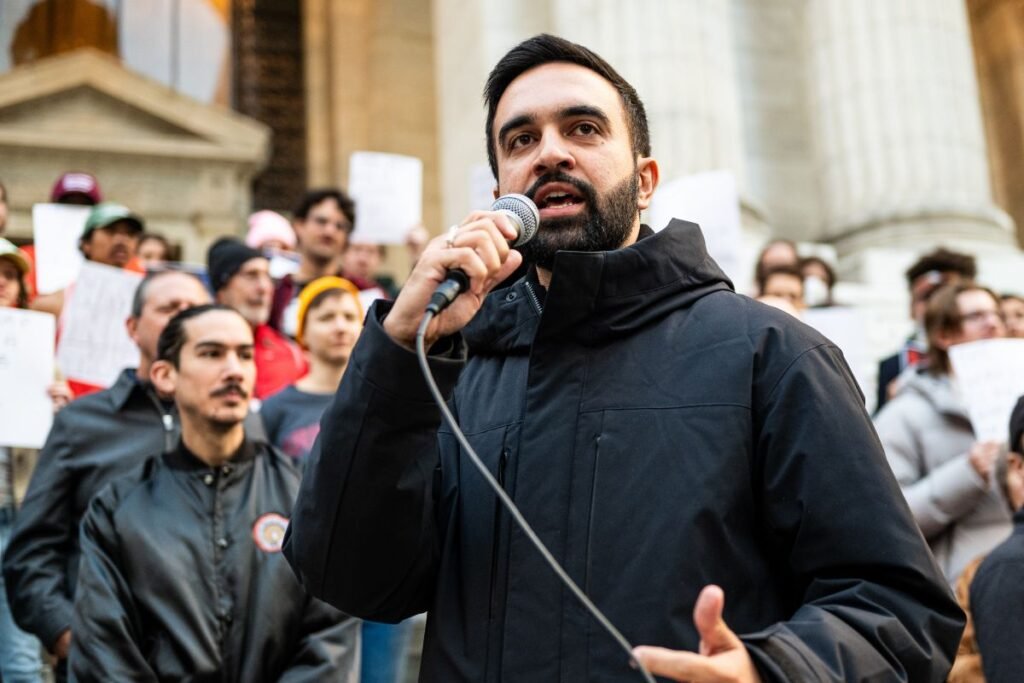
In New York City, we can point to the boldface success of Zohran Mamdani as an example. Recently nominated as the Democratic mayoral candidate, his affordability push focuses on creating better options for the working and middle class, such as a network of city-owned grocery stores that reduce the cost of food and affordable housing—all of which led to his big success with the city’s voters. Whatever one makes of his candidacy, it would seem that “the economy, stupid” is still voters’ most pressing concern.
Mandami-naysayers like to pretend that cheaper food or free buses are a Willy-Wonka-by-way-of-the-Democratic-Socialists-of-America fantasy. But nonprofits have offered such options for years. For example, New York City already has government-supported grocery stores through rent discounts like Essex Market on the Lower East Side, with leases supported by the city’s economic development corporation. In Aspen, CO, there are “free shuttle routes that will take you to the office, the trailhead, the ski lift and to everything else Aspen has to offer.”
The new Mamdani-inspired spotlight on such efforts could be extended to other economic justice nonprofits as well, which have also been doing this work for years.
Power to the Precariat
I see precariat power in the efforts of both older and more recently created nonprofits that are devoted to economic justice.
Some have been around for a while, like the Economic Hardship Reporting Project that I lead, which was founded in 2012, or thinktanks like the Institute on Taxation and Economic Policy (ITEP), which has been fighting since 1980 for progressive and adequate tax codes so wealthy people and corporations pay their fair share.
Other organizations have more recent origins, emerging in the mid-2010s, like the Poor People’s Campaign, Repairers of the Breach, and 100 Days in Appalachia.
There are also even more recently emerging nonprofits focused on affordability like WorkMoney, whose slick site (think of a telecom ad) dubs the group the “nonprofit working with people to save more” so “hard-working Americans get a fair deal.”
Race and ethnic and gender identity are often shaped by the systemic barriers that come with economic precarity.
Economic justice can often look two ways. Some nonprofits have a movement-centered outlook. Some may focus on individual uplift rather than structural reforms—helping people with job training to earn more to afford childcare, say, rather than organizing for childcare. What I am calling precariat power focuses on the latter—social transformation—and this is what philanthropy should support right now.
Common to both nonprofits and electoral successes like Mamdani’s is the resonance and relevance of this kind of economic justice mindset.
For the first time since the Occupy movement, economic justice is becoming central to the national discourse.
Sign up for our free newsletters
Subscribe to NPQ's newsletters to have our top stories delivered directly to your inbox.
By signing up, you agree to our privacy policy and terms of use, and to receive messages from NPQ and our partners.
Why Precariat Power Matters
This precariat sector is now a fundamental part of what I have called the nation’s “dystopian social safety net”—that is, a group of organizations that wouldn’t be needed if the government were doing its job.
Nonprofits that help create this substitute—this dystopian safety net—are particularly important now as Medicaid, food stamps, and federal jobs are whittled away.
But precariat power is also a strategy for nonprofits facing federal cuts, as retaliation for their DEI (diversity, equity, and inclusion) work. Precariat power can describe initiatives that widen the aperture as to who and how we protect people, so that class and economic survival become the primary considerations. Indeed, race and ethnic and gender identity are often shaped by economic precarity, a layer which was sometimes elided in earlier identitarian moments.
Jonathan Wilson-Hartgrove, director of Repairers of the Breach, told NPQ that he sees the erosion of democracy and rise of authoritarianism as symptoms of how many poor people have been marginalized. The 90 million eligible voters who didn’t—or were potentially prevented from—voting need now representation from the “independent sector.”
Repairers of the Breach and the Poor People’s Campaign call their strategy “fusion.” The idea is to organize people, including those who are poor, to be able to act together. There are political possibilities that lie within building a coalition of those who are struggling with economic insecurity; the fight for a more economically just society is also sometimes the locus of organizations like these by default.
Nonprofit journalism outfits like 100 Days in Appalachia have a working class-specific focus in part due to the geographical area they cover, which goes from New York to Alabama. Due to the labor history of the region, issues impacting blue collar citizens “are top of mind to communities and audiences we serve,” Dana Coester, the organization’s founder tells NPQ. She sees a focus on economic justice to be what can emerge when nonprofits are “close to people and their realities.” For example, Coester cites her group’s coverage of data centers as reporting that is neither Left nor Right in its optic, but it is about social class, political power, and postindustrial change. “It’s important to help people to think about impacted communities, through the lens of who benefits and who is harmed,” she said.
The Role of Philanthropy
Philanthropy may be an unlikely supporter of precariat-focused organizations. Taxing the rich and fighting for fair rent can be seen as “too controversial,” as poverty justice nonprofit leader Amy Hanauer told NPQ.
Hanauer, who directs ITEP, puts it like this: “It would be a great for philanthropy to think about how they can replace some of the [diminished] labor movement.” We should “enable the wealthy to be paying a much larger share of our taxes, to fund public grocery stores, free transit” as it would “redound to the benefit of the majority of Americans who struggle.”
There is an interest in employing terms that convey that level of scale and catastrophe and a political language that supports transformation.
Still, there has been some positive movement by philanthropy toward economic justice. While the recent philanthropic orientation toward local news isn’t always about prioritizing economic justice, reporting on neglected communities is often about telling stories related to social class and inequality, and today, local nonprofit news is being supported by initiatives like Press Forward, the L.A. Local News Initiative, and the American Journalism Project.
In addition, we at EHRP have been the beneficiaries of a substantive five-year BUILD grant from the Ford Foundation that will boost our ability to publish and amplify underrepresented worker voices in journalism and reporting on economic insecurity.
Time for a Big Reframe
There are ambitious frames for the new Mamdani-moment-interest in affordability, and the radical shifts necessary to ensure cities go in that direction. These include the Third Reconstruction, coined back in 2010 by Poor People’s Campaign’s Reverend William Barber. These are notions that seek to build on the achievements of the first Reconstruction, when briefly after the Civil War the United States moved in the direction of full enfranchisement of Black Americans; and the second Reconstruction, also known as the modern civil rights movement, led by Martin Luther King Jr.
There is an interest in employing terms that convey that level of scale and catastrophe and a political language that supports transformation.
For example, Democrats have long offered citizens tax credits instead of overhauling the social safety net. “Leaning on the tax code is very roundabout, when what people really need are the resources not to fall into precarity,” said Sabeel Rahman, a Cornell University Law School Professor and former head of the think tank Demos, in an interview with NPQ. We may need more potent political branding to get at the enormity of the reconstruction that lies ahead of us. That is where the Third Reconstruction, Precariat Power, and terms like “apocalyptic organizing” come in. The latter was coined by scholar Dana Fisher, from recent studies of climate change activists and their “people power.” In her telling, successful political organizing breeds “apocalyptic optimism” among us, a mindset shift that itself can instigate societal change.
Precariat power organizations that are jumping into this fray—or that have been fighting for people’s economic dignity all along—are a crucial part of a reframe. Affordable food and transportation, journalism that represents the economically insecure, a movement of the poor—the precariat power’s time has come.