“What policy initiatives would I create if I could?” It’s a question I’ve asked myself but haven’t set out in print before.
I’ve worked in and with nonprofits for a long time, including directing one nonprofit, working in another, and consulting with many. I’ve written a monthly newsletter, ZimNotes, on nonprofits for over 30 years.
But what can we hope for? In nonprofits, we tend to act defensively, especially in times of crisis like these. But being future-oriented is important.
Back in the 19th century, French scientist Louis Pasteur (of pasteurized milk fame) once remarked that “chance only favors the mind which is prepared.” So, in that spirit, here are my thoughts, informed by colleagues I consulted from the nonprofit sector. Of course, I hardly expect my preferred policies to be adopted wholesale. But I do hope these proposals spur discussion—and even responses.
In nonprofits, we tend to act defensively, especially in times of crisis like these. But being future-oriented is important.
As we approach the Fourth of July, I want to propose a policy agenda that will strengthen democracy and give a fair shake to all. I call my approach a “New Fair Deal”—a combination of Franklin Delano Roosevelt’s New Deal and Harry Truman’s Fair Deal. If the Heritage Foundation can create Project 2025, we can create a progressive Project 2029. And don’t worry. What follows won’t be 900 pages long.
A Sketch of a “New Fair Deal”
This sketch is grouped into a few key policy areas—restoring a sense of common purpose or citizenship, supporting children, building a stronger safety net, protecting the environment—and paying for it with progressive taxes.
1. Rebuilding a Sense of Citizenship
Given growing misinformation and disinformation…mandatory civics and media literacy classes throughout the middle and high school years are needed.
- Mandatory Service: Requiring service for people over age 18 is not always a popular idea among progressives. Still, national service can help foster a sense of responsibility, promote national unity, and provide valuable skills and work experiences to help them in the labor market later on.
Many countries have mandatory military service, and some of these include a service component. What I am proposing would focus on the service end, while making space for young people to choose enlisting in the military to satisfy the requirement. This effort could be modeled on the existing AmeriCorps VISTA program, which incidentally supports thousands of nonprofits across the United States. Young people’s work could also be directed to our national and state parks, similar to Roosevelt’s Civilian Conservation Corps.
Sign up for our free newsletters
Subscribe to NPQ's newsletters to have our top stories delivered directly to your inbox.
By signing up, you agree to our privacy policy and terms of use, and to receive messages from NPQ and our partners.
There are many models, including existing Peace Corps and AmeriCorps programs in the United States. Some have existed for a long time. Mexico’s program is called Servicio Social; it was established in 1936 to engage university students in reconstructing the country after the Mexican Revolution. Other countries with civilian service programs include Nigeria, Ghana, Kenya, and Chile.
- Civic Education and Media Literacy: Given growing misinformation and disinformation—and new risks stemming from the misapplication of artificial intelligence—mandatory civics and media literacy classes throughout the middle and high school years are needed. Two past Supreme Court justices both promoted civic education: Earl Warren, in Brown v. Board of Education, talked about the importance of education to our democratic society; Sandra Day O’Connor, warned that “the rule of law is seriously threatened by Americans’ alarming lack of civic knowledge.” The Civics Secures Democracy Act, which has been introduced in Congress in multiple past sessions, is a start.
- Voting Rights: Adopt the John R. Lewis Voting Rights Advancement Act (HR 14) to restore the 1965 Voting Rights Act core protections. Other voting rights reforms I favor would include abolishing the Electoral College—which could be done effectively by interstate compact if states with more than 270 combined votes all agree to cast their electoral votes in favor of the candidate winning that national popular vote. Effective voting rights also requires ending the US electoral system of the “best elections money can buy” that favors donor votes over people’s votes. The need to overturn the 2010 Citizens United decision, which gave corporations immense power in elections is clear, and well-explained by the Brennan Center.
- Immigration: Immigration is a complicated issue, but one aspect of it is not—except for Native Americans and Africans forcibly brought across the Atlantic in chains, all US citizens came here first as immigrants or are descended from those who did. Supporting new Americans is thus core to restoring a sense of common citizenship. This means dedicating sufficient resources to reduce the waiting periods for the legal immigration process, as well as allowing existing Dreamers—people who have lived in the United States since they were children—a pathway to citizenship.
- Racial and Gender Equality: There are United Nations conventions on racial and gender equality that nearly every nation in the world subscribes to, except for the United States. CEDAW (Convention on the Elimination of All Forms of Discrimination Against Women) has been adopted by 189 countries; it calls for equity in the workplace and a woman’s freedom to make reproductive choices. The United States has signed on to the International Convention on the Elimination of All Forms of Racial Discrimination, but a 2022 UN report roundly criticized lax implementation of its provisions. More broadly, the Southern Poverty Law Center report noted that the United States had only signed three of the nine core UN human rights conventions.
2. Supporting Children
- Childcare and Preschool: Childcare and early childhood education are critical supports for working parents, for children’s life outcomes, and for family and social cohesion. These systems currently do not come close to meeting the needs of US families, but a blueprint for a national childcare program exists in the Child Care for Working Families Act, introduced by Senator Patty Murray (D-WA) in 2021. Although never voted into law, it provides a template for establishing and funding a childcare assistance program. It includes funds for states to provide services and support to infants, toddlers, and children with disabilities (for a working statewide program, see Oregon’s Preschool Promise program).
- Education: Our youth are our greatest asset. But teachers who are vital to youth development aren’t supported sufficiently. Abundant research about outcomes for young people has concluded that teachers are a key ingredient to student achievement. We must create the circumstances for teaching be desirable and pay teachers appropriately for their society-building work.
3. Building a Stronger Safety Net
- Medicare for All: The case for the United States to join the international norm and provide healthcare for all its people has been clear for a long time. The Medicare for All Act, introduced in 2025 by Senator Bernie Sanders (I-VT) would move us toward that goal. As outlined in the bill, it would: “(1) cover all U.S. residents; (2) provide for automatic enrollment of individuals upon birth or residency in the United States; and (3) cover items and services that are medically necessary or appropriate to maintain health including…hospital services, prescription drugs, mental health and substance abuse treatment, dental and vision services, home- and community-based long-term care, gender-affirming care, and reproductive care, including contraception and abortions.”
- Minimum Income: More than a few cities have adopted some form of basic income as an important anti-poverty measure, and other countries have had programs for years. As with universal healthcare, the positive case for universal basic income is overwhelming.
The United States has suffered gravely from growing income and wealth inequality, but that means more can be collected from the beneficiaries.
- Housing: In 2021, Senator Sanders and Representative Alexandria Ocasio-Cortez (D-NY) introduced the Green New Deal for Public Housing Act, which provides a valuable framework for establishing housing as a human right and setting up a national system to provide it. These efforts could also draw on the longstanding work of the many public interest groups working on housing issues, such as the National Low Income Housing Coalition, National Fair Housing Alliance, Habitat for Humanity, and Catholic Charities USA.
4. Environment: Far more could be said here about the need to address the climate crisis, but I will be brief. A 121-page report released in 2024 from the office of Senator Ed Markey (D-MA) and Representative Ocasio-Cortez outlines how existing legislation passed during the Biden administration, notably the Bipartisan Infrastructure Law and the Inflation Reduction Act, could, if leveraged appropriately—advance many national climate justice goals.
How to Pay for What We Need
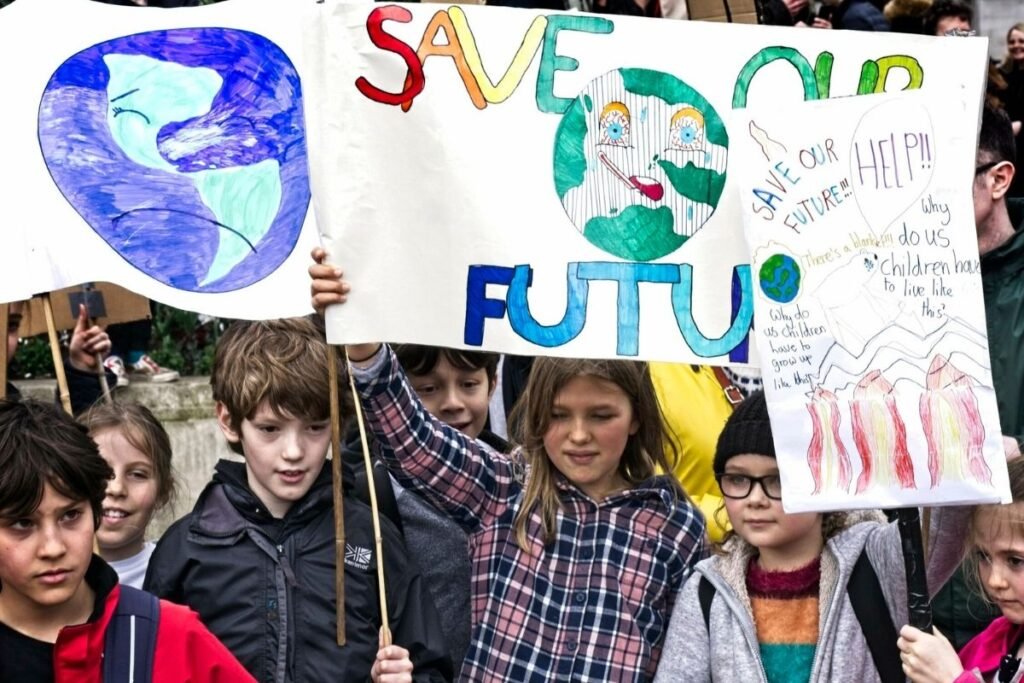
Where can the money come from to implement these initiatives? It is no great mystery that the United States has suffered gravely from growing income and wealth inequality, but that means more can be collected from the beneficiaries of this inequality. Here are three such measures.
- Social Security: Eliminate the taxable wage cap to ensure that all wages are subject to Social Security tax, rather than the current law of stopping at $176,100. This would ensure individuals with higher pay bear the same tax burden as low- and middle-income workers. Senator Sanders introduced a bill in 2023 that would have done this. According to one estimate, making this policy change would raise $3.2 trillion over the next 10 years.
- Wealth Tax: This would be a recurring annual tax on a person’s net worth, which includes the value of assets (like stocks, bonds, real estate, yachts, art, and so on). Senator Elizabeth Warren (D-MA), along with Representatives Pramila Jayapal (D-WA) and Brendan Boyle (D-PA), proposed the Ultra-Millionaire Tax Act in 2024, which includes a 2 percent annual tax on the net worth of households between $50 million and $1 billion; and an additional 1 percent annual surtax on the net worth of households and trusts above $1 billion (for a total rate of 3 percent). Warren’s office estimates this one policy change would raise $3.75 trillion over the next 10 years.
- Increase Estate Taxes: Senator Sanders’s For the 99.8 Percent Act reforms the federal estate tax system, targeting the highest incomes of 0.2 percent of Americans. Under its provisions, the first $3.5 million would remain exempt from tax. The portion of an estate over $3.5 million ($7 million for couples) would be taxed at a 45 percent rate, with a top rate of 77 percent only kicking in after the first billion dollars in estate value. The senator’s office has estimated that this one measure could ultimately raise $2.2 trillion from billionaires alone.
Moving Forward
What’s been listed above is not comprehensive, but it’s a start. I hope it might spur further discussion. Many will say that the proposals outlined here could never happen, but 50 years ago, who thought Project 2025 would be implemented?
The bottom line: Adopting policies like these would benefit the people and communities that so many of the country’s nonprofits aim to serve.
Who wouldn’t want that?