
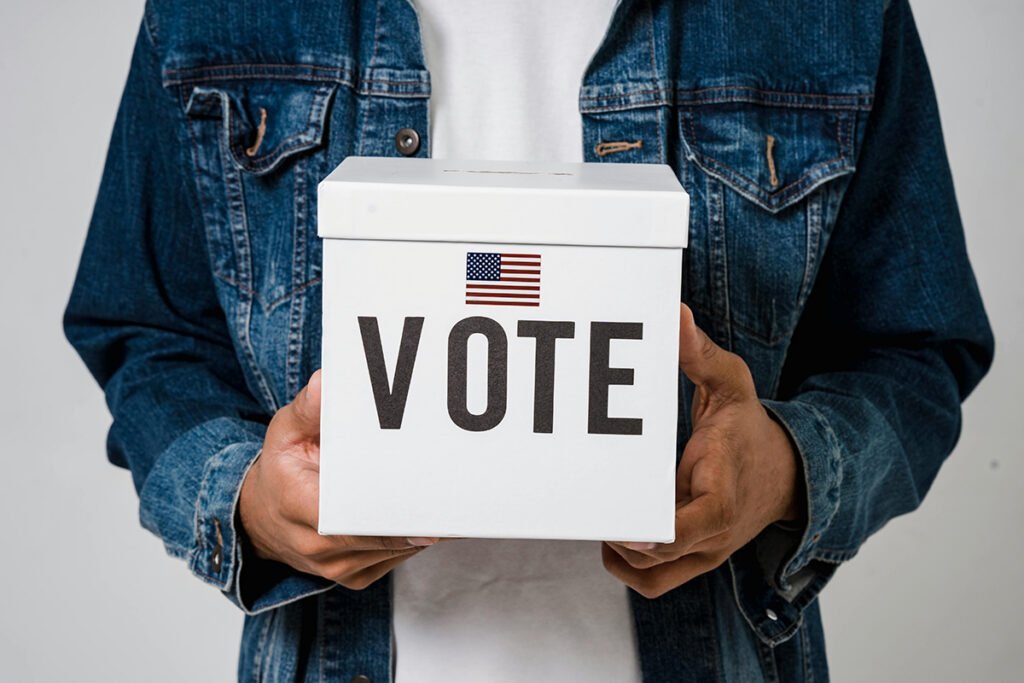
Nonprofits may not see promoting voting as essential to their mission, but right now, there may be no more important civic duty. Voting is the key to keeping our democracy intact in 2026 (and 2028, and beyond). It is a civic ritual and the primary defense against political overreach, which is why trusted institutions like nonprofits are critical.
As institutions that are embedded in the communities they serve, nonprofits are uniquely positioned to meet this moment. They speak the language of their constituents, understand local barriers—whether transportation, language access, disability accommodations, voter ID confusion, or simple distrust born of past exclusion—and, crucially, are legally permitted to support voter participation.
Come November, the nation will decide whether it renews its commitment to free and fair elections.
Voter turnout matters. Authoritarian-leaning movements tend to thrive when participation is low and disengagement is high. Democracy can win when participation is broad, inclusive, and informed. Nonprofits can help by normalizing voting as part of community life—not a special event, but a shared responsibility. This does not mean telling people what or whom they should vote for—501c3s can’t promote the election of particular candidates. Rather, it means reminding them that their vote matters and countering misinformation. It means using newsletters, social media, community meetings, service interactions, and trusted messengers to keep voting visible and accessible. And compared to nonvoters, voters are more likely to volunteer, according to Nonprofit Voting’s “The Benefits of Voting,” reinforcing a virtuous cycle of community engagement.
Come November, the nation will decide whether it renews its commitment to free and fair elections. Faced with the new SAVE America Act, voting has never been more at risk—and support from nonprofits never more critical. In the United States, voting remains the legitimate antidote to authoritarian impulses, political intimidation, and the concentration of power in the hands of a few. Ahead of the upcoming midterms (and each subsequent election for that matter), the question is not whether voting matters, but whether voters will have the accurate information, confidence, and encouragement they need to participate.
Nonprofits Are Trusted Messengers in a Polarized Time
That is where nonprofits come in. Research shows that nonprofits enjoy higher levels of public trust than government institutions, media, or political parties. They are seen as grounded in community interests, mission-driven, and oriented toward service rather than self-interest. That trust matters when people are deciding whether to engage with elections or feel safe participating.
In short, nonprofits can help ensure that people do not let confusion, fear, or manipulation keep them from the polls. As the election approaches, ask: Are we fully using our community’s trust to support democracy? If the answer is no, act now.
Promoting voting is a civic and social responsibility that goes to the heart of why most organizations exist, though many don’t take part, often because they are unsure if elections-related activity will run afoul of tax regulations.
So, what is allowed under the laws that govern nonprofits? The following comes from the IRS’s webpage:
Can a section 501(c)(3) organization conduct voter registration and get-out-the-vote drives?
Yes, if they are conducted in a neutral, non-partisan manner, for example, without reference to any candidate or political party. However, voter education or registration activities conducted in a biased manner that favors (or opposes) one or more candidates is prohibited.
By helping your community register, learn, and vote, your organization strengthens democracy.
This means that nonprofit organizations may conduct voter registration drives at the office or in the community and encourage people to register to vote in person, through organizational communications, on social media, on websites, or at events.
The key requirement is that all nonprofit 501c3 voter registration activities must be conducted on a strictly nonpartisan basis. This means:
- Your activities must be open to all eligible voters.
- You cannot favor any particular candidate or political party.
- You can target eligible voters or clients in your offices, service area, or the communities where you regularly work.
Powerful Ways Nonprofits Can Promote Voting Now
Nonprofits are trusted, credible voices on civic participation. We have the opportunity—and responsibility—to ensure everyone we serve knows their voting power and can access the ballot.
By helping your community register, learn, and vote, your organization strengthens democracy. Here’s how to get started—before Election Day arrives.
1. Pick a Coordinator and Create a Plan
Assign a staff member, volunteer, or board member to lead voter engagement.
- Explicitly add voting to the agenda for your next staff or board meeting. Vote on how your nonprofit will engage and list next steps.
- Create a timeline: Send registration reminders, highlight key election dates, promote early voting, and organize Election Day outreach.
- Include civic engagement in your organization’s newsletters, flyers, client emails, and social media posts.
- Review state-specific rules through Nonprofit VOTE’s Voting in Your State.
Make your physical site voter-friendly: Hang posters, place postcards or QR codes in waiting areas, and add a line about voting to your email signature. Executive directors can also encourage staff to volunteer as nonpartisan election workers or translators—a practical and visible way to model civic participation.
Sign up for our free newsletters
Subscribe to NPQ's newsletters to have our top stories delivered directly to your inbox.
By signing up, you agree to our privacy policy and terms of use, and to receive messages from NPQ and our partners.
2. Add Election Reminders to Everything You Distribute
Add clear, multilingual flyers that show how, when, and where to vote into every handout or packet you distribute—including meal boxes, newsletters, or event programs.
- Add your logo and a tagline like “Your voice matters—make sure it’s heard!”
- Highlight early voting windows, vote-by-mail deadlines, and links to local election resources such as Vote.org or county registrar pages.
- Have the executive director or board chair send a motivational message to staff about the importance of civic participation. Specify voting time-off policies in the message.
- If possible, show a short, engaging video (such as Nonprofit VOTE’s “Why Vote” Tool ) during a client group meeting or staff lunch to connect voting with your nonprofit’s mission and impact.
3. Educate and Empower Voters on the Process
Many potential voters stay home because they’re unsure what to expect. Help remove barriers by making voting feel familiar and accessible:
- Print or post sample ballots and polling place guides.
- Post quick facts on social media, using images or infographics, about voting deadlines, ID rules, and voting options.
- Ask specific board members to be present at your site in the weeks before the election—provide them with FAQ sheets to answer voter questions and distribute information.
Every small act of education helps—informed voters are more confident voters.
4. Share Election Day Help and Support
Be the link between your community and the help they might need on Election Day. Share these key numbers:
- 866-OUR-VOTE (English)
- 888-VE-Y-VOTA (Spanish)
- 844-YALLA-US (Arabic)
- 888-API-VOTE (multiple Asian languages)
Encourage staff, volunteers, or program participants to become poll workers or nonpartisan Election Day helpers. Nonprofits can also coordinate ride-sharing or carpools to help clients get to the polls—especially seniors, people with disabilities, or people without transportation.
Importantly, people without a permanent home can still vote. When registering, use a shelter, street corner, or park as a home address. Choose a different mailing address, such as that of a friend or a social service agency, to receive mail. For details, Nonprofit VOTE has resources on voting and homelessness.
Remember, these efforts don’t endorse candidates or parties—they simply ensure access.
The SAVE America Act…is a massive assault on voting.
5. Launch a Nonpartisan Get-Out-the-Vote Push
In the final weeks before Election Day, step up visibility. Organize a simple GOTV campaign with your staff and volunteers.
- Assign a team member to post daily countdown messages on your social media until Election Day.
- Call or text people in your network to encourage them to make a voting plan by choosing in advance when, where, and how they will vote.
- Partner with groups such as the League of Women Voters, Nonprofit VOTE, or the National Council of Nonprofits to access outreach materials and distribute them in your community.
- Invite staff, clients, and community members to share their voting stories and spotlight them in your communications to motivate others.
Nonprofits are trusted messengers. Use that trust to promote voting and help build stronger, more inclusive communities.
The SAVE America Act’s Impact on Voting
The SAVE America Act, passed by the House in February 2026, is a massive assault on voting and is being promoted heavily by Donald Trump. It would require US citizens to present documents such as a passport or birth certificate to register to vote. Research by the Brennan Center shows that more than 21 million eligible voters lack ready access to those documents. Roughly half of US citizens don’t have a passport. Millions lack access to a paper copy of their birth certificate.
The SAVE America Act threatens to disenfranchise US voters across all demographics, with a particularly severe impact on younger voters and communities of color. Millions of women whose married names do not match those on their birth certificates or passports would encounter additional barriers to casting their ballots. The legislation also requires states to submit their voter rolls to the Department of Homeland Security, where they would be subject to an error-prone citizenship-verification process.
Trump has threatened not to sign any other bills until the SAVE America Act passes, recently posting on social media, “THERE IS NOTHING THAT IS MORE IMPORTANT FOR THE U.S.A.”
Every one of the restrictive measures in the act has been on the conservative voter suppression wish list for more than 10 years, but the legislation is unlikely to pass, given the current makeup of the Senate and filibuster rules. Still, we should all be vigilant as Trump uses this as a wedge issue to impact the election. In the past, he’s urged his constituents to wait until right before the midterms to begin talking about transgender athletes in women’s sports. “Don’t bring that subject up, because there’s no election right now….But about a week before the election, bring it up, because you can’t lose.”
As November approaches, nonprofits can and should be ready to leverage their positions of power and trust to disrupt this cynical approach to elections.
Voting is not the only tool for change—but it is indispensable. In the face of rising authoritarianism, the answer is not despair or disengagement. The answer is participation. And nonprofits, as trusted sources for voters, have both the opportunity and the obligation to help lead the way.
Additional Resources:
- Nonprofit Nonpartisan Voter Engagement Toolkit (Nonprofit VOTE)
- United States Election Assistance Commission
- Center for American Progress on the SAVE America Act
- Protecting Democracy Through Nonpartisan Voter Registration (Alliance for Justice)
- Check your own voter registration statusor register to vote (Vote.org)