In what some feminists have called reminiscent of the book The Handmaid’s Tale, the Trump administration has made pronatalism—policies aimed at increasing the US birthrate—a central focus of his presidency.
Backed by pronatalist organizations and their philanthropic supporters, the administration’s approach reflects what queer scholar Lee Edelman has called reproductive futurism, a cultural logic that ties the future to heteronormative reproduction and certain idealized visions of families and children. By employing this framework, the administration has advanced pronatalist policies while simultaneously restricting bodily autonomy for cisgender women, transgender people, and LGBTQ+ youth.
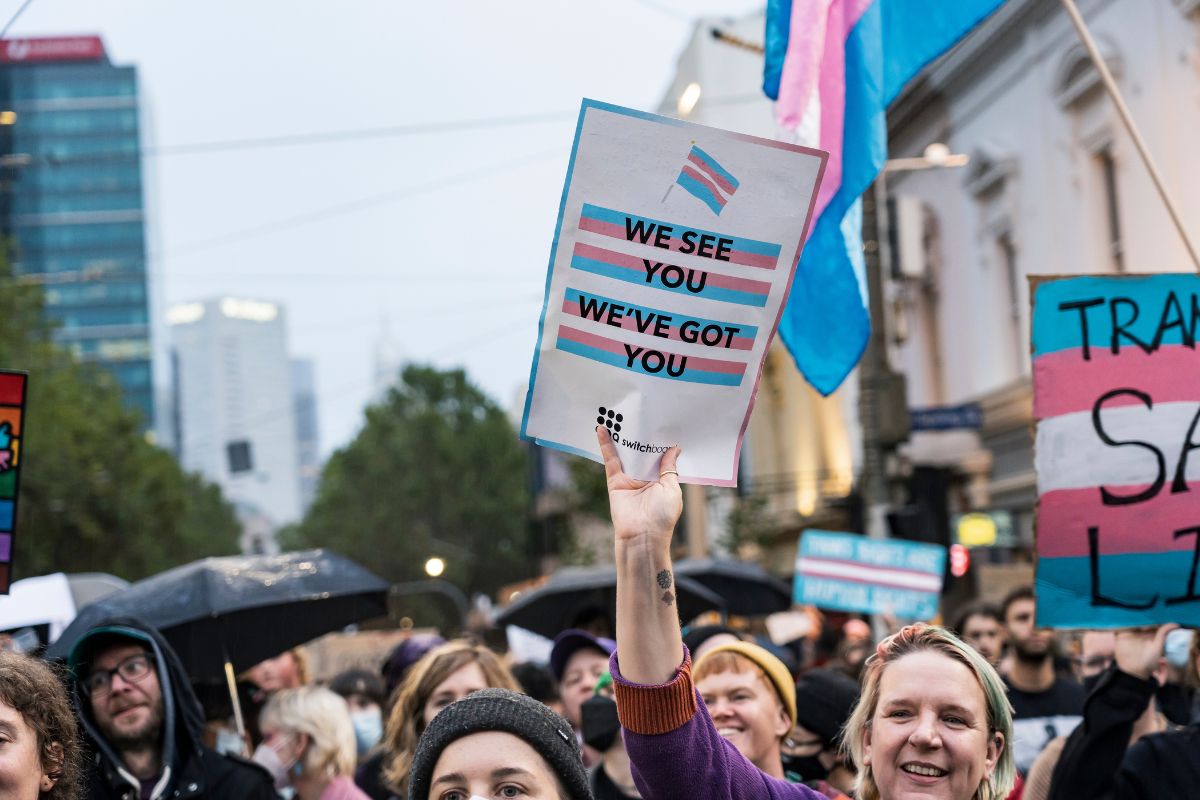
For instance, a White House press release in March 2025 framed its policies around the claim that “America’s children are our future.” This rhetoric links political value to an idealized, heteronormative vision of the future, enabling the administration to erase the legal recognition of transgender and intersex people, restrict transgender youth from participating in sports that align with their gender identity, attack access to gender-affirming care—leading dozens of hospitals to stop offering lifesaving care for trans youth—and eliminate support for what it labeled “the radical, un-American indoctrination of America’s children by eliminating support for divisive, radical ‘gender ideology’ and ‘equity ideology.’”
The Trump administration’s use of children to justify eroding civil rights and bodily autonomy for marginalized people underscores the point made by advocates like Esther Afolaranmi, co-executive director at the Fair Start Movement, who noted that political appeals “for the children” often exclude those who do not fit heteronormative pronatalist ideals.
“This framing invisibilizes children who exist outside those norms—queer, trans, disabled, poor, or marginalized children whose lived realities rarely shape policy priorities,” Afolaranmi told NPQ.
Trump’s Pronatalist Agenda
Aligned with the Heritage Foundation’s Project 2025—the conservative blueprint promoting the cisgender heterosexual nuclear family as the cornerstone of American society—the Trump administration has sought to embed the logic of pronatalist reproductive futurism into national public policy.
In fact, the Trump administration has not been quiet about its goal of increasing the number of babies born in the United States. At an anti-abortion rally in July, Vice President JD Vance declared, “I want more babies in the United States of America,” while Trump himself has expressed a desire to be remembered as the “fertilization president.” Specifically, the administration considered policies encouraging cisgender White women to have more children, including proposals such as giving mothers $5,000 per child, reserving 30 percent of Fulbright scholarships for married parents, funding fertility education programs, and issuing “motherhood medals” for women with six or more children—though these ideas were never fully enacted.
Aligned with the Heritage Foundation’s Project 2025…the Trump administration has sought to embed the logic of pronatalist reproductive futurism into national public policy.
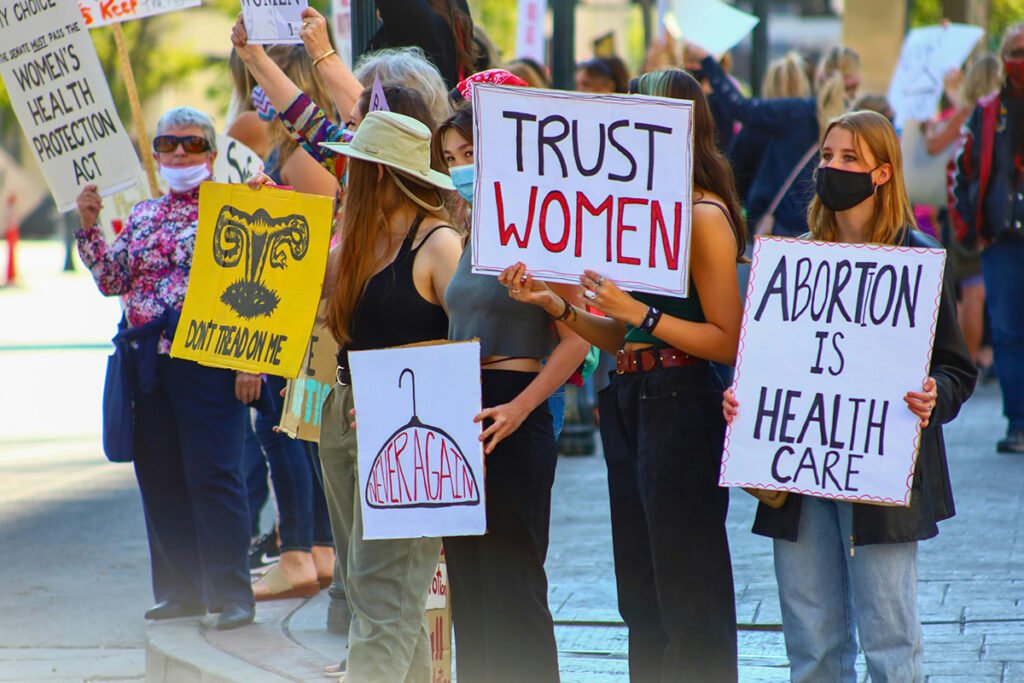
Instead, the administration implemented a $1,000 “Trump account” baby bonus for new US citizen babies starting in July 2026, while focusing primarily on restricting access to contraception and abortion rather than expanding social services to support having children. For instance, the Trump administration has cut Medicaid funding for Planned Parenthood, limiting reproductive health services for low-income Americans.
“It is vital that we expose the pronatalist agenda for what it really is: a racist, sexist set of policies that is narrowly focused on boosting birth rates for ‘acceptable’ people, which often means White, straight, and conservative,” Sydney Petersen, senior media relations manager at the National Women’s Law Center, told NPQ. “At the same time, this movement is attempting to limit options for women and take supports away from those who don’t fit into their narrow definition of who should be making a family.”
The Trump administration is interested only in certain kinds of population growth, seeking to incentivize reproduction among White, heteronormative families while using immigration policy, criminalization, and eugenic logic to shape the nation’s racial and social demographics, promoting only what Trump has called “great genes.”
This is made obvious by the administration amplifying the “great replacement” narrative—the false claim that White Americans are being replaced by non-White populations with higher birth rates—escalating militarized immigration enforcement, and making targeting transgender rights, particularly attacks on LGBTQ+ youth, a central policy priority.
Activist Riki Wilchins told NPQ that the current wave of pronatalism—“which drives both anti-abortion efforts and the Trump administration’s deranged crusade against transgender people”—is rooted in a White Christian nationalist “obsession with procreation as a means of promoting White ethnic identity” and a simultaneous “fear of immigrants as threats to White ethnic stock from without, and queers as threats to it from within.”
Architects of the Pronatalist Presidency
The contemporary pronatalism movement, which underpins the pronatalist presidency, has substantial funding and influence from prominent Silicon Valley figures and tech elites. Elon Musk, a proponent of the “great replacement theory” and father of at least 14 children, has called declining birth rates “one of the biggest risks to civilization.” Other Silicon Valley insiders like Sam Altman and Peter Thiel have also dived into the pronatalism movement, hoping to cash in on the future of reproductive technologies.
“Capitalism has created a vision of ‘the future child’ that’s tied to consumption and wealth, often in Western contexts,” Afolaranmi explained. “That erasure is not accidental; it’s systemic.”
To these men, who depend on a steady supply of workers and consumers, natalism is inseparable from capitalism—and they’re putting their money behind it. Many of these Silicon Valley pronatalists are funding conservative nonprofits—such as the Heritage Foundation, Focus on the Family, the Family Research Council, the Institute for Family Studies, American Compass, and the Ethics and Public Policy Center—which play a central role in shaping and lobbying for a pronatalist agenda.
But their investment in future children comes with a very specific vision: These children are certainly not transgender and are almost certainly expected to become future workers. As Patri Friedman, a Silicon Valley veteran and grandson of the economist Milton Friedman, explained: “If you think of government as a business, then babies are its future customers.”
What Reproductive and Gender Equity Nonprofits Are Doing to Fight Back
While the current presidency is a major win for the pronatalist movement, there is still time to fight back, and advocates are intensifying their efforts. “[N]ow is the time to launch an aggressive campaign to undercut their power,” Petersen told NPQ.
The National Women’s Law Center, for example, is “fighting back against the dangerous pronatalist agenda coming out of the White House and conservative organizations” by employing litigation, advocacy, and policy work to protect reproductive rights; defend programs like Head Start; and advance gender justice nationwide.
Sign up for our free newsletters
Subscribe to NPQ's newsletters to have our top stories delivered directly to your inbox.
By signing up, you agree to our privacy policy and terms of use, and to receive messages from NPQ and our partners.
Advocates are also addressing the structural forces underlying these issues.
“Disrupting reproductive futurism means prioritizing justice for all children, everywhere,” Afolaranmi told NPQ. “Policy should not just anticipate the needs of future generations—it must start by ensuring that every child born today has an equitable and sustainable start in life.”
Carter Dillard, policy adviser for the Fair Start Movement, explained that ensuring just futures for all children requires disrupting the accumulation of wealth and the forces driving income inequality, which lies at the heart of the pronatalist project.
“We have to say that wealth is illegal and owed to the future generations it harmed, or we are conceding its legitimacy and then just dealing with the effect and not cause,” he told NPQ.
“Capitalism has created a vision of ‘the future child’ that’s tied to consumption and wealth, often in Western contexts.”
To advance this goal, the Fair Start Movement recently sent a letter to Rob Bonta, attorney general of California, urging the state to adopt the “full justice” standard, which defines true empowerment as ensuring that no child is born without the resources necessary for freedom and self-determination and thus requires that both parents and children are meaningfully empowered in the political system they are born into.
“The full justice standard starts from a reality we usually avoid: Children do not arrive on equal footing,” Suriya Khan, advisor for the Fair Start Movement, told NPQ. “Any policy that celebrates ‘the future’ without reckoning with what a child is actually born into is not neutral, it’s choosing which lives matter.”
But these organizations cannot fight the pronatalist movement alone—they need support and resources to defend themselves and those they advocate for.
Funders Must Join the Fight Against Pronatalism
Pronatalist nonprofits receive hundreds of millions in funding each year, while groups advocating for reproductive rights and gender equity are increasingly underfunded. This lopsided funding landscape has worsened since Dobbs v. Jackson Women’s Health Organization reversed the constitutional right to an abortion and the Trump administration’s increasingly targeted attacks on the sector, with many funders reducing or ending support for progressive nonprofits.
According to the Project 2025 Tracker, 50 percent of the conservative blueprint has been implemented since January of last year, with tangible consequences for transgender people, reproductive rights, and bodily autonomy—such as restricted access to reproductive healthcare, increased barriers to gender-affirming care, and heightened risks to the rights and wellbeing of marginalized communities.
And the Heritage Foundation has already released another policy blueprint for 2026, which builds off Project 2025. This iteration, as Kathy Spillar, cofounder and director of the Feminist Majority Foundation and executive editor of Ms., wrote, “lays out a government redesigned to control women’s bodies, erase LGBTQ+ lives, dismantle civil rights protections and roll back decades of hard-won progress. Wrapped in the language of ‘family,’ ‘sovereignty’ and ‘restoring America,’ it is a direct attempt to impose a narrow, rigid ideology on an entire nation.”
“Make no mistake,” Spillar wrote, “This is a plan for forced motherhood, government-policed gender and the end of women’s equality as we know it.”
“Organizations that center and advocate for reproductive rights, birth equity, and child wellbeing are actively building a better future for everyone…not just those who agree with them.”
In fact, in a recent report, the Heritage Foundation urged the Trump administration to “encourage and protect the formation of families, not mere fertility.” This framing makes clear that the concern is not simply whether children are born, but whether the “right” children are raised in “right” families—namely, heterosexual Christian households. The Heritage Foundation thus argues that federal policy should target what the report characterizes as the “needless delay in marriage and out-of-wedlock births” by disfavoring “same-sex and polyamorous relationships, cohabitation, or intentional single parenthood.”
To counter this expanding pronatalist agenda, advocates suggest that progressive funders must step up.
“Funders who put their resources towards such organizations are making long-term investments in healthier children and parents, more economically secure families, and a stronger and more resilient economy,” Petersen explained. “We feel strongly that we can provide an alternative vision of the future where all women and families can thrive, not just those with the most power and influence.”
One thing funders can do right now is support organizations that center reproductive rights, birth equity, and the wellbeing of marginalized children. By directing resources to groups like the Fair Start Movement, the Truth Alliance, Population Connection, the Feminist Majority Foundation, and the National Women’s Law Center, funders can help ensure that policies prioritize all children, not just those who fit a narrow, exclusionary ideal being pushed by pronatalist organizations.
“Organizations that center and advocate for reproductive rights, birth equity, and child wellbeing are actively building a better future for everyone,” Petersen said, “not just those who agree with them.”
Note: The author currently provides consulting services to the Fair Start Movement, staff and affiliates of which are quoted in this article.