logo logo
giving banner
Donate
    • Membership
    • Donate
  • Social Justice
    • Racial Justice
    • Climate Justice
    • Disability Justice
    • Economic Justice
    • Food Justice
    • Health Justice
    • Immigration
    • LGBTQ+
  • Civic News
  • Nonprofit Leadership
    • Board Governance
    • Equity-Centered Management
    • Finances
    • Fundraising
    • Human Resources
    • Organizational Culture
    • Philanthropy
    • Power Dynamics
    • Strategic Planning
    • Technology
  • Columns
    • Ask Rhea!
    • Ask a Nonprofit Expert
    • Economy Remix
    • Gathering in Support of Democracy
    • Humans of Nonprofits
    • The Impact Algorithm
    • Living the Question
    • Nonprofit Hiring Trends & Tactics
    • Notes from the Frontlines
    • Parables of Earth
    • Re-imagining Philanthropy
    • State of the Movements
    • We Stood Up
    • The Unexpected Value of Volunteers
  • CONTENT TYPES
  • Leading Edge Membership
  • Newsletters
  • Webinars

An Oregon Nonprofit Facilitates Family Farm Successions

Angie Wierzbicki
September 30, 2016
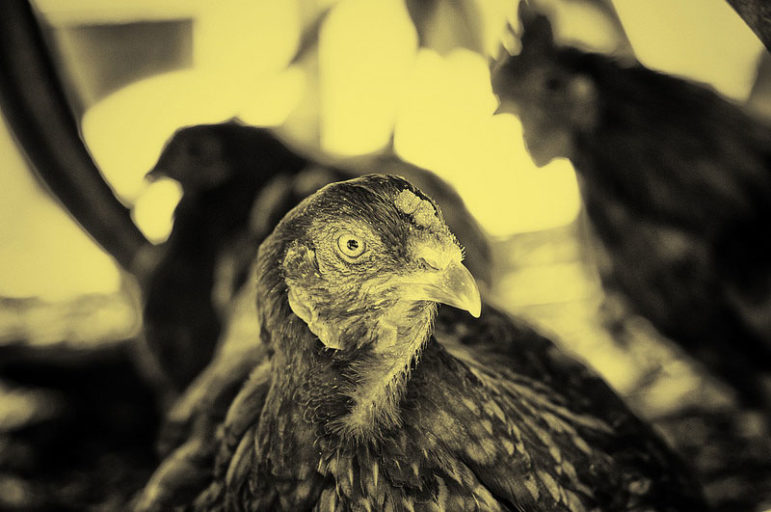
chicken
Henny Penny / David Goehring

September 28, 2016; Capital Press

Succession—it’s a word that’s used in business, nonprofit organizations, and even family farming. And with 64 percent of Oregon’s farmland changing hands over the next 20 years, nonprofits are among those trying to manage the transition.

According to a joint report by Oregon State University and Portland State University, approximately 10.5 million acres are up for grabs.. Essentially, farmers are aging out and the fate of their properties is uncertain. Rogue Farm Corps, a nonprofit in Oregon that offers farm training programs with hands-on experience, is determined to ensure as many of these farms as possible continue as family farms.

Like most things, this is easier said than done. Rogue Farm Corps’ director of farm preservation programs, Nellie McAdams, explained that bigger farms with fewer owners are a very likely outcome when ownership turnover happens. According to McAdams, this can result in less diverse crop and farming methods. Additionally, larger parcels cost more and can be a hurdle for beginner farmers. Her organization helps those who have little experience to become farmers.

Sign up for our free newsletters

Subscribe to NPQ's newsletters to have our top stories delivered directly to your inbox.

By signing up, you agree to our privacy policy and terms of use, and to receive messages from NPQ and our partners.

The decades-long decline of small family farms coupled with an increase in the farm size, specialization and capitalization began in the 1950s. “The Future of Oregon’s Agricultural Land” updates this trend in Oregon. From 2010 through 2015, almost 40 percent of farmland sales in several Oregon counties were to business entities. Nearly 15 percent of farm sales in those counties involved out-of-state buyers.

Aging baby boomers are a huge segment of the current population, resulting in the massive, projected transfer of farmland in the near future. The report states the average age of Oregon farmers and ranchers is now 60, up from 55 in 2002.

Land changing hands isn’t news, but the report focuses on how it’s going to change hands, as it will affect generations of people and, quite literally, Oregon’s landscape for years to come. According to the study, nearly 100,000 acres of Oregon farmland have already been removed from agricultural production in the last 40 years.

“Traditional” farms aren’t the only pieces of land that are looking for successors. The Land Institute, which recently celebrated 40 years, reiterated its call to action for farming in a sustainable model—but farming nonetheless, instead of business entities focused on investment, finance, or property management.—Angie Wierzbicki


Our Voices Are Our Power.

Journalism, nonprofits, and multiracial democracy are under attack. At NPQ, we fight back by sharing stories and essential insights from nonprofit leaders and workers—and we pay every contributor.

Can you help us protect nonprofit voices?

Your support keeps truth alive when it matters most.
Every single dollar makes a difference.

Donate now
logo logo logo logo logo
About the author
Angie Wierzbicki

Angie Wierzbicki is Executive Director for Cullinan Park Conservancy in the suburbs of Houston, TX. She has been involved in nonprofit leadership roles for almost 10 years, mostly in Texas. Angie has an MS in Recreation, Park and Tourism Administration from Western Illinois University and a BA in Broadcast Journalism from the University of Southern California. In addition to nonprofits, Angie has served in the Peace Corps in Malawi, Africa, and dabbled in retail management.

More about: Nonprofit NewsRural Voices
See comments

Call to action
You might also like
Big Tech Comes to Tucker County, West Virginia
Laura Harbert Allen, 100 Days in Appalachia
Building Community Capacity in Rural East Texas: The Long Lift
Jerry Neal Kenney and Martha Claire Bullen
How Rural Electric Cooperatives Can Support a Green New Deal
Wan R. Smith and Philip Fracica
The Soil-Keeping Approach to Regenerative Justice: 7 Principles
Kiley Arroyo
New Coalition Promises to Promote Equitable Access to Telehealth Services
Nicole Zerillo
A Burgeoning Food Justice Movement Rises in Black America
Steve Dubb

Upcoming Webinars

Group Created with Sketch.
January 29th, 2:00 pm ET

Participatory Decision-making

When & How to Apply Inclusive Decision-making Methods

Register
Group Created with Sketch.
February 26th, 2:00 pm ET

Understanding Reduction in Force (RIF) Law

Clear Guidance for Values-centered Nonprofits

Register

    
You might also like
A red circle overlayed on a yellow background with three multi-colored dots on each side. In the center it reads, " Isaiah Thompson: Staff Picks for 2025"
Staff Picks for 2025: Isaiah Thompson
Isaiah Thompson
Staff Picks for 2025: Steve Dubb
Steve Dubb
A red circle overlayed on a yellow background with three multi-colored dots on each side. In the center it reads, "Alison Stine: Staff Picks for 2025"
Staff Picks for 2025: Alison Stine
Alison Stine

Like what you see?

Subscribe to the NPQ newsletter to have our top stories delivered directly to your inbox.

See our newsletters

By signing up, you agree to our privacy policy and terms of use, and to receive messages from NPQ and our partners.

  • About
  • Advertise
  • Careers
  • Contact
  • Copyright
  • Donate
  • Editorial Policy
  • Funders
  • Submissions

We are using cookies to give you the best experience on our website.


Nonprofit Quarterly | Civic News. Empowering Nonprofits. Advancing Justice.
Powered by  GDPR Cookie Compliance
Privacy Overview

This website uses cookies so that we can provide you with the best user experience possible. Cookie information is stored in your browser and performs functions such as recognising you when you return to our website and helping our team to understand which sections of the website you find most interesting and useful.

Strictly Necessary Cookies

Strictly Necessary Cookie should be enabled at all times so that we can save your preferences for cookie settings.