
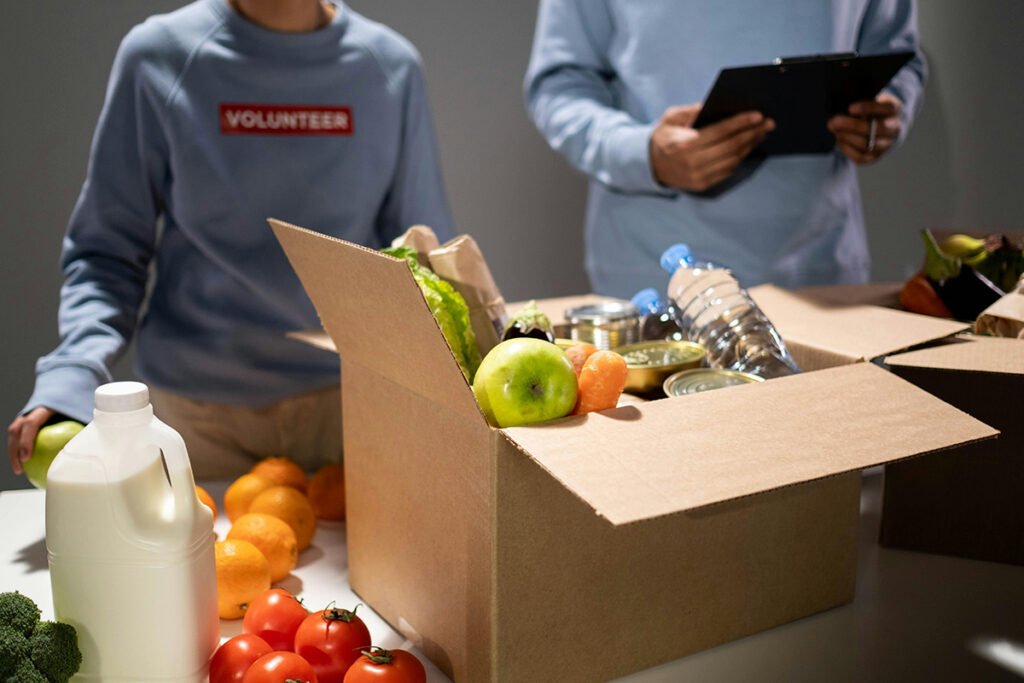
On November 1, 42 million Americans faced heightened food insecurity when the Supplemental Nutrition Assistance Program (SNAP) halted benefits for the first time in its history due to a manufactured political crisis. In Massachusetts alone, 1.1 million residents, including 335,000 children, lost $240 million in monthly food assistance.
Nonprofits quickly mobilized—extending hours, opening emergency pantries, and fundraising—falling into the ongoing trap of charity standing in for government responsibility. In Massachusetts, the state government also set up a Food Insecurity Taskforce and allocated $22 million.
But make no mistake, these were stopgap solutions. Meanwhile, the $186 billion in cuts to SNAP passed by Congress in July mean the nation’s food security system’s inadequacies remain. To use Massachusetts as an example again, an estimated 175,000 residents statewide are expected to lose SNAP benefits, according to the Massachusetts Law Research Institute.
The Arithmetic of Impossibility
SNAP delivers nine times more meals than the entire Feeding America network of food banks combined. In a statement, the Greater Boston Food Bank emphasized, “There is no way our charitable food network can replace this essential program.”
Cuts to SNAP passed by Congress in July mean the nation’s food security system’s inadequacies remain.
As a former executive director from 2020 to 2023 of People Helping People in the Boston suburb of Burlington, MA, I know that nonprofits can fill only part of the food hunger gap. In Burlington, for instance, while an estimated 1,400 residents faced food insecurity at the time that I was leading the organization, our pantry only reached a third of those people, despite ample resources and volunteers.
The Healthcare Proxy Problem
Food insecurity is a health crisis: A third of Massachusetts SNAP recipients have disabilities, and a quarter are over 60. For many, adequate nutrition is essential medicine.
Nonprofit dedication enables policymakers to shirk responsibility.
When nonprofits provide emergency food, they act as unpaid healthcare providers, preventing crises and hospitalizations but receiving limited compensation. Food interventions save healthcare systems millions—a 2017 study found that “receiving SNAP benefits was associated with a reduction in annual health care spending of about $1,400 per person among low-income adults”—while the community nonprofits feeding people bear the costs and strain their capacity. Without SNAP, nutrition-related health crises drive up expensive emergency room visits and hospitalizations, quickly escalating costs.
Emergency food seldom meets dietary needs. Seniors at People Helping People wanted more produce and low-sodium options, but federal programs often provide foods unsuitable for people who have diabetes or heart conditions. Heavy food boxes further limit access for those with mobility issues. Stigma remains a barrier: Three out of five eligible seniors never enroll in SNAP, according to AARP. The pandemic briefly reduced this stigma, but old narratives quickly returned, and policies like work requirements further discourage participation through shame and red tape.
The Political Weaponization of Nonprofit Dedication
Nonprofit dedication enables policymakers to shirk responsibility. When nonprofits fill gaps, political leaders point to “community response” instead of addressing policy failure, reframing crises as successes and dodging accountability. As one food bank director told NPQ, speaking on background, “This isn’t a hurricane—it’s a manmade, reversible political crisis.”
Sign up for our free newsletters
Subscribe to NPQ's newsletters to have our top stories delivered directly to your inbox.
By signing up, you agree to our privacy policy and terms of use, and to receive messages from NPQ and our partners.
In her 1998 book Sweet Charity? Emergency Food and the End of Entitlement, Janet Poppendieck critiqued the US emergency food system by arguing that charitable food programs—such as pantries and soup kitchens—function as a Band-Aid rather than a solution, providing the appearance of addressing hunger while allowing deeper structural problems like poverty, inequality, and weak social supports to persist.
Poppendieck contended that reliance on charity can perpetuate poverty by mitigating immediate need and reducing pressure for systemic reforms, such as living wages, robust welfare, and affordable housing. Moreover, institutionalizing charity as policy can undermine dignity and justice, treating hunger as a private benevolence issue rather than a rights-based matter. Finally, emergency food is often nutritionally inadequate and inconsistently supplied, dependent on donations rather than systematic planning, making it an unstable and insufficient substitute for comprehensive public support.
In the nearly 30 years since Poppendieck made her arguments, not much has changed.
Key Strategies to Change the Status Quo
How can nonprofits respond, reduce hunger, and support nutrition, rather than filling gaps during crises? There is no single solution, but core to addressing a failed status quo are two key things: 1) make problems visible, rather than hiding them, and 2) engage actively in advocacy to create a more equitable situation.
To make systemic problems visible to the greater public, here are six strategies to pursue:
- Publicly name causes. Use press releases and social media posts to state plainly that the shortage is the result of policy choices or Congressional inaction, not operational failure. Example wording: “Today we turned away X families because federal nutrition benefits were suspended by Congressional impasse. Charity cannot replace legislation.” Demand rapid reinstatement of benefits, emergency appropriations, or a state bridge program with concrete dollar figures and timelines, not vague appeals.
- Triage transparently. Create and publish prioritization criteria that center medically vulnerable people (seniors, people with disabilities, diabetic patients). Triage is not cruelty; it’s responsible allocation when resources are finite. Develop emergency exit plans. Coordinate with neighboring towns, hospital social work departments, and larger regional food banks to establish agreed-upon surge protocols rather than ad hoc scrambling that hides systemic failure.
- Humanize without privatizing the problem. Share client stories that illustrate systemic failure but always connect the story to policy remedies and the name of responsible officials. Expose the “moral safety valve.” Regular op-eds and social media campaigns should explain how charitable abundance becomes political convenience when used to mask underfunding.
- Document harm. Keep medical incident logs, hospital referrals, and evidence of preventable hospitalizations to support litigation or emergency legislative hearings when appropriate. Offer policymakers an evidence-based menu (temporary state supplements, expedited SNAP recertification, emergency Medicaid nutrition waivers), so your refusal to stretch service beyond capacity is paired with workable alternatives.
- Set and publicize capacity limits. Publish daily/weekly distribution caps and the rationale (supplies, refrigeration, staff, volunteers). When you hit the limit, post the number of people turned away and the unmet poundage or meals.
- Document rigorously. Use standardized intake forms that record household composition, income bands, SNAP eligibility, medical vulnerability, and reason for need. Aggregate and publish the results on a simple dashboard so the public, press, and policymakers see the gap in real time. This data can then become incontrovertible evidence that charity cannot substitute for SNAP-scale assistance.
In terms of advocacy, here are four important ways to build political power:
Rejecting the narrative that charity can replace public policy [is] the only ethically coherent way to protect communities long-term.
- Prioritize advocacy budgets and staff. Dedicate a percentage of unrestricted funding—say 10 or 15 percent—for policy work and hire or retain at least one full-time advocacy coordinator whose job is to translate service data into legislative pressure.
- Turn service encounters into civic action. Provide clients with simple, guided ways to contact their congressional representatives (text/email templates, smartphone kiosks at pantry sites) and collect petition signatures demonstrating constituent impact.
- Build coalitions. Hospitals, long-term care providers, and unions have an economic stake in preventing nutrition-related hospitalizations. A coalition that quantifies healthcare savings from SNAP can appeal to fiscally conservative officials.
- Engage funders strategically. Ask foundations for multiyear, flexible funding to maintain advocacy staff and systems capacity. Explain that emergency food dollars sustain people this week; advocacy dollars prevent the crisis next year.
The Path Forward
Nonprofits must break the cycle of absorbing government-created crises by rejecting the narrative that charity can replace public policy. The refusal to pretend otherwise isn’t callousness, it’s the only ethically coherent way to protect communities long-term.
The November 2025 interruption in federal SNAP benefits exposed how nonprofits are forced to shoulder government failure. Being in emergency reaction mode strains capacity, diverts from strategic advocacy, and risks normalizing charity as a substitute for policy. Food insecurity is also a health crisis, particularly for seniors and people with disabilities, yet nonprofits operate as unpaid healthcare proxies.
A sustainable response requires transparency, data-driven limits, advocacy-centered planning, and coalition building with health systems and labor. For nonprofits, humanizing need must always link to policy remedies, exposing systemic failure while offering actionable alternatives.