logo logo
giving banner
Donate
    • Membership
    • Donate
  • Social Justice
    • Racial Justice
    • Climate Justice
    • Disability Justice
    • Economic Justice
    • Food Justice
    • Health Justice
    • Immigration
    • LGBTQ+
  • Civic News
  • Nonprofit Leadership
    • Board Governance
    • Equity-Centered Management
    • Finances
    • Fundraising
    • Human Resources
    • Organizational Culture
    • Philanthropy
    • Power Dynamics
    • Strategic Planning
    • Technology
  • Columns
    • Ask Rhea!
    • Ask a Nonprofit Expert
    • Economy Remix
    • Gathering in Support of Democracy
    • Humans of Nonprofits
    • The Impact Algorithm
    • Living the Question
    • Nonprofit Hiring Trends & Tactics
    • Notes from the Frontlines
    • Parables of Earth
    • Re-imagining Philanthropy
    • State of the Movements
    • We Stood Up
    • The Unexpected Value of Volunteers
  • CONTENT TYPES
  • Leading Edge Membership
  • Newsletters
  • Webinars

Spinning Gold into Good: Nobel Economist Bequeaths Medal Proceeds to Southern Poverty Law Center

Eileen Cunniffe
June 5, 2018

June 2, 2018; CNN News Source

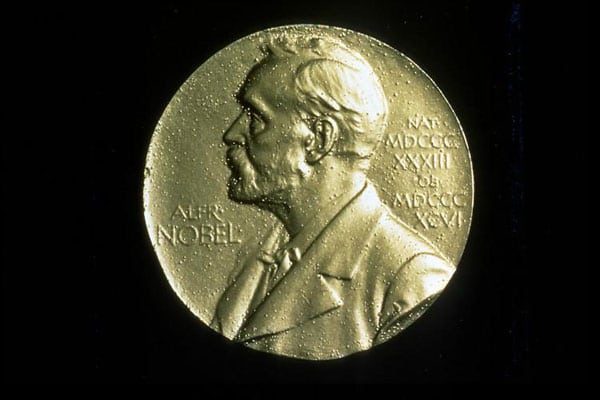
In 2005, Dr. Thomas Schelling received (along with Israeli economist Robert J. Aumann) the Nobel Prize in Economics—and an 18-karat gold medal to symbolize his achievement. Now, 18 months after Schelling’s death at the age of 95, his family has auctioned the medal and donated the proceeds—a whopping $187,000—to the Southern Poverty Law Center (SPLC). In the current environment, it would seem that the timing of this gift could hardly be better for SPLC, a nonprofit headquartered in Montgomery, Alabama, that describes its work as “fighting hate, teaching tolerance and seeking justice.”

Schelling’s widow, Alice, explained the unusual legacy gift:

Tom, a most rational man, was also someone who felt empathy, especially towards those whom he perceived to be unjustly treated. For that reason, he and I have been longtime supporters of the Southern Poverty Law Center and it was Tom’s wish that his Nobel medal be auctioned off and the proceeds donated to the SPLC. Hate and extremism should have no place in our country.

Schelling received the Nobel Prize for his work on “game theory in relation to conflict resolution and avoiding war.” A New York Times obituary in December 2016 described him as a “master theorist of nuclear strategy” and traced his fascinating career in government and academia, working in Europe to help implement the Marshall Plan, working at the White House through the Cold War, even consulting on the screen adaptation of the novel Red Alert into the movie Dr. Strangelove. That obituary also included the following passage, which perhaps offers a link to Schelling’s commitment to the work of SPLC:

Sign up for our free newsletters

Subscribe to NPQ's newsletters to have our top stories delivered directly to your inbox.

By signing up, you agree to our privacy policy and terms of use, and to receive messages from NPQ and our partners.

In the 1970s, Professor Schelling moved on to other social questions that seemed to be fertile ground for game theory, notably the dynamics behind racial change in American neighborhoods.

Expanding on the work of Morton Grodzins, a political scientist at the University of Chicago who used the term “tip point” to describe the crucial moment when white fears become white flight, Mr. Schelling offered a simple diagram, almost like a game board, to show how mixed urban neighborhoods could quickly become entirely black, even when white residents expressed only a slight preference for living among members of their own race.

His papers on the subject, and his book Micromotives and Macrobehavior (1978), achieved wider currency when his ideas were popularized by Malcolm Gladwell in his best-selling book The Tipping Point (2000).

As noted in the report, Schelling’s research was in some ways ahead of its time. Maureen Cropper, chairwoman of the economics department at the University of Maryland, where Schelling taught for more than a decade before retiring in 2003, observed, “The topics that he worked on are all topics that remain relevant today and the fact that he was working on them in the middle of the last century almost really does show the fact that he was a very broad thinker as well as a very deep thinker.”

In acknowledging the gift, SPLC president Richard Cohen said, “I am a longtime admirer of Thomas Schelling and his intellect. My colleagues and I are deeply grateful to have his support and that of his wife in our work to end hate and bigotry.”—Eileen Cunniffe


Our Voices Are Our Power.

Journalism, nonprofits, and multiracial democracy are under attack. At NPQ, we fight back by sharing stories and essential insights from nonprofit leaders and workers—and we pay every contributor.

Can you help us protect nonprofit voices?

Your support keeps truth alive when it matters most.
Every single dollar makes a difference.

Donate now
logo logo logo logo logo
About the author
Eileen Cunniffe

Eileen Cunniffe has worked in the nonprofit arts sector for more than a decade, managing board development, capacity-building consulting projects and skill-based volunteer programs. She also has deep experience in corporate public affairs, organizational communications and community relations work. In addition to writing for NPQ, Eileen also writes and publishes creative nonfiction.

More about: Economic PolicyNonprofit NewsPhilanthropyPolicySocial Movements
See comments

Call to action
You might also like
Making Sense of GivingTuesday 2025
Isaiah Thompson
Blocking Authoritarianism: Steps Nonprofits and Foundations Must Take
Saqib Bhatti
Social Enterprise: Lessons from Down Under
Vicki Pozzebon
The Power of Direct Community Funding
Ana Valéria Araújo
Organizers at Global Teach-ins Seek Solutions and Envision What Comes Next
April Doner and Deissy Perilla
Equitable Intermediaries: Power, Protection, Partnership
Frank Gargione and Andrea Granda

Upcoming Webinars

Group Created with Sketch.
January 29th, 2:00 pm ET

Participatory Decision-making

When & How to Apply Inclusive Decision-making Methods

Register
Group Created with Sketch.
February 26th, 2:00 pm ET

Understanding Reduction in Force (RIF) Law

Clear Guidance for Values-centered Nonprofits

Register

    
You might also like
A red circle overlayed on a yellow background with three multi-colored dots on each side. In the center it reads, " Isaiah Thompson: Staff Picks for 2025"
Staff Picks for 2025: Isaiah Thompson
Isaiah Thompson
Staff Picks for 2025: Steve Dubb
Steve Dubb
A red circle overlayed on a yellow background with three multi-colored dots on each side. In the center it reads, "Alison Stine: Staff Picks for 2025"
Staff Picks for 2025: Alison Stine
Alison Stine

Like what you see?

Subscribe to the NPQ newsletter to have our top stories delivered directly to your inbox.

See our newsletters

By signing up, you agree to our privacy policy and terms of use, and to receive messages from NPQ and our partners.

  • About
  • Advertise
  • Careers
  • Contact
  • Copyright
  • Donate
  • Editorial Policy
  • Funders
  • Submissions

We are using cookies to give you the best experience on our website.


Nonprofit Quarterly | Civic News. Empowering Nonprofits. Advancing Justice.
Powered by  GDPR Cookie Compliance
Privacy Overview

This website uses cookies so that we can provide you with the best user experience possible. Cookie information is stored in your browser and performs functions such as recognising you when you return to our website and helping our team to understand which sections of the website you find most interesting and useful.

Strictly Necessary Cookies

Strictly Necessary Cookie should be enabled at all times so that we can save your preferences for cookie settings.