
Reimagining Philanthropy explores transformative and decolonized approaches to philanthropy that can shift our sector from traditional top-down models toward more equitable, community-centered practices. In community, we explore how philanthropic organizations can share power authentically, center affected communities in decision-making, and build truly reciprocal relationships.
In June 2025, the two of us jointly resigned from the editorial advisory committee of Alliance Magazine—a leading London-based platform that we had collectively served for many years—in protest of its position of neutrality in the face of the ongoing Israeli genocide in Palestine.
We decided to resign due to the Palestine exceptionalism embodied by the nature of Alliance’s coverage and its failure to hold philanthropy accountable for the sector’s complicity in the genocide.
Our participation in the editorial advisory committee was premised on bringing Global Majority (Global South) perspectives, viewpoints, and narratives to the publication, so our decision was not easy. Ultimately, however, we decided to sacrifice influence through this platform because we could no longer legitimize an institution with such a deeply flawed approach to an era-defining issue. In silence lies complicity, and philanthropy’s complicity has been stark and demands scutiny.
The lack of critical philanthropic intervention to meet even the dire humanitarian needs in Palestine over two years of genocide—let alone the systemic drivers underlying it—is not merely a failure of one aspect of the sector. It is, rather, a failure of the system and the sum of all its parts. Here we wish to explore and examine more broadly our sector’s lack of meaningful response at this moment in history, which demands scrutiny and a harsh reckoning.
If this is not the moment to stand up to oppressive power, then what is?
Throughout our careers, we have both been dedicated to challenging issues of power and privilege in the institutionalized philanthropic system, the complicity of the system in retaining rather than transforming the status quo. In reality, philanthropic “transformations,” presented as deep change, are often depoliticized and diluted, only yielding shallow impact. There is a longstanding mismatch between the depth of the philanthropic sector’s response and the scale of the systemic inequalities it seeks to address.
We have both been vocal about the colonial and racist dynamics, narratives, and practices that continue to characterize much of the philanthropic sector—particularly regarding the harmful ways in which it operates in relation to the Global Majority. These were the questions, ethical considerations, and values we discussed and mulled over for over six months, before finally resolving that resignation was our only option, and that in order to be meaningful it needed to be public.
We share our perspectives in the hope that, as individuals and a sector, we can collectively shape philanthropic systems that actively catalyze justice. We must address the stark contradictions of a sector meant to be dedicated to equality and justice yet failing in its fundamental duty of care.
Why Palestine Matters
While we know that Palestine is not the only crisis in the world, it has borne the burden of being at the center of much of the geopolitical landscape in the past two years.
We find that the question of Palestine serves as a litmus test for moral clarity and justice, and we’ve seen, in the broader response of governments, development agencies, and the global philanthropic sector overall, a very bleak picture of just how power is wielded to entrench racial superiority and how Black and Brown bodies continue to be seen as dispensable in the face of retaining colonial domination over people and resources of the Global Majority.
The genocide in Palestine—and the broader implications this has had on unveiling the gross injustices and inequities perpetrated by the Zionist settler-colonial project against the Palestinian people over the last 77-plus years—is an acute reflection of this.
One unique feature of the Palestine exception is that no other genocide has been continuously livestreamed on our devices quite like this one. And yet the world’s power structures and the institutions that support them have refused to intervene in any meaningful way at best, and at worst have contributed to the genocide.
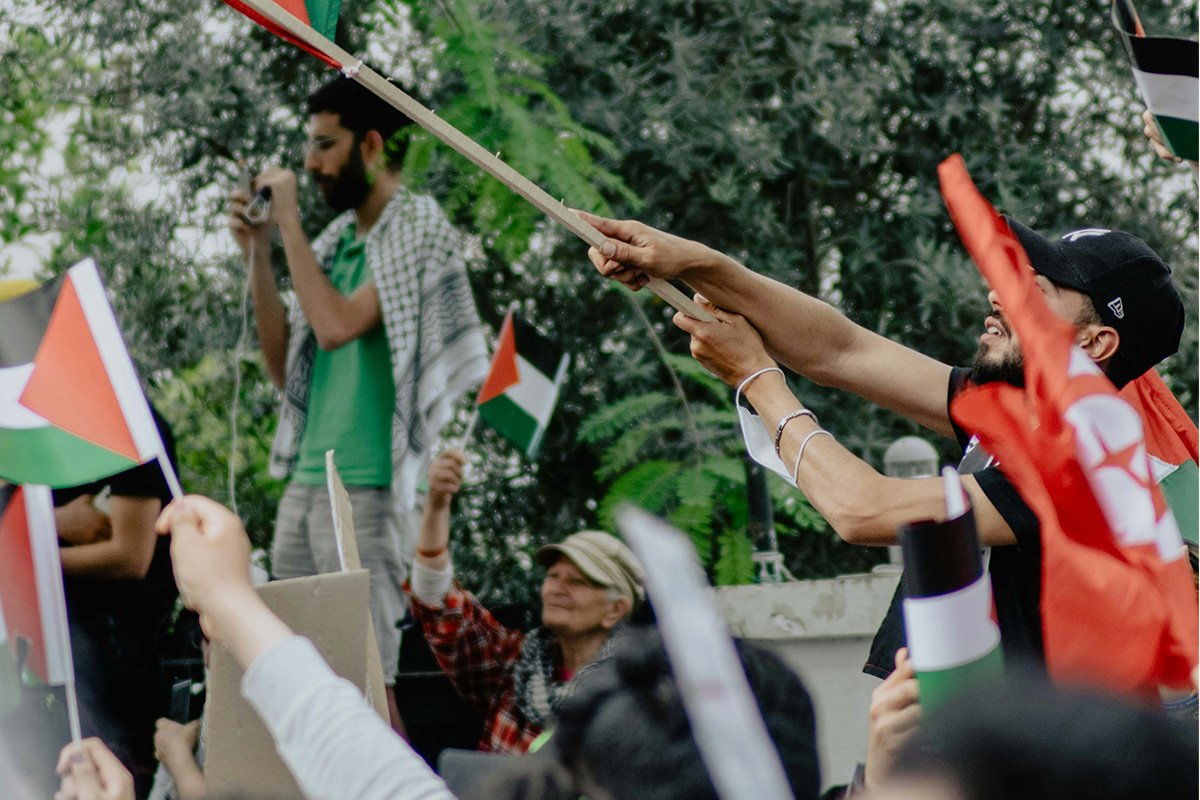
Despite the hundreds of thousands of protesters marching in streets across hundreds of cities around the world, while ordinary citizens made their voices and objections heard, for far too long governments and corporations—and even humanitarian and philanthropy organizations—consistently refused to acknowledge the genocide and the humanitarian catastrophe unfolding in front of our eyes.
By the time institutions with any global credibility—like Human Rights Watch, Amnesty International, and the International Court of Justice—came out to declare the genocide (or its plausibility) as what it is, the toll was already extraordinary. The official death toll in Gaza by the Gaza Health Ministry now exceeds 70,000 people, but the actual number of deaths is likely much higher.
For far too long…even humanitarian and philanthropy organizations consistently refused to acknowledge the genocide and the humanitarian catastrophe unfolding in front of our eyes.
Sign up for our free newsletters
Subscribe to NPQ's newsletters to have our top stories delivered directly to your inbox.
By signing up, you agree to our privacy policy and terms of use, and to receive messages from NPQ and our partners.
Francesca Albanese, a United Nations special rapporteur on Palestine, declared at a press conference in Geneva in September 2025 that 680,000 lives lost is “the number that some scholars and scientists claim being the real death toll in Gaza.”
It’s important to note the reason for the discrepancy in the numbers of deaths reported: As a measure of hyper-vigilance on the part of the Gaza Health Ministry, and to avoid questions around the credibility of the reported statistics, only the number of confirmed, identified, and recovered bodies of those killed are reported officially. The general consensus is that the number of deaths that meet those criteria is very low.
In addition, most hospitals have been destroyed, the population has experienced starvation and severe malnutrition, 200-plus journalists have been killed by Israel, and homes and hallmarks of a vibrant, albeit oppressed, society have been decimated.
Can Philanthropy Play a Positive Role?
For those of us whose work is anchored in justice and equality, the failure of philanthropy at large to act has been enraging, leaving us desperate and confused. Coupled with the silencing and threats to our livelihoods for speaking out, the situation has made it difficult to feel hopeful about the sector and our place in it.
As a sector predicated on humanity and the public good, how are we supposed to reconcile our complicity in this catastrophe with our intended duty of care?
We recognize that some within philanthropic institutions and networks globally have openly condemned the genocide. Others have supported, funded, and advocated for Palestinian liberation and justice. This includes such groups as Arab Foundations Forum, Jewish Donors in Philanthropy, Funders4Palestine, and others.
The majority of institutional philanthropy, however, has chosen silence or neutrality. Some have done worse, penalizing grantees for projects supporting Palestine or even for solidarity statements advocating for a ceasefire. As a recent Funding Freedom report detailed, some foundations have “policed the language of grantees, added new requirements to grant agreements, or dropped grantees altogether.”
Institutions and philanthropic intermediaries in the Global Majority have not escaped this either, with a range of implications including forced closure, defunding, and oppressive renegotiated contract terms. Too many civil society and philanthropy institutions in the Global Majority have chosen neutrality or silence to preserve funding and remain in the good graces of donors.
Additionally, these contexts and implications are rarely discussed publicly. Our philanthropy infrastructure institutions, for the most part, have avoided this topic and have delayed confrontation—a confrontation we believe is both necessary and inevitable. The “Palestine exception” has become imbued—in extremely worrying ways—both implicitly and explicitly within nonprofits and philanthropy.
Recentering Justice Through Accountable Governance
Across the sector, Palestine has become a source of tension—among staff, between staff and leadership, between leadership and boards, and within boards. Yet most of these debates remain internal, with “playing it safe” too often becoming the default public stance. In some institutions, a climate of fear has silenced staff from speaking or acting on principle. In others, internal discussions occur but fail to influence strategy, positioning, or commitments to freedom of expression and association.
We are seeing a wave of philanthropies adopt increasingly conservative postures—in general, and specifically on Palestine—by depoliticizing structural issues to maintain distance. Boards have been central in enabling this shift. While we recognize the wider climate of threats to philanthropy and the instinct to avoid further scrutiny, we must ask: If this is not the moment to stand up to oppressive power, then what is?
We must address the stark contradictions of a sector meant to be dedicated to equality and justice yet failing in its fundamental duty of care.
This moment demands an honest examination of how governance functions across the philanthropic sector—not simply as a compliance mechanism, but as a set of values that should empower organizations to act with courage, integrity, and political clarity when the stakes are highest. In the context of Palestine—and what it represents globally in struggles against oppression—governance models must be reimagined to create safe, enabling spaces rather than punitive, risk-averse ones.
This requires governance bodies, including those of Global Majority intermediaries funded from outside, to interrogate their roles in several important ways. Among these are the following:
- Restore the politics of justice to the center of philanthropic work. By this we do not mean partisan politics, but rather the politics of confronting power, privilege, structural violence, and inequity—a distinction that is too often collapsed to justify inaction.
- Ask sharper strategic questions. Governance must press institutions to assess how their strategies and programs are shaped by, and respond to, the current context—and whether they meaningfully advance rights, justice, and protection for the spaces they support.
- Define and practice substantive solidarity. This means not only endorsing principled positions but ensuring they translate into action—and holding leadership accountable when they do not.
- Take bolder risks. Those on the ground take the biggest risks, and governance bodies need to be bolder in advancing institutional positions that can help absorb and mitigate those risks. This is not the time for conservative retreat, but for bold and protective action.
- Reassess philanthropic assets and investment practices. Governance should scrutinize investments tied to institutions complicit in violence and explore divestment as a first step, moving toward ethical, justice-aligned investment strategies. The doctrine of maximizing market returns—regardless of social harm—must be challenged.
- Expand the horizon on endowments and reparations. A commitment to substantially resourcing Global Majority institutions and spaces must become central. Conversations about significant asset transfer remain rare, constrained by narratives of efficiency, risk, and control. A focus within nonprofits and philanthropy on sustainability, rather than independence, has constrained the agency and transformative potential of civic action in the Global South. True independence and ecosystem strength cannot emerge without philanthropies interrogating their own historical complicities and obligations. Board members must lead these conversations, not avoid them, and hold their respective institutions accountable by ensuring that explorations are engaged with, not on behalf of, the communities they intend to serve—especially those that have been the most harmed.
Ultimately, we must ask: What should institutions be accountable to—and what happens when governance itself is complicit? If governance is to serve its purpose, it must evolve from a structure that manages risk to one that enables principled, justice-aligned action—especially when times are toughest.