
Reimagining Philanthropy explores transformative and decolonized approaches to philanthropy that can shift our sector from traditional top-down models toward more equitable, community-centered practices. In community, we explore how philanthropic organizations can share power authentically, center affected communities in decision-making, and build truly reciprocal relationships.
“How can you think about creating civic spaces when those who fight for them are being threatened?”
Funding, safety, democracy promotion, and community control in the Global South cannot be understood in isolation from one another.
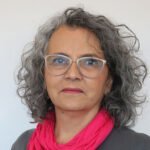
Mara Carneiro, formerly the general coordinator (executive director) of CEDECA Ceará (Centro de Defesa da Criança e do Adolescente do Ceará, The Center for the Defense of Children and Adolescents of Ceará), raised this question to NPQ when asked to discuss the role of direct community funding in supporting human rights defense work in Brazil.
The questions of funding, safety, democracy promotion, and community control in the Global South cannot be understood in isolation from one another. Who writes the checks, in short, is not the only factor to consider. But having direct community control of philanthropy is important.
Indeed, in Brazil, it has proven to be essential in enabling community activists to organize and respond to state violence—and to defend human rights.
The Curió Massacre
In November 2015, in an act of retaliation for the death of a police officer, military police officers executed 11 people in about three hours in a peripheral area of the city of Fortaleza in an event known as the Curió Massacre. Most of the victims were under 18 years old.
Public outrage over the massacre has led to one of the most extensive set of trials on police violence in the history of Brazil. The mere existence of these cases already represents a milestone for human rights in Brazil. It is also a powerful example of the role of local organizations in social transformation and the potential for flexible, long-term philanthropic funding to drive change.
Human rights work in Brazil is urgent….Incarceration rates have risen rapidly [to] the third-highest prison population in the world.
These cases come not a moment too soon in a country where over 6,000 people have died annually at the hands of police officers—in 2024, that number was 6,243, according to the Brazilian Yearbook of Public Security (Anuário Brasileiro de Segurança Pública).
This works out to more than four times the number of fatal police shootings in the United States, even though Brazil has a third fewer people. On average, three out of every four victims of police violence in Brazil are Black, according to Human Rights Watch.
Human rights work in Brazil is urgent and extends beyond seeking accountability for the massacre. Incarceration rates have risen rapidly in Brazil from 212,000 in 2000 to 726,000 by June 2016.
Today, over 900,000 people are in prison in Brazil, giving it the third-highest prison population in the world, trailing only the United States and China. As a result of this mass incarceration, torture within the system and insecurity throughout society have also increased.
The Story of a Local Community Group
CEDECA Ceará is a nonprofit created to defend the rights of children and adolescents in the northeastern Brazilian state of Ceará. The nonprofit focuses on addressing cases involving state neglect or abuse and was established following a developing model—locally based centers for the defense of children and adolescents in different Brazilian cities.
Immediately after the massacre, CEDECA started providing support to the mothers and families of the victims, educating them on their rights. As time passed and more resources became available, CEDECA’s work expanded to seek accountability for the massacre.
Carneiro recalled that at the time of the massacre CEDECA was going through “a very difficult time caused by a lack of financial resources, which affected the health and permanence of the team.” Nonprofit financial strain is not an uncommon problem in Brazil, but the fact that the massacre occurred at a time of internal restructuring made organizing an effective response more challenging.
Importantly, the Brazil Fund is not governed by funders or from abroad but rather by Brazilian activists from diverse causes.
Fortunately, the Brazil Fund (Fundo Brasil) helped CEDECA cover some of its restructuring costs. Created 19 years ago with a $400,000 seed grant from the Ford Foundation, the Brazil Fund has attracted additional funders over time, including: Open Society Foundations, Laudes Foundation, Tenure Facility, Porticus, Brot für die Welt (Bread for the World), Oak Foundation, Wellspring Philanthropic Fund, Nia Tero, the Climate and Land Use Alliance, and the Warner Music Group Social Justice Fund.
Importantly, the Brazil Fund is not governed by funders or from abroad but rather by Brazilian activists from diverse causes—land and territory, racial justice, women’s rights, Indigenous peoples’ rights, LGBTQIA+ rights, the protection of human rights defenders, among others.
In short, the Brazil Fund aims to mobilize and allocate funding to grassroots groups, social movements, and nonprofits. It supports grassroots organizations as its priority audience, also providing strategic support to regional and national movement organizing and nonprofits, enabling cohesive and diverse movements to better influence structural policy change.
Sign up for our free newsletters
Subscribe to NPQ's newsletters to have our top stories delivered directly to your inbox.
By signing up, you agree to our privacy policy and terms of use, and to receive messages from NPQ and our partners.
The Brazil Fund is not alone. As part of a group of independent Brazilian funds and foundations, most of whom are part of the Comuá Network (Rede Comuá), it facilitates the flow of funding to grassroots groups, ensuring that funds reach communities in more remote regions of the country. At the same time, they provide technical assistance to these groups, strengthening their institutional capacities and, consequently, amplifying their role in public debate.
This path, which builds on the autonomy of local organizations, requires trust-based relationships and differs markedly from funders who take top-down decisions without considering local knowledge and practices.
CEDECA Ceará first became eligible for funding from the Brazil Fund in 2014, and initial support enabled CEDECA to fully commit to the fight for human rights within the criminal justice system in Brazil. Since 2014, the Brazil Fund has contributed approximately $100,000 (given exchange rate variations) to CEDECA Ceará. Over the past five years, CEDECA has also received funding from other foundations, including those from the Global North.
The Curió Trials
The trials for the Curió Massacre started in 2023, eight years after the event. During five trials, CEDECA has offered the victims’ mothers psychosocial support in a dedicated room—a measure that also had a political function.
“It was key to ensuring that these women could remain strong amidst the pain, the stories of violence, the photos of their dead children, so that they could give interviews, and continue to press for a verdict that would be positive for the families,” said Carneiro.
As part of the support provided to enable the Curió mothers to attend the trials and press for justice, CEDECA Ceará obtained funding from the Brazil Fund to cover their transportation, accommodation, and protection costs during the hearings.
Over the past 10 years, the Curió case has become a symbol in the fight for rights.
“Initially, the press justified the crimes….In addition to their physical death, the teenagers were also subjected to a social death,” said Carneiro. “But we turned the conversation around, and we have reached a point where there is a lot of interest from media outlets across the country, with the public narrative highlighting the mothers’ victory against state violence.”
Defenders at Risk
In the fight for their right to memory, justice, and redress for the murders of their children, the mothers of the Curió Massacre became human rights defenders. Many are now part of witness and victim protection programs.
In Brazil, being a human rights defender is risky. Over 2023 and 2024, 55 human rights defenders were killed amid a total of 486 incidents of recorded violence. The data is from a report titled On the Front Line (Na Linha de Frente) produced by Justiça Global (Global Justice) and Terra de Direitos (Land Rights).
CEDECA has partnered with other groups, such as Mothers of Curió (Mães de Curió), which has also received Brazil Fund backing. The report’s findings confirmed the need for protection, revealing cases of clandestine listening devices installed in collective meeting spaces, spying with drones, and direct intimidation.
Making Trust-Based Philanthropy Work
How does trust-based philanthropy work in practice in Brazil? The goal is to reduce bureaucracy by simplifying project selection so that foundations and grantees can focus on the responsible use of resources. In this way, the Brazil Fund strengthens and promotes the autonomy of grassroots groups, social movements, and nonprofits—highlighting local strategies built on diverse knowledge, promoting community and collective development, and empowering individuals to take leadership roles.
Central to this approach is active listening, which enables the Brazil Fund to continually adjust strategies as needed.
All told, over 19 years, Brazil Fund grants have totaled approximately $29 million to about 2,100 initiatives, the advocates of Curió among these.
Other Brazil Fund grantees include the Grupo de Agricultores Familiares e Extrativistas do Purupuru (Group of Family Farmers and Foresters of Purupuru) in the state of Amazonas, which recently organized a regional meeting to discuss climate change and how to support sustainable production that meets community needs.
Agência Diadorim, another grantee, is an LGBTQIA+ community digital publication; its website offers digital tools for searching and analyzing anti-LGBTQIA+ legislation and monitoring political candidates who have adopted hate speech, key resources for advocates defending rights and countering misinformation.
The struggle for justice and human rights is difficult. But some progress has been made. With the Curió Massacre, some perpetrators have been held accountable and some victims’ families have secured modest compensation. The state of Ceará has also taken public policy steps, including forming the Rede Acolhe (Welcome Network) to provide psychosocial and legal support to victims and families affected by violence.
In Mara Carneiro’s view, human rights defenders are making a difference. “These signs of progress and changes happen in the long term,” she pointed out, with the help of long-term investments. In CEDECA’s case, support over 11 years has offered the group stability to establish itself as a leading voice in confronting institutional violence, racism, torture, and bias in the criminal justice system.