logo logo
giving banner
Donate
    • Membership
    • Donate
  • Social Justice
    • Racial Justice
    • Climate Justice
    • Disability Justice
    • Economic Justice
    • Food Justice
    • Health Justice
    • Immigration
    • LGBTQ+
  • Civic News
  • Nonprofit Leadership
    • Board Governance
    • Equity-Centered Management
    • Finances
    • Fundraising
    • Human Resources
    • Organizational Culture
    • Philanthropy
    • Power Dynamics
    • Strategic Planning
    • Technology
  • Columns
    • Ask Rhea!
    • Ask a Nonprofit Expert
    • Economy Remix
    • Gathering in Support of Democracy
    • Humans of Nonprofits
    • The Impact Algorithm
    • Living the Question
    • Nonprofit Hiring Trends & Tactics
    • Notes from the Frontlines
    • Parables of Earth
    • Re-imagining Philanthropy
    • State of the Movements
    • We Stood Up
    • The Unexpected Value of Volunteers
  • CONTENT TYPES
  • Leading Edge Membership
  • Newsletters
  • Webinars

Great Crowdfunding Model at New York’s Jewish Museum: “Take Me, I’m Yours”

Ruth McCambridge
August 10, 2016
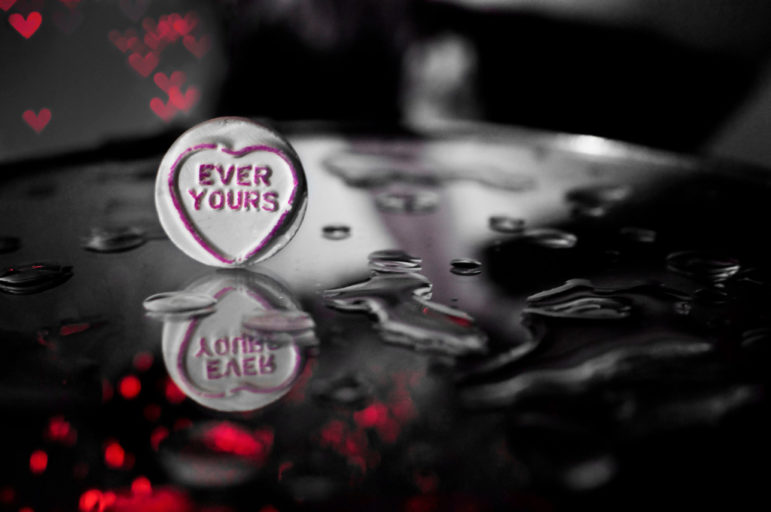
Love-forever-yours
Ever Yours / Luke Hayfield

August 9, 2016; ArtNews

The alignment between this particular fundraising effort and the project being supported impressed us, so we thought we’d share what we know.

New York’s Jewish Museum put its toe into crowdfunding waters when it launched a $30,000 campaign on Kickstarter to support an exhibition entitled “Take Me (I’m Yours).” This highly interactive exhibit was originally conceived in 1995 by curator Hans Ulrich Obrist and artist Christian Boltanski for London’s Serpentine Gallery. It featured interactive pieces by 12 artists, with some elements designed by the artists that visitors could take home. This was supposed to help challenge patrons’ ideas about the value of art.

The idea evidently travels well. Last year, the New York Times described an exhibition in the series at the mint in Paris:

Some works are meant to disappear entirely. In “Dispersion,” the French artist Christian Boltanski, a curator of the show, has placed four tall piles of used clothes in a high-ceilinged salon. Visitors can take out clothes in specially printed brown paper shopping bags.

At the time, Obrist commented, “Part of this is the idea that an exhibition can continue to grow.” Even though artists’ works are supposed to develop value over time, the exhibition also explores other manners of “exchange and giveaway, dissemination and distribution of artworks.”

Sign up for our free newsletters

Subscribe to NPQ's newsletters to have our top stories delivered directly to your inbox.

By signing up, you agree to our privacy policy and terms of use, and to receive messages from NPQ and our partners.

The German artist Hans-Peter Feldmann lined an entire room with Eiffel Tower postcards, which visitors can also take away. The work explores how objects become art.

“If you look at it, it’s like a postcard of the outside of a museum,” Mr. Boltanski said. “But if you put it in a ‘Take Me (I’m Yours)’ bag it becomes precious.”

“It’s like the water at Lourdes,” he added. “If it’s water, it’s worth nothing. If you put it in the bottle, it’s worth something. It is a very serious reflection on the philosophy of what a relic is.”

This new exhibit at the Jewish Museum uses the same basic premise and will be curated by Obrist and staff from the museum. The exhibit as it appears online will involve a total of 40 artists, with many site-specific works designed to be hands-on. And some will be designed to be carted home—for instance, some air by Yoko Ono and temporary tattoos by Lawrence Weiner.

The rewards donors can expect for giving to the crowdfunding campaign—a fundraising mechanism where rewards for investors are an expected part of many successful campaigns—are a perfect fit. All of these rewards are fashioned by participating artists, such as a Rirkrit Tiravanija-designed T-shirt or a “limited edition” bottle of pill capsules from Carsten Höller’s “Pill Clock Project,” for instance.

Other nonprofits may not have an opportunity so obviously well suited to such a campaign, but the alignment of ask to end result makes the donors real participants in the effort and then gives them “something to remember us by.” That is just smart!—Ruth McCambridge


Our Voices Are Our Power.

Journalism, nonprofits, and multiracial democracy are under attack. At NPQ, we fight back by sharing stories and essential insights from nonprofit leaders and workers—and we pay every contributor.

Can you help us protect nonprofit voices?

Your support keeps truth alive when it matters most.
Every single dollar makes a difference.

Donate now
logo logo logo logo logo
About the author
Ruth McCambridge

Ruth is Editor Emerita of the Nonprofit Quarterly. Her background includes forty-five years of experience in nonprofits, primarily in organizations that mix grassroots community work with policy change. Beginning in the mid-1980s, Ruth spent a decade at the Boston Foundation, developing and implementing capacity building programs and advocating for grantmaking attention to constituent involvement.

More about: Arts and CultureCrowdfundingFundraisingNonprofit NewsPhilanthropy
See comments

You might also like
Giving Bigger, Organizing More Boldly: Centering Disability Justice
Katrina Schaffer
Philanthropy Must Defend the Right to Bear Witness
Vina Kay and Melissa Rudnick
Funders Need to Get Dollars Out the Door for 2026 Midterms
Joe Goldman
Resistance and Redistribution in Alaska
Margi Dashevsky
This Is Not a Retreat
Nwamaka Agbo
The Palestine Exception: Interrogating Philanthropy’s (Non) Response to Genocide
Naila Farouky and Halima Mahomed

Upcoming Webinars

Group Created with Sketch.
February 26th, 2:00 pm ET

Understanding Reduction in Force (RIF) Law

Clear Guidance for Values-centered Nonprofits

Register
Group Created with Sketch.
March 19th, 2:00 pm ET

Open Board Search

How Casting a Wide Net Transforms Nonprofit Governance

Register

    
You might also like
A silhouette of a person in a wheelchair with outstretched arms overlooking a picturesque mountainous view, symbolizing bold and big vision for disability justice.
Giving Bigger, Organizing More Boldly: Centering Disability...
Katrina Schaffer
Philanthropy Must Defend the Right to Bear Witness
Vina Kay and Melissa Rudnick
An illustrated graphic of a hand pressing a stopwatch with a fan of money behind it, symbolizing the necessity or early and timely funding.
Funders Need to Get Dollars Out the Door for 2026 Midterms
Joe Goldman

Like what you see?

Subscribe to the NPQ newsletter to have our top stories delivered directly to your inbox.

See our newsletters

By signing up, you agree to our privacy policy and terms of use, and to receive messages from NPQ and our partners.

  • About
  • Advertise
  • Careers
  • Contact
  • Copyright
  • Donate
  • Editorial Policy
  • Funders
  • Submissions

We are using cookies to give you the best experience on our website.


Nonprofit Quarterly | Civic News. Empowering Nonprofits. Advancing Justice.
Powered by  GDPR Cookie Compliance
Privacy Overview

This website uses cookies so that we can provide you with the best user experience possible. Cookie information is stored in your browser and performs functions such as recognising you when you return to our website and helping our team to understand which sections of the website you find most interesting and useful.

Strictly Necessary Cookies

Strictly Necessary Cookie should be enabled at all times so that we can save your preferences for cookie settings.