logo logo
giving banner
Donate
    • Membership
    • Donate
  • Social Justice
    • Racial Justice
    • Climate Justice
    • Disability Justice
    • Economic Justice
    • Food Justice
    • Health Justice
    • Immigration
    • LGBTQ+
  • Civic News
  • Nonprofit Leadership
    • Board Governance
    • Equity-Centered Management
    • Finances
    • Fundraising
    • Human Resources
    • Organizational Culture
    • Philanthropy
    • Power Dynamics
    • Strategic Planning
    • Technology
  • Columns
    • Ask Rhea!
    • Ask a Nonprofit Expert
    • Economy Remix
    • Gathering in Support of Democracy
    • Humans of Nonprofits
    • The Impact Algorithm
    • Living the Question
    • Nonprofit Hiring Trends & Tactics
    • Notes from the Frontlines
    • Parables of Earth
    • Re-imagining Philanthropy
    • State of the Movements
    • We Stood Up
    • The Unexpected Value of Volunteers
  • CONTENT TYPES
  • Leading Edge Membership
  • Newsletters
  • Webinars

Former DC Official Advocates “Homegrown” Alternative to Amazon Rush

Steve Dubb
November 29, 2017
“Hackfort 2 Hackathon at Trailhead” [cropped] by Daniel X. O’Neil

November 27, 2017; CityLab

“Cities are right to pour their energy into homegrown businesses,” advises David Zipper, who served as director of business development for Washington, D.C. from 2009 to 2013 and now is a fellow at the German Marshall Fund.

Zipper is no wild-eyed local economy enthusiast. Indeed, he warns cities against issuing high-risk “large contracts to local startups for untested or inferior products.” But, as Zipper outlines in CityLab, cities adopting a “grow-your-own” orientation to economic development can draw on a wide number of lower risk economic development tools that they have at their disposal.

As Zipper writes,

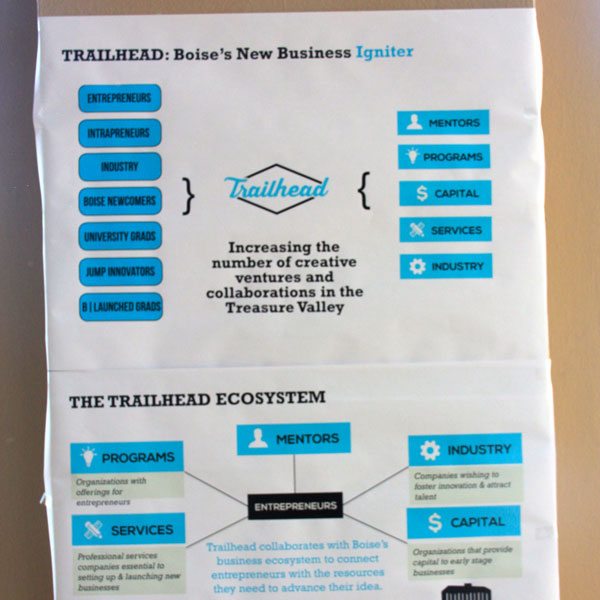
There are plenty of ways for city leaders to support startup-fueled economic development without dipping into public coffers. An easy process for business licensing and registration can nudge prospective entrepreneurs to take the plunge (and make life a little easier for existing businesses, too). Creating a startup advocate position within city hall—as Seattle has done—can give founders a useful “front door” when they have questions about setting up shop or navigating city government. Cities can also provide funding and support to create a startup hub that brings together students, entrepreneurs, investors, and corporations—much as Boise did when Trailhead launched in 2015. Each of these techniques can improve the urban environment for startups and make it easier for new ventures to launch and scale.

The nonprofit Trailhead acts both as a hub and accelerator for local small businesses. It presently has about 375 individual members and supports more than 60 member companies. Similar organizations can be found in other cities. For example, in Richmond, Virginia, a city-business partnership known as RVA Works acts in a similar fashion.

Sign up for our free newsletters

Subscribe to NPQ's newsletters to have our top stories delivered directly to your inbox.

By signing up, you agree to our privacy policy and terms of use, and to receive messages from NPQ and our partners.

City officials can also use the bully pulpit to good effect. For instance, Zipper writes,

A mayor could visit a startup’s office or tweet about their product. A testimonial from a city official can be a powerful lift to an entrepreneur building a brand and show legitimacy to prospective customers. A mayor could also deploy her network to help a local startup, providing connections to city businesses that could become customers or partners. And if she really believes in a startup’s new product, a mayor could offer a chance to test it through an unpaid city pilot. Some startups may ask for a token payment to show they can close a deal, and that’s OK, too.

The nonprofit Institute for Local Self-Reliance, which has been advocating for locally based economic development for over 40 years, earlier this year produced a report that outlined eight city-based policy strategies that can form part of a comprehensive homegrown economic development strategy. In addition to setting up a small business office (like the startup office Zipper cites in Seattle), these policies include designing retail to favor local businesses (such as using zoning to ensure smaller spaces are available for local businesses to rent, potential set-asides for local businesses in larger retail developments, and limitations on the density of so-called formula or chain stores); rules that facilitate the adaptive reuse of old buildings, as Phoenix has done; expanding access to capital through loan funds; giving slight bid preferences to local business, as Cleveland, Ohio, has done; and shifting economic incentive dollars to support local business, as NPQ covered earlier this fall in Asheville, North Carolina.

“To summarize,” Zipper writes, “if you’re a city official ready to adopt a grow-your-own economic development strategy, make it easier for prospective entrepreneurs to take the plunge and celebrate them when they do. Simplify business regulations, tweet about successful startups, offer to do a city agency pilot, and introduce entrepreneurs to resources in the community.”

“And while you’re at it,” Zipper adds, “pat yourself on the back for doing something more productive than climbing aboard the HQ2 bandwagon.”—Steve Dubb


Our Voices Are Our Power.

Journalism, nonprofits, and multiracial democracy are under attack. At NPQ, we fight back by sharing stories and essential insights from nonprofit leaders and workers—and we pay every contributor.

Can you help us protect nonprofit voices?

Your support keeps truth alive when it matters most.
Every single dollar makes a difference.

Donate now
logo logo logo logo logo
About the author
Steve Dubb

Steve Dubb is senior editor of economic justice at NPQ, where he writes articles (including NPQ’s Economy Remix column), moderates Remaking the Economy webinars, and works to cultivate voices from the field and help them reach a broader audience. In particular, he is always looking for stories that illustrate ways to build a more just economy—whether from the labor movement or from cooperatives and other forms of solidarity economy organizing—as well as articles that offer thoughtful and incisive critiques of capitalism. Prior to coming to NPQ in 2017, Steve worked with cooperatives and nonprofits for over two decades, including twelve years at The Democracy Collaborative and three years as executive director of NASCO (North American Students of Cooperation). In his work, Steve has authored, co-authored, and edited numerous reports; participated in and facilitated learning cohorts; designed community building strategies; and helped build the field of community wealth building. Most recently, Steve coedited (with Raymond Foxworth) Invisible No More: Voices from Native America (Island Press, 2023). Steve is also the lead author of Building Wealth: The Asset-Based Approach to Solving Social and Economic Problems (Aspen 2005) and coauthor (with Rita Hodges) of The Road Half Traveled: University Engagement at a Crossroads, published by MSU Press in 2012. In 2016, Steve curated and authored Conversations on Community Wealth Building, a collection of interviews of community builders that Steve had conducted over the previous decade.

More about:
See comments

Call to action
You might also like
On the Oracle Alice Wong, Disability, and Community
Alison Stine
Staff Picks for 2025: Isaiah Thompson
Isaiah Thompson
The Deadly Combination of Pregnancy and Rural Living in the United States
Janelle Carlson
How Climate Instability and Extreme Heat Could Upend High School Sports
Roxanne L. Scott
Staff Picks for 2025: Steve Dubb
Steve Dubb
Staff Picks for 2025: Alison Stine
Alison Stine

Upcoming Webinars

Group Created with Sketch.
January 29th, 2:00 pm ET

Participatory Decision-making

When & How to Apply Inclusive Decision-making Methods

Register
Group Created with Sketch.
February 26th, 2:00 pm ET

Understanding Reduction in Force (RIF) Law

Clear Guidance for Values-centered Nonprofits

Register

    
You might also like
A red circle overlayed on a yellow background with three multi-colored dots on each side. In the center it reads, " Isaiah Thompson: Staff Picks for 2025"
Staff Picks for 2025: Isaiah Thompson
Isaiah Thompson
Staff Picks for 2025: Steve Dubb
Steve Dubb
A red circle overlayed on a yellow background with three multi-colored dots on each side. In the center it reads, "Alison Stine: Staff Picks for 2025"
Staff Picks for 2025: Alison Stine
Alison Stine

Like what you see?

Subscribe to the NPQ newsletter to have our top stories delivered directly to your inbox.

See our newsletters

By signing up, you agree to our privacy policy and terms of use, and to receive messages from NPQ and our partners.

  • About
  • Advertise
  • Careers
  • Contact
  • Copyright
  • Donate
  • Editorial Policy
  • Funders
  • Submissions

We are using cookies to give you the best experience on our website.


Nonprofit Quarterly | Civic News. Empowering Nonprofits. Advancing Justice.
Powered by  GDPR Cookie Compliance
Privacy Overview

This website uses cookies so that we can provide you with the best user experience possible. Cookie information is stored in your browser and performs functions such as recognising you when you return to our website and helping our team to understand which sections of the website you find most interesting and useful.

Strictly Necessary Cookies

Strictly Necessary Cookie should be enabled at all times so that we can save your preferences for cookie settings.