

March 28, 2018; Next City
Many entrepreneurs of color struggle to gain access to the capital and mentors necessary to succeed in business. But a growing number of nonprofits are working to develop a support system to change that.
One example is a group called the Runway Project, which partners with community-based nonprofits in Baltimore, Cincinnati, and Washington, DC to provide seed financing. The goal is to substitute for what is sometimes called “friends and family” money. Because of the racial wealth gap—in 2016, the median wealth for Black families was $17,600 was just over 10 percent of the white median household level of $171,000—entrepreneurs of color typically have far less access to startup capital from friends and family than white entrepreneurs. This lack of capital often keeps the business from reaching the stage where it can successfully access bank financing.
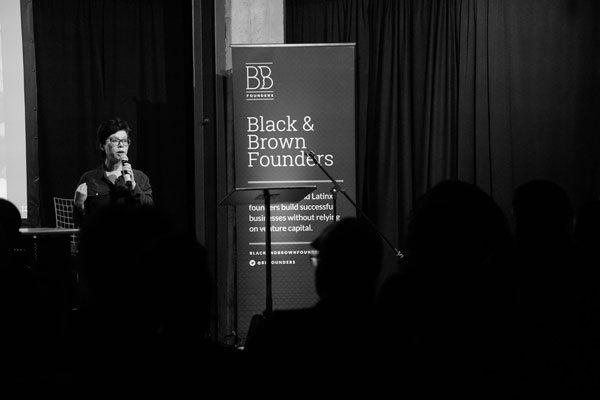
Another new nonprofit seeking to change this is Black and Brown Founders, which provides “community, education and access to Black and Latinx entrepreneurs, allowing them to build successful tech businesses with modest resources.” During 2017, Black and Brown Founders hosted three strategic convenings in different US cities and is looking to have several more throughout 2018. The focus of the events is to provide training in critical business areas like accessing financing, financing options, budgets, and managing growth. The stated goal of Black and Brown Founders is that 10 percent of the companies they work with will generate revenues of half a million dollars or more and have at least three employees by 2021.
Many nonprofits receive federal funding to support entrepreneurs of color at various stages of their business through the US Department of Commerce’s Minority Business Development Agency (MBDA) program. In sum, 44 MBDA centers provide assistance in business model development, understanding market demand, financing options, marketing, staffing considerations, business structure, and other essential details needed for a successful startup. MDBA centers assist later-stage businesses on increasing their market presence, hiring and managing staff, and growing their bottom lines through business development and contract procurement. The program is critical to addressing the gap in business development services for entrepreneurs of color as US “minority [sic]” business enterprises (MBE) represent 29 percent of all firms but only 11 percent have paid employees. If businesses owned by people of color employed workers at the same rate as white-owned business,13 million more Americans would have jobs.
Sign up for our free newsletters
Subscribe to NPQ's newsletters to have our top stories delivered directly to your inbox.
By signing up, you agree to our privacy policy and terms of use, and to receive messages from NPQ and our partners.
One successful locally based effort is the Metropolitan Economic Development Association (MEDA), located in Minneapolis. Last year, MEDA was recognized by the US Department of Commerce as the top performing MBDA-affiliated center in the country in 2017. MEDA supports entrepreneurs of color in various stages of development, including helping businesses secure larger contracts that facilitate business growth. In 2016, MEDA helped the businesses it worked with obtain over $165 million in contracts. MEDA is also a Community Development Financial Institution (CDFI) and provides flexible financing and loans to entrepreneurs in tandem with support services.
Across the country, many other CDFIs also support the needs of entrepreneurs of color by offering financing and technical assistance. In Portland, Oregon, for example, Micro Enterprise Services of Oregon (MESO) is a CDFI that offers credit-building programs to entrepreneurs of color to ensure that they are positioned to secure funding from traditional financial institutions. In Florida, BBIF is a nonprofit and CDFI that invests in businesses owned by people of color as a pathway to community revitalization; the CDFI’s loans have supported businesses that provide over 12,000 jobs since its inception.
CDFIs are also critical in helping entrepreneurs of color avoid predatory financing. According to the Opportunity Fund, a CDFI based in California, many businesses owned by people of color finance their operations through merchant cash advances (MCAs), which are high-interest loans that cut into cash flow and inhibit growth. According to the Opportunity Fund’s recent report, Unaffordable and Unsustainable: The New Business Lending on Main Street, the average APR of an MCA loan is 94 percent, and the average payment cost is nearly double (178 percent) owners’ net income. Many CDFIs can assist business owners of color get out from under their MCA loans, thereby freeing up cash flow to invest in staffing, infrastructure, and growth.
Overall, there is a high need for financing to support businesses owned by people of color. According to the US Department of Commerce, people of color own eight million businesses, a 38 percent increase since 2007. But these businesses often remain small due to challenges in accessing business education, disparities in contracting, and difficulty accessing credit from mainstream financial institutions. For nonprofits seeking to dismantle these disparities, it is essential to understand these underlying barriers, as well as the tools being developed to address them.—Derrick Rhayn