
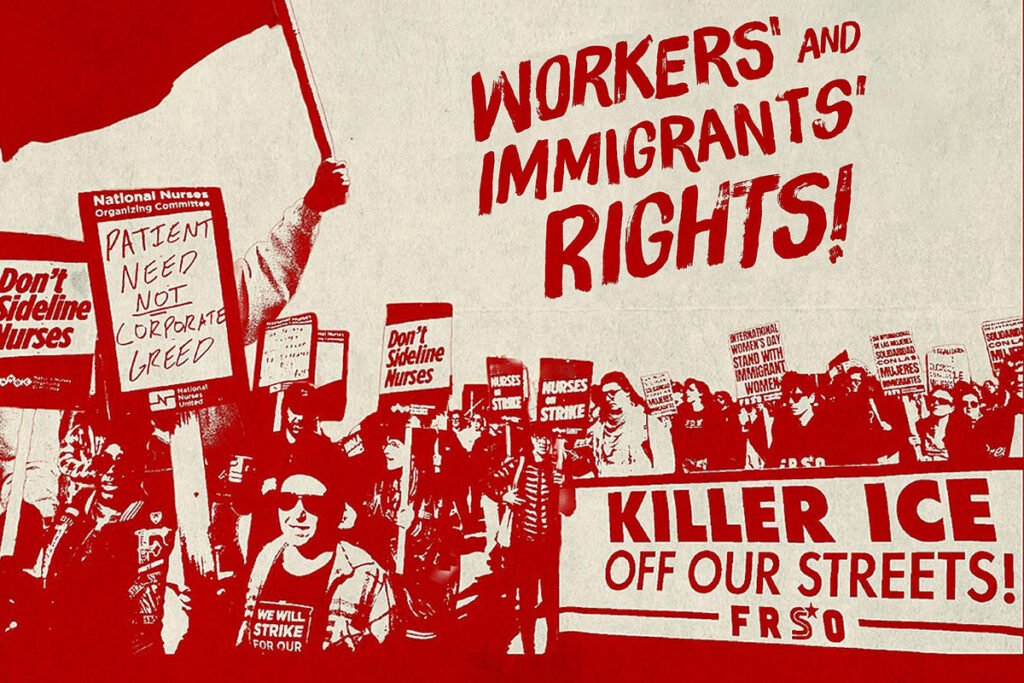
On May 1, 2026, thousands of workers across California took to the streets. Domestic workers, union members, student organizers, families, and neighbors. People who know they need each other.
They know what we know. As the great Audre Lorde said, “There is no such thing as a single-issue struggle because we do not live single-issue lives.”
Nowhere is this more present than at a protest where a mother, pushing her child in a stroller, marches alongside a group of teens with hand-painted signs, next to an organizer who has been doing this work for decades, standing shoulder to shoulder with neighbors, friends, family, and coworkers.
Because we trust that when the lives of our loved ones are better, when the lives of our neighbors are better, when the lives of every Californian is better, then we will be better.
Some may call a protest a simple performance. But what we at Women’s Foundation California see is a statement of values, a statement of solidarity. It is this interdependent solidarity that philanthropy must understand, especially now.
What We Witnessed
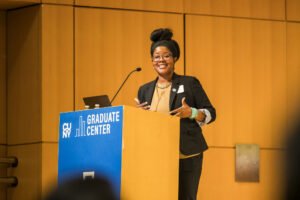
Sabreen Imtair, a youth organizer with the Arab Resource & Organizing Center (AROC), took the microphone during San Francisco’s May Day protest and named what many in the crowd were already feeling.
“We are undeterred on the front lines, with our communities fighting against this rising fascist agenda,” she said.
She shared how 20 workers’ unions across Palestine came together to call for international worker solidarity. And she added: “We believe that we will win. Because history shows us when we fight, we win.”
In Los Angeles, thousands marched from MacArthur Park to downtown, including Women’s Foundation California’s partner CHIRLA (the Coalition for Humane Immigrant Rights). Its director of communications, Jorge-Mario Cabrera, spoke about how this year marks two decades since the massive immigrant-rights mobilizations that swept the nation in 2006. The stakes feel just as high now—maybe higher.
“We need to defend and protect our democracy,” he said, naming immigrants, workers, women, LGBTQ communities, and voters in a single breath. Not as separate constituencies but as one people.
A representative from the California Domestic Workers Coalition reminded us what we know to be true: “We deserve safe workplaces, fair wages, worker and immigrant rights and protections, freedom for our families in ICE detention.”
They are one crisis, moving through different doorways.
Mujeres Unidas y Activas marched in Oakland and San Francisco, declaring: “We do have a voice, we do have power, and we are a united people.”
One marcher with CHIRLA put it plainly: “There are 14 million people who live in this country without legal status. The only protection they need is permanent residency with a path to citizenship. We want citizenship now.”
This was not abstract advocacy. These were people naming their lives.
Sign up for our free newsletters
Subscribe to NPQ's newsletters to have our top stories delivered directly to your inbox.
By signing up, you agree to our privacy policy and terms of use, and to receive messages from NPQ and our partners.
What We Can No Longer Ignore
May Day 2026 made visible what organizers on the ground have long understood: the attacks on workers, women, immigrants, voters, and communities of color are not separate crises. They are one crisis, moving through different doorways.
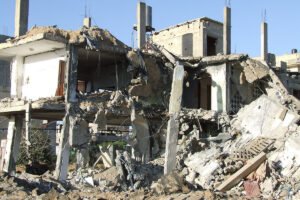
In recent months, the Supreme Court delivered a ruling that gutted key provisions of the Voting Rights Act, striking at a cornerstone of the multiracial democracy that generations fought to build. ICE quietly opened a new detention center in a former California prison, while thousands of community members remain separated from their families. The war in the Middle East continues to claim civilian lives, funded by US weapons and tax dollars. And the stock market climbs.
For too long, philanthropic institutions have treated labor organizing, immigrant rights, and international solidarity as separate silos.
Those who work the hardest in this country—who clean, care for, build, and serve—continue to be compensated and protected the least. AI consuming water and land to erode the livelihoods of artists, writers, and scholars adds another layer to an already precarious labor landscape. The through-line is not coincidence. It is policy. It is a deliberate concentration of political will aimed at disenfranchising working-class communities.
Somos el pueblo. We are the people. And the people showed up.
Now Philanthropy Has to Show Up Too
For too long, philanthropic institutions have treated labor organizing, immigrant rights, and international solidarity as separate silos: funding one here, another there, with careful distancing from anything that might feel too political, too loud, too movement-ish.
But the communities we claim to serve do not live in silos. The domestic workers who fear an ICE raid also fear losing their right to vote. The youth organizer chanting in solidarity with Palestinian unions understands that these struggles share a common root.
When philanthropy funds democracy, we should be willing to say that we believe in the right to vote, the right to organize, the right to remain.
The organizations that took to our streets on May 1 are doing extraordinary work, often with extraordinary precarity. Many are running lean budgets, absorbing care work that the state has abandoned, and navigating a funding landscape that still too often rewards respectability over power-building.
Here is what philanthropy must do:
- Fund the infrastructure of resistance, not just the outputs. General operating support for worker centers, immigrant rights organizations, and labor-aligned nonprofits is not a risk: it is the most direct investment in the health of our democracy. These organizations need multi-year, flexible funding to show up the way they showed up on May 1: consistently, powerfully, and without apology.
- Follow the intersections. The coalitions that filled those streets were not accidental. CHIRLA, Mujeres Unidas y Activas, the California Domestic Workers Coalition, and international labor voices were all present because the needs of their communities overlap and their fights converge. Philanthropy should fund coalitions and coordination—not just individual organizations competing for the same grants.
- Name what is being funded and why. When philanthropy funds democracy, we should be willing to say that we believe in the right to vote, the right to organize, the right to remain. Neutral language in a moment of deliberate disenfranchisement is not neutrality. It is a choice.
- Increase urgency and scale. The political will to attack these communities is, as organizers noted that day, extraordinary. The will to protect them—from foundations, from governments, from institutions—has not matched it. That gap is a philanthropy problem. Especially during times of economic uncertainty, we need multi-year grantmaking. We must fund beyond the minimum that extractive markets decide and do it for the long term. The time to give over our power is now. We need to make five to 10-year commitments to those on the ground.
The marchers did not need us to lead. They never did. What they need from institutions like ours is simpler and harder: resources, trust, and the willingness to be in relationship with movements over time—not just when it’s comfortable, not just when the cause is safe.
On May 1, 2026, people chanted: No fear. No silence. Just people power.
Philanthropy’s answer cannot be silence either.