logo logo
giving banner
Donate
    • Membership
    • Donate
  • Social Justice
    • Racial Justice
    • Climate Justice
    • Disability Justice
    • Economic Justice
    • Food Justice
    • Health Justice
    • Immigration
    • LGBTQ+
  • Civic News
  • Nonprofit Leadership
    • Board Governance
    • Equity-Centered Management
    • Finances
    • Fundraising
    • Human Resources
    • Organizational Culture
    • Philanthropy
    • Power Dynamics
    • Strategic Planning
    • Technology
  • Columns
    • Ask Rhea!
    • Ask a Nonprofit Expert
    • Economy Remix
    • Gathering in Support of Democracy
    • Humans of Nonprofits
    • The Impact Algorithm
    • Living the Question
    • Nonprofit Hiring Trends & Tactics
    • Notes from the Frontlines
    • Parables of Earth
    • Re-imagining Philanthropy
    • State of the Movements
    • We Stood Up
    • The Unexpected Value of Volunteers
  • CONTENT TYPES
  • Leading Edge Membership
  • Newsletters
  • Webinars

Increasingly Bizarre Donor Scandal Rocks Worcester Polytechnic Institute

Sheela Nimishakavi
April 3, 2017
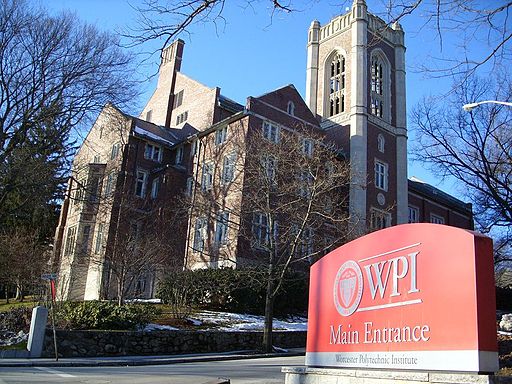
No machine-readable author provided. Runningonbrains assumed (based on copyright claims). [Public domain], via Wikimedia Commons

April 2, 2017; Boston Globe

When nonprofits are offered large gifts, the typical protocol is to gratefully accept the donation, thank the donor (repeatedly!), and acknowledge the gift in a more public manner, such as naming a conference room after them. While development staff do do some research into the gift, particularly those from new donors who may have unexpectedly donated a large gift, given the harried schedules of development staff, they are forced to move quickly on to finding the next big gift.

Worcester Polytechnic Institute (WPI) more or less followed this protocol when Robert Foisie offered the university a whopping $40 million gift. They gladly accepted the largest gift in the school’s history and named The Foisie Innovation Studio in his honor. Unfortunately for WPI, since the gift was received, the Foisie family has been caught up in a bizarre legal struggle, with WPI caught right in the middle.

As reported previously by NPQ, the issue began when Janet Foisie, Robert’s ex-wife, claimed that $4.5 million of Robert’s gift to WPI technically belonged to her. Robert allegedly hid money in overseas accounts, so during their divorce settlement, she did not have access to these funds. Janet claims Robert later transferred money from a Swiss account to WPI. The university was largely able to steer clear of the drama by acknowledging both Robert and Janet Foisie as donors.

Sign up for our free newsletters

Subscribe to NPQ's newsletters to have our top stories delivered directly to your inbox.

By signing up, you agree to our privacy policy and terms of use, and to receive messages from NPQ and our partners.

As the story has been unfolding very publicly, more shocking allegations have been brought against Robert, most recently that he hired a hit man to kill his own son and is being investigated by the FBI for wire fraud. Although these allegations have not been substantiated, the very public nature of the scandal hangs a cloud over those affiliated with Robert Foisie, particularly WPI, where Foisie’s name was celebrated as the largest donor to the institute. Still, WPI has opted to stay out of the line of fire. In a public letter, WPI president Laurie Leshin said, “We don’t know whether any of the allegations are true or false, but I want to assure you that we are taking the situation seriously…We are following this closely and will take action, if necessary, to ensure that we are aligned with best practices.”

It’s a story NPQ has seen on several occasions (like here and here), and as such has published a guide on how nonprofit organizations can deal with so-called “tainted” donors. The guide describes three possible actions that nonprofit organizations can take when donors become scandalized. When there is little outside pressure to address the donation, nonprofit organizations can engage in defiance, keeping the gift and continuing to acknowledge the donor; that’s where WPI is right now. With more pressure, nonprofits can move to compromise, in which they keep the money but publicly distance themselves from the donor. The last step would be acquiescence. With enough pressure, such as other donors refusing to support the organization, nonprofits can essentially be forced to return the gift and remove public acknowledgement of the donor.

As the lawsuits play out, WPI will need to follow them very closely and determine which of these strategic actions is in the best interest of the university both monetarily and in terms of setting precedent for future tainted donors, should more come around. WPI may need to set more policies in place, such as protocol for when WPI will opt not to accept a gift, no matter how large it may be.—Sheela Nimishakavi


Our Voices Are Our Power.

Journalism, nonprofits, and multiracial democracy are under attack. At NPQ, we fight back by sharing stories and essential insights from nonprofit leaders and workers—and we pay every contributor.

Can you help us protect nonprofit voices?

Your support keeps truth alive when it matters most.
Every single dollar makes a difference.

Donate now
logo logo logo logo logo
About the author
Sheela Nimishakavi

Sheela Nimishakavi is a nonprofit finance and operations professional with a passion for creating socially just and inclusive communities. She has held senior management positions at several community based organizations addressing access to healthcare and services for persons with disabilities, currently serving as the Director of Operations of the Brain Injury Association of Virginia. After working in the nonprofit field for over a decade and seeing many organizations struggle with the administrative requirements of running a nonprofit, Sheela founded ThirdSuite, a consulting firm that offers nonprofit administrative services and trainings to help organizations increase their capacity and further their mission. Sheela received an MA/MPH in Health Policy and Management from Boston University School of Public Health, and a BS in Neurobiology, Physiology and Behavior from the University of California, Davis. She currently serves on the boards of the Central Virginia Grant Professionals Association and Empowering People for Inclusive Communities.

More about: AccountabilityBoard GovernanceDonor RelationsEquity-Centered ManagementFundraisingNonprofit NewsPhilanthropy
See comments

Call to action
You might also like
Making Sense of GivingTuesday 2025
Isaiah Thompson
Blocking Authoritarianism: Steps Nonprofits and Foundations Must Take
Saqib Bhatti
The Power of Direct Community Funding
Ana Valéria Araújo
Equitable Intermediaries: Power, Protection, Partnership
Frank Gargione and Andrea Granda
If Farm School NYC Closes, What Will the City Lose?
Farm School NYC and Iris M. Crawford
GivingTuesday: Mobilizing Grassroots Donors
Isaiah Thompson

Upcoming Webinars

Group Created with Sketch.
January 29th, 2:00 pm ET

Participatory Decision-making

When & How to Apply Inclusive Decision-making Methods

Register
Group Created with Sketch.
February 26th, 2:00 pm ET

Understanding Reduction in Force (RIF) Law

Clear Guidance for Values-centered Nonprofits

Register

    
You might also like
A red circle overlayed on a yellow background with three multi-colored dots on each side. In the center it reads, " Isaiah Thompson: Staff Picks for 2025"
Staff Picks for 2025: Isaiah Thompson
Isaiah Thompson
Staff Picks for 2025: Steve Dubb
Steve Dubb
A red circle overlayed on a yellow background with three multi-colored dots on each side. In the center it reads, "Alison Stine: Staff Picks for 2025"
Staff Picks for 2025: Alison Stine
Alison Stine

Like what you see?

Subscribe to the NPQ newsletter to have our top stories delivered directly to your inbox.

See our newsletters

By signing up, you agree to our privacy policy and terms of use, and to receive messages from NPQ and our partners.

  • About
  • Advertise
  • Careers
  • Contact
  • Copyright
  • Donate
  • Editorial Policy
  • Funders
  • Submissions

We are using cookies to give you the best experience on our website.


Nonprofit Quarterly | Civic News. Empowering Nonprofits. Advancing Justice.
Powered by  GDPR Cookie Compliance
Privacy Overview

This website uses cookies so that we can provide you with the best user experience possible. Cookie information is stored in your browser and performs functions such as recognising you when you return to our website and helping our team to understand which sections of the website you find most interesting and useful.

Strictly Necessary Cookies

Strictly Necessary Cookie should be enabled at all times so that we can save your preferences for cookie settings.