logo logo
giving banner
Donate
    • Membership
    • Donate
  • Social Justice
    • Racial Justice
    • Climate Justice
    • Disability Justice
    • Economic Justice
    • Food Justice
    • Health Justice
    • Immigration
    • LGBTQ+
  • Civic News
  • Nonprofit Leadership
    • Board Governance
    • Equity-Centered Management
    • Finances
    • Fundraising
    • Human Resources
    • Organizational Culture
    • Philanthropy
    • Power Dynamics
    • Strategic Planning
    • Technology
  • Columns
    • Ask Rhea!
    • Ask a Nonprofit Expert
    • Economy Remix
    • Gathering in Support of Democracy
    • Humans of Nonprofits
    • The Impact Algorithm
    • Living the Question
    • Nonprofit Hiring Trends & Tactics
    • Notes from the Frontlines
    • Parables of Earth
    • Re-imagining Philanthropy
    • State of the Movements
    • We Stood Up
    • The Unexpected Value of Volunteers
  • CONTENT TYPES
  • Leading Edge Membership
  • Newsletters
  • Webinars

Corporate Racewashing: The Limits of JPMorgan Chase’s Commitment to Racial Justice

Ruth McCambridge
September 18, 2017
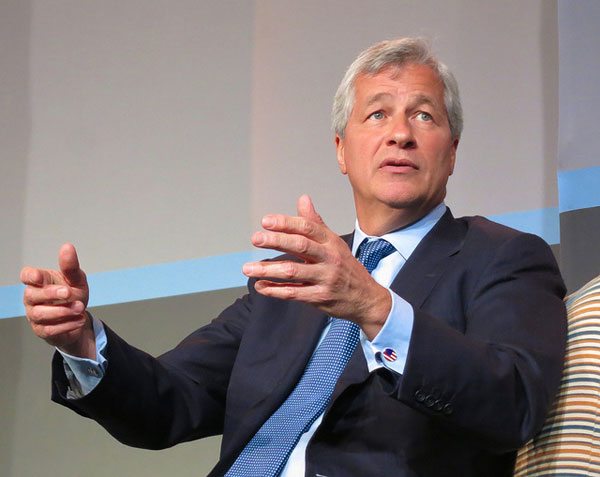
“Jamie Dimon, CEO of JPMorgan Chase” by Steve Jurvetson

September 16, 2017; AlterNet

As corporations speak out more actively on issues of human rights, is it important to understand these statements and donations in the context of their other activities, which may contradict those espoused values? This question is likely to come to the fore more and more over the next few years.

Writing for AlterNet, Hannah Lownsbrough suggests we all take a closer look at the integrity of the messages sent by corporations in the midst of this period of race turbulence. In particular, she takes on JPMorgan Chase, which, she points out, “has invested time, public relations’ efforts, and money in presenting itself as a defender of human rights. But the $2 million Chase has pledged to fight racism is a drop in the ocean compared to the potential yield from its massive investment in the private prison system: one of the starkest manifestations of racial injustice in the U.S. today.” This, she says, comes into even more stark relief with the cancellation of DACA.

The private prison industry’s stocks have risen dramatically with the election of Donald Trump and some of the subsequent decisions of his presidential administration. There’s a warped internal logic to that, but, as Lownsbrough points out, investments in private prisons don’t fit with enjoying a stance as a champion for racial justice, as JPMorgan Chase CEO Jamie Dimon seems to do.

It’s also important to note that investors like JPMorgan Chase are not simply passive beneficiaries of a grossly unjust immigration system. Their financing actively encourages the private prison sector to grow. Private prison corporations rely on debt financing from banks like JPMorgan Chase to expand their control of the criminal justice and immigration enforcement systems. In turn, the banks generate revenue from collecting interest and fees on [the debts of CoreCivic, formerly the Corrections Corporation of America, or CCA] and GEO Group’s debts.

Sign up for our free newsletters

Subscribe to NPQ's newsletters to have our top stories delivered directly to your inbox.

By signing up, you agree to our privacy policy and terms of use, and to receive messages from NPQ and our partners.

In the Public Interest has written a fact sheet on the topic about the extent of the involvement of JPMorgan Chase in helping private prisons to expand:

Summary of JPMorgan Chase’s current involvement in CCA’s and GEO Group’s debts (through debt agreements that were active as of June 2016)

  • JPMorgan Chase has extended to CCA a $132.5 million line of revolving credit, of which CCA has borrowed $65.4 million.
  • JPMorgan Chase has provided a $14.3 million term loan to CCA.
  • JPMorgan Chase is part of the syndicate of banks that has extended a $900 million line of revolving credit to GEO Group, of which GEO Group has borrowed $450 million.
  • JPMorgan Chase underwrote at least $113 million of CCA’s and GEO Group’s bonds.
  • JPMorgan Chase held $166 million of CCA’s and GEO Group’s bonds as of October 14, 2016.

Also, never forget that JPMorgan Chase was deeply involved in the mortgage crisis, which disproportionately affected communities of color and low-income communities. The company settled with federal and state civil suits for $13 billion in 2014 for its part in the packaging, marketing, sale, and issuance of residential mortgage-backed securities and never skipped a beat. In this context, what is a mere $2 million but an empty symbol and a cheap distraction.

What, if anything, might bother the company? Lownsbrough points out that the bank is a consumer bank, and that any meaningful action will need to be the result of consumer revolt.—Ruth McCambridge


Our Voices Are Our Power.

Journalism, nonprofits, and multiracial democracy are under attack. At NPQ, we fight back by sharing stories and essential insights from nonprofit leaders and workers—and we pay every contributor.

Can you help us protect nonprofit voices?

Your support keeps truth alive when it matters most.
Every single dollar makes a difference.

Donate now
logo logo logo logo logo
About the author
Ruth McCambridge

Ruth is Editor Emerita of the Nonprofit Quarterly. Her background includes forty-five years of experience in nonprofits, primarily in organizations that mix grassroots community work with policy change. Beginning in the mid-1980s, Ruth spent a decade at the Boston Foundation, developing and implementing capacity building programs and advocating for grantmaking attention to constituent involvement.

More about: Corporate Social ResponsibilityNonprofit NewsPhilanthropyRace and PowerRacial JusticeStructural Racism
See comments

You might also like
For Movements to Win, Organize People and Money
Farhad Ebrahimi
The Danger ICE Poses to the Disabled Community
Alison Stine
Blue-State Pensions Are Subsidizing the Billionaire Takeover: This Must Stop!
Sara Myklebust and Aditi Sen
Beyond the Plantation Economy: How Alabama Can Benefit from Cooperatives
Andre Carter
For Every $100 Foundations Give, Only 19 Cents Go to Volunteer Support
Jan Masaoka
Sacred Storm Buffalo Unfiltered: Healing Lives, Restoring Ecosystems
Kim Pate

Upcoming Webinars

Group Created with Sketch.
January 29th, 2:00 pm ET

Participatory Decision-making

When & How to Apply Inclusive Decision-making Methods

Register
Group Created with Sketch.
February 26th, 2:00 pm ET

Understanding Reduction in Force (RIF) Law

Clear Guidance for Values-centered Nonprofits

Register

    
You might also like
A floating ball of dollar bills, symbolizing the organization and control of money.
For Movements to Win, Organize People and Money
Farhad Ebrahimi
ICE detainees sitting in caged cells in Ursula detention facility in McAllen, Texas.
The Danger ICE Poses to the Disabled Community
Alison Stine
A pair of pliers cutting a blue wire, symbolizing cutting off blue-state funding sources for Trump.
Blue-State Pensions Are Subsidizing the Billionaire...
Sara Myklebust and Aditi Sen

Like what you see?

Subscribe to the NPQ newsletter to have our top stories delivered directly to your inbox.

See our newsletters

By signing up, you agree to our privacy policy and terms of use, and to receive messages from NPQ and our partners.

  • About
  • Advertise
  • Careers
  • Contact
  • Copyright
  • Donate
  • Editorial Policy
  • Funders
  • Submissions

We are using cookies to give you the best experience on our website.


Nonprofit Quarterly | Civic News. Empowering Nonprofits. Advancing Justice.
Powered by  GDPR Cookie Compliance
Privacy Overview

This website uses cookies so that we can provide you with the best user experience possible. Cookie information is stored in your browser and performs functions such as recognising you when you return to our website and helping our team to understand which sections of the website you find most interesting and useful.

Strictly Necessary Cookies

Strictly Necessary Cookie should be enabled at all times so that we can save your preferences for cookie settings.