logo logo
Donate
    • Membership
    • Donate
  • Social Justice
    • Racial Justice
    • Climate Justice
    • Disability Justice
    • Economic Justice
    • Food Justice
    • Health Justice
    • Immigration
    • LGBTQ+
  • Civic News
  • Nonprofit Leadership
    • Board Governance
    • Equity-Centered Management
    • Finances
    • Fundraising
    • Human Resources
    • Organizational Culture
    • Philanthropy
    • Power Dynamics
    • Strategic Planning
    • Technology
  • Columns
    • Ask Rhea!
    • Ask a Nonprofit Expert
    • Gathering in Support of Democracy
    • Hope in the Dark
    • Humans of Nonprofits
    • Inside the States
    • In Defense of Civil Society
    • The Myth of Heroic Leadership
    • Notes from the Frontlines
    • Notes from the Long Arc
    • Reimagining Philanthropy
    • The Unexpected Value of Volunteers
    • We Stood Up
  • Newsletters
  • NPQ Online Events
    • Learn Out Loud
    • Leading Edge Webinars
    • Partner Events
    • On Demand
  • Leading Edge Membership

Jewish Nonprofits Beware: Here Come the Millennials

Martin Levine
September 20, 2017
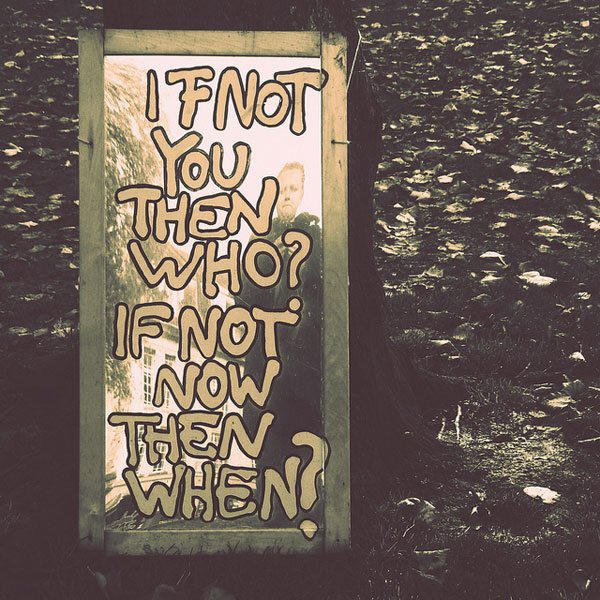
“If not you, then who? If not now, then when?” by Kevin Jarrett

September 11, 2017; Forward

The American Jewish community’s well-established network of advocacy, social service, and fundraising organizations now has to deal with demands for change that might threaten their viability. Fueled by the growing force of millennial activism, the same dynamic that spawned the Occupy movement and Black Lives Matter, new organizations, exemplified by the three-year-old IfNotNow, are springing up in the Jewish community and challenging the status quo, demanding systemic change, and competing for leadership.

Writing in the Forward, commentator Peter Beinart recently described the emergence of this millennial-driven organization that’s roiling Jewish community waters:

IfNotNow…stems not from the hopes that Obama inspired, but from disillusionment with what he failed to achieve. Occupy was a response to Obama’s failure to fundamentally reform Wall Street. The “dreamer” protests were a response to his record-level deportations of undocumented immigrants. Black Lives Matter was a response to his failure to curb police violence. And IfNotNow is a response to his failure to end Israel’s occupation of the West Bank.

A recently launched IfNotNow hashtag campaign, #YouNeverToldMe, illustrates their willingness to rock the boat. According to the Forward, “The campaign…relates the outrage and disappointment of millennial Jews upset that the synagogues, camps, and other institutions they grew up in did not better inform them about Israel’s occupation of the West Bank.”

Sign up for our free newsletters

Subscribe to NPQ's newsletters to have our top stories delivered directly to your inbox.

By signing up, you agree to our privacy policy and terms of use, and to receive messages from NPQ and our partners.

As important as the specific programs and political positions these emerging groups advocate are their urgency and their desire to be in charge. Unlike earlier generations, which may have been willing to engage in the process of organizational governance, join committees, and add their thinking to the ongoing discussion, millennials demand change or else. Millennial-led groups are not willing to “wait their turn”; they are ready to challenge how organizations are structured and demand that their agenda and tactics be adopted.

As the group wrote in a post on Medium, “We see ourselves as part of an entire generation that is rising up and organizing mass movements for real change.” IfNotNow wants this change to happen now.

We can no longer accept an educational approach to the Israeli-Palestinian conflict that ranges from open endorsement of indefinite occupation to saying, “It’s complicated” and leaving it at that. We can no longer accept a communal norm that will force another generation to only learn about the occupation only once they leave these institutions. We can no longer sit idly by while the institutions we care so deeply about lose moral legitimacy.

Earlier this year, NPQ looked at millennials from a fundraising perspective. Sheela Nimishakavi cited a Case Foundation and Achieve report that cautioned organizations to “not assume they are going to approach it the way previous generations did…millennials want to have a much more hands-on impact and connect with the work and understand the impact of the work.” Our feature above cautions us away from such blanket statements, but it is pretty clear that younger people come at issues with new ideas about what is important for an ever-more-connected global world and new tools that are native to their generations.

Now, we are seeing these traits beginning to challenge nonprofit organizations and their future. For the Jewish community, IfNotNow presents a threat to an infrastructure that has been developed over more than a century. This framework provides a range of basic human services to at-risk populations; it provides political support for the unique issues and concerns of the Jewish Community and has developed a wide-ranging educational program designed to ensure the community’s future strength. If significant numbers drop away because these organizations cannot or will not make the changes being demanded, the strength of this community structure is in jeopardy. Will millennials create new organizations to replace those they weaken? And, with so much legacy wealth controlled by the establishment, how will they fund these new directions?—Martin Levine


The work isn’t done. Neither is our commitment.

The challenges facing nonprofits aren’t going away. Neither can the journalism that informs, connects, and amplifies the sector.

Help NPQ keep this work free and accessible.

Give Today
logo logo logo logo logo
About the author
Martin Levine

Martin Levine is a Principal at Levine Partners LLP, a consulting group focusing on organizational change and improvement, realigning service systems to allow them to be more responsive and effective. Before that, he served as the CEO of JCC Chicago, where he was responsible for the development of new facilities in response to the changing demography of the Metropolitan Jewish Community. In addition to his JCC responsibilities, Mr. Levine served as a consultant on organizational change and improvement to school districts and community organizations. Mr. Levine has published several articles on change and has presented at numerous conferences on this subject. A native of New York City, Mr. Levine is a graduate of City College of New York (BS in Biology) and Columbia University (MSW). He has trained with the Future Search and the Deming Institute.

More about: Equity-Centered ManagementLeadershipNonprofit NewsPhilanthropy
See comments

Stuffing-1
You might also like
The invisible infrastructure of solidarity
Tria Mucyo Nkuruh
The mental health challenges of an aging America
Danielle Neveles-McGrath
Three assumptions we unlearned about participatory grantmaking
Ciara Coleman
Why the good offers seem to go to others
Rhea Wong
The case for co-governance for public education
James Haslam, Leigh Kennedy, Mike Matsuda and Mike Woodward
To preserve our democracy, philanthropy must invest in Black women
Chanceé Lundy

Upcoming Webinars

Group Created with Sketch.
December 3, 2:00 pm ET

After the Midterms

What’s Next for Nonprofits?

Register
Group Created with Sketch.
January 28, 2:00 pm ET

Democratic Staff Structures

Weaving Shared Leadership and Union Practice in Nonprofits

Register
You might also like
Two Black hands grasping each others fingers against a red background. One hand wears beaded bracelets, the other a watch.
The invisible infrastructure of solidarity
Tria Mucyo Nkuruh
An older man with brown skin and dark sunglasses looking into the cmaera with a serious expression. Behind him is a freshwater marsh.
The mental health challenges of an aging America
Danielle Neveles-McGrath
A group of colorful wooden humanoid figures arranged in a circle, as if working or talking together.
Three assumptions we unlearned about participatory...
Ciara Coleman

Like what you see?

Subscribe to the NPQ newsletter to have our top stories delivered directly to your inbox.

See our newsletters

By signing up, you agree to our privacy policy and terms of use, and to receive messages from NPQ and our partners.

  • About
  • Advertise
  • Careers
  • Contact
  • Copyright
  • Donate
  • Funders
  • Editorial Policy
  • Media Relations
  • Privacy Policy
  • Submissions

We are using cookies to give you the best experience on our website.


Nonprofit Quarterly | Civic News. Empowering Nonprofits. Advancing Justice.
Powered by  GDPR Cookie Compliance
Privacy Overview

This website uses cookies so that we can provide you with the best user experience possible. Cookie information is stored in your browser and performs functions such as recognising you when you return to our website and helping our team to understand which sections of the website you find most interesting and useful.

Strictly Necessary Cookies

Strictly Necessary Cookie should be enabled at all times so that we can save your preferences for cookie settings.