logo logo
Donate
    • Membership
    • Donate
  • Social Justice
    • Racial Justice
    • Climate Justice
    • Disability Justice
    • Economic Justice
    • Food Justice
    • Health Justice
    • Immigration
    • LGBTQ+
  • Civic News
  • Nonprofit Leadership
    • Board Governance
    • Equity-Centered Management
    • Finances
    • Fundraising
    • Human Resources
    • Organizational Culture
    • Philanthropy
    • Power Dynamics
    • Strategic Planning
    • Technology
  • Columns
    • Ask Rhea!
    • Ask a Nonprofit Expert
    • Gathering in Support of Democracy
    • Hope in the Dark
    • Humans of Nonprofits
    • Inside the States
    • In Defense of Civil Society
    • The Myth of Heroic Leadership
    • Notes from the Frontlines
    • Notes from the Long Arc
    • Reimagining Philanthropy
    • The Unexpected Value of Volunteers
    • We Stood Up
  • Newsletters
  • NPQ Online Events
    • Learn Out Loud
    • Leading Edge Webinars
    • Partner Events
    • On Demand
  • Leading Edge Membership

Milwaukee Arts Funding: A Debate Between Davids and Goliaths?

Rob Meiksins
October 5, 2012

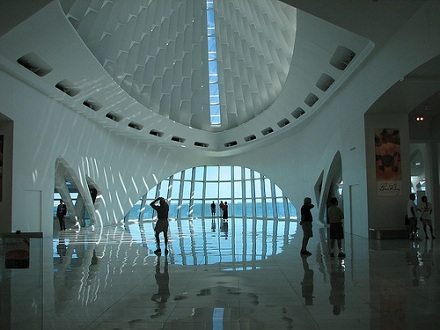
MAM

September 7, 2012; Source: Milwaukee Business Journal

In the Milwaukee arts world, Goliath venues are finding new support while the Davids of the arts scene are facing severe funding loss. Two studies in Milwaukee are looking at public support for the arts from very different angles. One, as reported in an opinion piece in the Milwaukee Business Journal, is to be conducted by a nonpartisan research firm and has been commissioned by the local tourism bureau (Spirit of Milwaukee).

According to the editorial, major arts venues located on county-owned facilities, including the Milwaukee Art Museum, the Public Museum, and Discovery World (a science museum), are about to launch a coordinated group capital campaign that some expect to include a target of more than $50 million. The study will look into a variety of alternate funding options including the potential of creating a dedicated arts sales tax—this at a time when “tax” has become a four-letter word. The Business Journal opinion piece suggests that these major arts venues need support but that there is not enough in charitable contributions to go around, concluding that the study will be a good way to start exploring how these major arts venues can get what they need.

Sign up for our free newsletters

Subscribe to NPQ's newsletters to have our top stories delivered directly to your inbox.

By signing up, you agree to our privacy policy and terms of use, and to receive messages from NPQ and our partners.

At the other end of the spectrum, a report that has just been released by the Nonprofit Management Fund and Management Cornerstones has identified many very significant challenges for small nonprofit performing arts organizations (such as the African-American Children’s Theatre, one of the few remaining theatre companies for people of color of any age that remain in Milwaukee, and Early Music Now, an organization bringing early Renaissance music and traditional instruments to venues around the city).

On the whole, there is support for the arts in Milwaukee, much of it through the United Performing Arts Fund (UPAF). But UPAF supports only a limited number of very well established performing arts groups, not the small, more experimental organizations, and the report notes that some community leaders feel that “there should be fewer small arts organizations.” In addition, the report found that some organizations perceive a racial bias in support for the arts, while some civic leaders have said that “nonprofit arts organizations need an entirely different business model,” although specifics on such a new model were few.

Are there really too many small performing arts organizations in Milwaukee? Would it make sense to let the market decide? Should those funders who are being asked to help support the arts in the community take it upon themselves to determine which organizations can thrive and which cannot? –Robert Meiksins


The work isn’t done. Neither is our commitment.

The challenges facing nonprofits aren’t going away. Neither can the journalism that informs, connects, and amplifies the sector.

Help NPQ keep this work free and accessible.

Give Today
logo logo logo logo logo
About the author
Rob Meiksins

Rob has served in the nonprofit sector for over 30 years in roles ranging from intern to program manager, executive director to board director, and consultant. Starting out in professional theatre in New York City, Rob moved to Milwaukee to work with Milwaukee Rep as the dramaturg. Later, he started to work more and more helping people and organizations in the nonprofit sector articulate, and then take the next step towards their vision. Currently he is working on a new effort to establish an intentional process for nonprofits to identify their capacity-building needs and then learn about and implement the tools that will help. Ideally this is a partnership between nonprofits, consultants, and the philanthropic community to strengthen the sector we all see as critical.

More about: Capital CampaignsNonprofit NewsPartnershipsPhilanthropy
See comments

Stuffing-1
You might also like
The invisible infrastructure of solidarity
Tria Mucyo Nkuruh
The mental health challenges of an aging America
Danielle Neveles-McGrath
Three assumptions we unlearned about participatory grantmaking
Ciara Coleman
To preserve our democracy, philanthropy must invest in Black women
Chanceé Lundy
Can a deck of cards interrupt bias in grantmaking?
Devyn Taylor
A campaign saying ‘NO MORE’ to a violent and corrupt prison system in Alabama
Kindred Motes and Daniel Forkkio

Upcoming Webinars

Group Created with Sketch.
December 3, 2:00 pm ET

After the Midterms

What’s Next for Nonprofits?

Register
Group Created with Sketch.
January 28, 2:00 pm ET

Democratic Staff Structures

Weaving Shared Leadership and Union Practice in Nonprofits

Register
You might also like
Two Black hands grasping each others fingers against a red background. One hand wears beaded bracelets, the other a watch.
The invisible infrastructure of solidarity
Tria Mucyo Nkuruh
An older man with brown skin and dark sunglasses looking into the cmaera with a serious expression. Behind him is a freshwater marsh.
The mental health challenges of an aging America
Danielle Neveles-McGrath
A group of colorful wooden humanoid figures arranged in a circle, as if working or talking together.
Three assumptions we unlearned about participatory...
Ciara Coleman

Like what you see?

Subscribe to the NPQ newsletter to have our top stories delivered directly to your inbox.

See our newsletters

By signing up, you agree to our privacy policy and terms of use, and to receive messages from NPQ and our partners.

  • About
  • Advertise
  • Careers
  • Contact
  • Copyright
  • Donate
  • Funders
  • Editorial Policy
  • Media Relations
  • Privacy Policy
  • Submissions

We are using cookies to give you the best experience on our website.


Nonprofit Quarterly | Civic News. Empowering Nonprofits. Advancing Justice.
Powered by  GDPR Cookie Compliance
Privacy Overview

This website uses cookies so that we can provide you with the best user experience possible. Cookie information is stored in your browser and performs functions such as recognising you when you return to our website and helping our team to understand which sections of the website you find most interesting and useful.

Strictly Necessary Cookies

Strictly Necessary Cookie should be enabled at all times so that we can save your preferences for cookie settings.