logo logo
giving banner
Donate
    • Membership
    • Donate
  • Social Justice
    • Racial Justice
    • Climate Justice
    • Disability Justice
    • Economic Justice
    • Food Justice
    • Health Justice
    • Immigration
    • LGBTQ+
  • Civic News
  • Nonprofit Leadership
    • Board Governance
    • Equity-Centered Management
    • Finances
    • Fundraising
    • Human Resources
    • Organizational Culture
    • Philanthropy
    • Power Dynamics
    • Strategic Planning
    • Technology
  • Columns
    • Ask Rhea!
    • Ask a Nonprofit Expert
    • Economy Remix
    • Gathering in Support of Democracy
    • Humans of Nonprofits
    • The Impact Algorithm
    • Living the Question
    • Nonprofit Hiring Trends & Tactics
    • Notes from the Frontlines
    • Parables of Earth
    • Re-imagining Philanthropy
    • State of the Movements
    • We Stood Up
    • The Unexpected Value of Volunteers
  • CONTENT TYPES
  • Leading Edge Membership
  • Newsletters
  • Webinars

Devastating Secondary Crises Caused by Ebola Virus

Shafaq Hasan
September 30, 2014


Ebola

September 20, 2014; Washington Post

Can you imagine what it was like for a pregnant woman named Comfort Fayiah to give “birth to twins in the dirt outside her small, whitewashed church?” According to writer Lenny Bernstein with the Washington Post, this tragic scene is one result of a secondary crisis stemming from the Ebola virus outbreak of epidemic proportions in Western Africa.

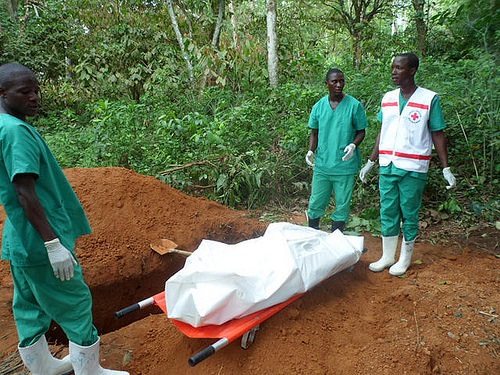
As the death toll nears 3,000 according to the World Health Organization and a total of 6,263 people have been either confirmed or are suspected of being probable cases of infection, Ebola is demanding a mammoth effort from healthcare organizations and local government administrations to bring under control. However, as Ebola-infected individuals put an incomparable burden on the health systems of these African countries, others with ordinarily preventable or treatable conditions, such as malaria, diarrhea, pneumonia or diabetes, among others, are feeling the tension of the situation. Many are avoiding seeking care for treatable diseases for fear that they will also contract the virus, while others are finding it difficult to find treatment at all.

“If you stub your toe now in Monrovia, you’ll have a hard time getting care, let alone having a heart attack or malaria,” said Sheldon Yett, the Liberian representative for UNICEF. “It’s a tremendous threat to children and a tremendous threat to families.

Sign up for our free newsletters

Subscribe to NPQ's newsletters to have our top stories delivered directly to your inbox.

By signing up, you agree to our privacy policy and terms of use, and to receive messages from NPQ and our partners.

While accurate data about the numbers perishing from treatable diseases is difficult to find and verify, several nonprofits have confirmed a small measles outbreak in Liberia, which is in the midst of a severe Ebola outbreak. The measles outbreak is mostly likely due to the lack of vaccinations available.

Disease researchers Jeremy Farrar of the Wellcome Trust and Peter Piot of the London School of Hygiene and Tropical Medicine observed in a new article in the New England Journal of Medicine that “West Africa will see much more suffering and many more deaths during childbirth and from malaria, tuberculosis, HIV-AIDS, enteric and respiratory illnesses, diabetes, cancer, cardiovascular disease, and mental health during and after the Ebola epidemic.”

The economic impact of the epidemic is evident even in countries and regions that remain unaffected by the epidemic. The price for cocoa, among the top exports in West Africa, rose 6.3 percent in earlier September, responding to concerns that the disease would permeate the Ivory Coast border or Ghana, two regions that produce nearly 60 percent of the world’s cocoa. While there have not been any reported cases of the Ebola outbreak in the Ivory Coast, for instance, residents are wary of the poorly monitored barrier between the Coast and Liberia and Guinea, two regions that have been heavily affected by the virus. Any disruptions in the export of cocoa would be devastating for the Ivory Coast, which significantly relies on the export for its income derived from agriculture.

“The fear people have is that once Ebola is verified in Ivory Coast…it will be pandemonium,” said Hector Galvan, senior market strategist at RJO Futures in Chicago. “The worst case scenario—you lose virtually all cocoa exports out of Ivory Coast [or] Ghana for an unknown period of time.”

The CDC recently came out with its worst-case scenario predictions of the epidemic with 1.4 million people becoming infected in four months. People dying of preventable diseases and the economic impact may only be the beginning of the byproducts of the epidemic. According to Jeremy Youde, a professor of political science at the University of Minnesota Duluth, “A prolonged outbreak could undercut the growth that these countries were finally starting to experience, taking away the resources that would be necessary for improving the health and education systems.”—Anita Janke and Shafaq Hasan


 

Our Voices Are Our Power.

Journalism, nonprofits, and multiracial democracy are under attack. At NPQ, we fight back by sharing stories and essential insights from nonprofit leaders and workers—and we pay every contributor.

Can you help us protect nonprofit voices?

Your support keeps truth alive when it matters most.
Every single dollar makes a difference.

Donate now
logo logo logo logo logo
About the author
Shafaq Hasan

Shafaq Hasan is a Community Builder at NPQ. She is a graduate of Brandeis University where she majored in Art History and spent most of her time working in the office of the student newspaper as the Opinions editor, and later, as an Associate editor. As an undergraduate, she was also a research assistant for the Justice Brandeis Law Project at the Schuster Institute for Investigative Journalism from 2011 to 2014.

More about: Global IssuesHealth EquityNonprofit NewsPolicy
See comments

You might also like
How the Next Set of UN Sustainability Goals Can Center the Solidarity Economy
Ilcheong Yi, Christina Clamp, Michael A. Peck, Zhen Lee, Ibon Zugasti and Yukyong Jung Yun Choe
A Move to Fund the Fight for Health Equity in the Trump Era
Isaiah Thompson
Social Enterprise: Lessons from Down Under
Vicki Pozzebon
Whose Solidarity? Race, Colonialism, Economy, and the Global South
Omar Freilla
If Farm School NYC Closes, What Will the City Lose?
Farm School NYC and Iris M. Crawford
Foundations Look to New Models of International Development amid Retrenchment
Ted Siefer

Upcoming Webinars

Group Created with Sketch.
January 29th, 2:00 pm ET

Participatory Decision-making

When & How to Apply Inclusive Decision-making Methods

Register
Group Created with Sketch.
February 26th, 2:00 pm ET

Understanding Reduction in Force (RIF) Law

Clear Guidance for Values-centered Nonprofits

Register

    
You might also like
Humanity@Work&Life: Volume Two: New Directions for the Social Economy
How the Next Set of UN Sustainability Goals Can Center the...
Ilcheong Yi, Christina Clamp, Michael A. Peck, Zhen Lee, Ibon Zugasti and Yukyong Jung Yun Choe
Image of diverse healthcare professionals standing resolute, representing people who are working under political threat while still committed to equity.
A Move to Fund the Fight for Health Equity in the Trump Era
Isaiah Thompson
A protest sign reading, “No Business on a dead planet”, emphasizing how the wellbeing of our planet is more important than profit.
Social Enterprise: Lessons from Down Under
Vicki Pozzebon

Like what you see?

Subscribe to the NPQ newsletter to have our top stories delivered directly to your inbox.

See our newsletters

By signing up, you agree to our privacy policy and terms of use, and to receive messages from NPQ and our partners.

  • About
  • Advertise
  • Careers
  • Contact
  • Copyright
  • Donate
  • Editorial Policy
  • Funders
  • Submissions

We are using cookies to give you the best experience on our website.


Nonprofit Quarterly | Civic News. Empowering Nonprofits. Advancing Justice.
Powered by  GDPR Cookie Compliance
Privacy Overview

This website uses cookies so that we can provide you with the best user experience possible. Cookie information is stored in your browser and performs functions such as recognising you when you return to our website and helping our team to understand which sections of the website you find most interesting and useful.

Strictly Necessary Cookies

Strictly Necessary Cookie should be enabled at all times so that we can save your preferences for cookie settings.