logo logo
Donate
    • Membership
    • Donate
  • Social Justice
    • Racial Justice
    • Climate Justice
    • Disability Justice
    • Economic Justice
    • Food Justice
    • Health Justice
    • Immigration
    • LGBTQ+
  • Civic News
  • Nonprofit Leadership
    • Board Governance
    • Equity-Centered Management
    • Finances
    • Fundraising
    • Human Resources
    • Organizational Culture
    • Philanthropy
    • Power Dynamics
    • Strategic Planning
    • Technology
  • Columns
    • Ask Rhea!
    • Ask a Nonprofit Expert
    • Economy Remix
    • Gathering in Support of Democracy
    • Humans of Nonprofits
    • The Impact Algorithm
    • Living the Question
    • Nonprofit Hiring Trends & Tactics
    • Notes from the Frontlines
    • Parables of Earth
    • Re-imagining Philanthropy
    • State of the Movements
    • We Stood Up
    • The Unexpected Value of Volunteers
  • CONTENT TYPES
  • Leading Edge Membership
  • Newsletters
  • Webinars

Remembering Aretha Franklin and Her Social Justice Vision

Steve Dubb
August 17, 2018
“Aretha Franklin Tribute.” Personeels.net

August 16, 2018; Detroit Free Press, Atlanta Journal-Constitution, and Rolling Stone

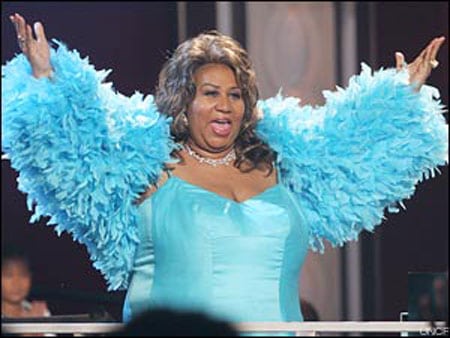
Aretha Franklin, the legendary “Queen of Soul,” died yesterday of pancreatic cancer. She was 76. As Brian McCollum notes in the Detroit Free Press, “Franklin was the loftiest name in the rich history of Detroit music and one of the transcendent cultural figures of the 20th century. Raised on an eclectic musical diet of gospel, R&B, classical and jazz, she blossomed out of her father’s Detroit church to become the most distinguished black female artist of all time, breaking boundaries while placing nearly 100 hits on Billboard’s R&B chart—20 of them reaching No. 1.” Franklin played her final Detroit show in June 2017 at a concert for thousands at an outdoor festival downtown. In November 2017, Franklin sang in public for the last time, performing a nine-song set at an Elton John AIDS Foundation benefit in New York.

Franklin was born in Memphis in 1942, but moved to Detroit at the age of four, when her father became pastor at New Bethel Baptist Church. Her father, in addition to leading the church, was a nationally known gospel singer. Franklin grew up singing gospel with her father. In 1960, she signed her first record deal. But it was seven years later, in 1967, when Franklin broke through with a range of hits, including “Respect,” “Baby I Love You,” “(You Make Me Feel Like) A Natural Woman,” “Chain of Fools,” and “Ain’t No Way.”

It is hard to overstate Franklin’s musical impact. We will not try to review her musical career here, but many have done so. To pick just one source, see this profile by Dave Remnick in the New Yorker.

But, as McCollum notes, Franklin’s broader social impact “was just as important.” Atlanta Journal-Constitution reporters Ernie Suggs and Shelia M. Poole point out that Franklin grew up in a civil rights movement household.

Sign up for our free newsletters

Subscribe to NPQ's newsletters to have our top stories delivered directly to your inbox.

By signing up, you agree to our privacy policy and terms of use, and to receive messages from NPQ and our partners.

“From 1946 until 1979, as pastor of New Bethel Baptist Church, [her father] was one of the biggest and most influential preachers in America, with his church serving as a civil rights hub.…When Dr. King came to Detroit, many of the black bourgeoisie did not exactly embrace him. But people like her father, who was a grassroots minister, did,” notes Greg Dunmore—identified by Suggs and Poole as a “longtime friend, journalist, and neighbor” of Franklin.

In Rolling Stone, Jamil Smith recalls Franklin’s support of Angela Davis while she was in jail. As Smith explains, “In 1970, as Franklin was nearing the height of her celebrity, the Black Power activist and philosophy professor Angela Davis stood accused of purchasing firearms used in a deadly attempt to help prisoners escape a courtroom in Marin County, California. Davis was an acknowledged Communist, and President Nixon had labeled her a ‘dangerous terrorist.’” Franklin offered to pay the bond for Davis, “whether it’s $100,000, or $250,000.” Ultimately, for logistical reasons, another person posted bond instead of Franklin (and Davis was later acquitted). The statement Franklin made at the time, however, speaks to her vision:

Angela Davis must go free. Black people will be free. I’ve been locked up (for disturbing the peace in Detroit) and I know you got to disturb the peace when you can’t get no peace. Jail is hell to be in. I’m going to see her free if there is any justice in our courts, not because I believe in communism, but because she’s a black woman and she wants freedom for black people. I have the money; I got it from black people—they’ve made me financially able to have it—and I want to use it in ways that will help our people.

At NPQ, we have noted the interconnection of art and social change before. Last fall, jazz musician Sonny Rollins, while establishing a jazz and social justice scholarship fund at Oberlin, noted that the goal is for young artists “to tap into the universal power of a higher spirit, so they can give people what they need.” At least a part of achieving this, as NPQ’s Cyndi Suarez puts it, requires “identifying with resistance movements and figuring out how to link them to the art world.”

Franklin was uncanny in her ability to connect in this way. As Smith remarks, “Her songs are universal, but Franklin became political because blackness is. Because womanhood is. And to borrow from Ossie Davis’s eulogy for Malcolm X, Franklin was our living black womanhood. Her power as an artist was not merely excelling at every single American musical form, but doing so in the cadence of our sisters, mothers and grandmothers.”—Steve Dubb


Our Voices Are Our Power.

Journalism, nonprofits, and multiracial democracy are under attack. At NPQ, we fight back by sharing stories and essential insights from nonprofit leaders and workers—and we pay every contributor.

Can you help us protect nonprofit voices?

Your support keeps truth alive when it matters most.
Every single dollar makes a difference.

Donate now
logo logo logo logo logo
About the author
Steve Dubb

Steve Dubb is senior editor of economic justice at NPQ, where he writes articles (including NPQ’s Economy Remix column), moderates Remaking the Economy webinars, and works to cultivate voices from the field and help them reach a broader audience. In particular, he is always looking for stories that illustrate ways to build a more just economy—whether from the labor movement or from cooperatives and other forms of solidarity economy organizing—as well as articles that offer thoughtful and incisive critiques of capitalism. Prior to coming to NPQ in 2017, Steve worked with cooperatives and nonprofits for over two decades, including twelve years at The Democracy Collaborative and three years as executive director of NASCO (North American Students of Cooperation). In his work, Steve has authored, co-authored, and edited numerous reports; participated in and facilitated learning cohorts; designed community building strategies; and helped build the field of community wealth building. Most recently, Steve coedited (with Raymond Foxworth) Invisible No More: Voices from Native America (Island Press, 2023). Steve is also the lead author of Building Wealth: The Asset-Based Approach to Solving Social and Economic Problems (Aspen 2005) and coauthor (with Rita Hodges) of The Road Half Traveled: University Engagement at a Crossroads, published by MSU Press in 2012. In 2016, Steve curated and authored Conversations on Community Wealth Building, a collection of interviews of community builders that Steve had conducted over the previous decade.

More about: LiberationNonprofit NewsPhilanthropy
See comments

You might also like
Information as Civic Infrastructure—and How Philanthropy Can Support the Ecosystem
Rhett Ayers Butler
Cupcakes, Crisis, and the Cost of Compliance
Sadé Dozan
Who’s Doing the Work? How to Shift Power and Not Just Workloads
Noah Ponton and Vijay Simhan
Power and Possibility: The Role of Donor Organizing
Rachel Sherman
Giving Bigger, Organizing More Boldly: Centering Disability Justice
Katrina Schaffer
Philanthropy Must Defend the Right to Bear Witness
Vina Kay and Melissa Rudnick

Upcoming Webinars

Group Created with Sketch.
March 19th, 2:00 pm ET

Open Board Search

How Casting a Wide Net Transforms Nonprofit Governance

Register
Group Created with Sketch.
March 26, 2:00 pm ET

Learn Out Loud

How Every Philanthropy, Nonprofit, and Community Member Can Leverage Power in Our Fight Against ICE

Register

    
You might also like
A person holding up a sign that reads, “System Change, Not Climate Change”
Information as Civic Infrastructure—and How Philanthropy...
Rhett Ayers Butler
A row of blue, frosted cupcakes with rainbow sprinkles.
Cupcakes, Crisis, and the Cost of Compliance
Sadé Dozan
Black man with cropped hair holding up a large red circle to his face, signifying a pause and shift.
Who’s Doing the Work? How to Shift Power and Not Just...
Noah Ponton and Vijay Simhan

Like what you see?

Subscribe to the NPQ newsletter to have our top stories delivered directly to your inbox.

See our newsletters

By signing up, you agree to our privacy policy and terms of use, and to receive messages from NPQ and our partners.

  • About
  • Advertise
  • Careers
  • Contact
  • Copyright
  • Donate
  • Editorial Policy
  • Funders
  • Submissions

We are using cookies to give you the best experience on our website.


Nonprofit Quarterly | Civic News. Empowering Nonprofits. Advancing Justice.
Powered by  GDPR Cookie Compliance
Privacy Overview

This website uses cookies so that we can provide you with the best user experience possible. Cookie information is stored in your browser and performs functions such as recognising you when you return to our website and helping our team to understand which sections of the website you find most interesting and useful.

Strictly Necessary Cookies

Strictly Necessary Cookie should be enabled at all times so that we can save your preferences for cookie settings.