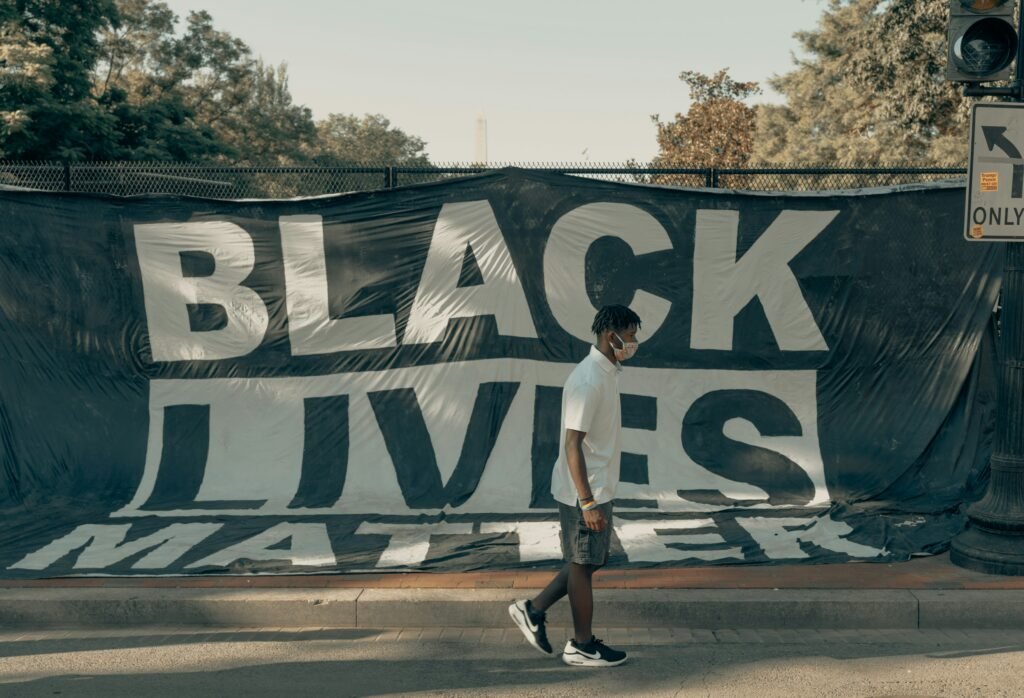
Jazz musician LaFrae Sci was living in Flatbush, a neighborhood in Brooklyn, NY, when news of a fast-spreading virus emerged in early 2020. The neighborhood was hit hard by the first wave of COVID-19. A few weeks later, it became an epicenter of the Black Lives Matter uprisings.
“The efforts of my family and ancestors taught me to meet the moment with my head up.”
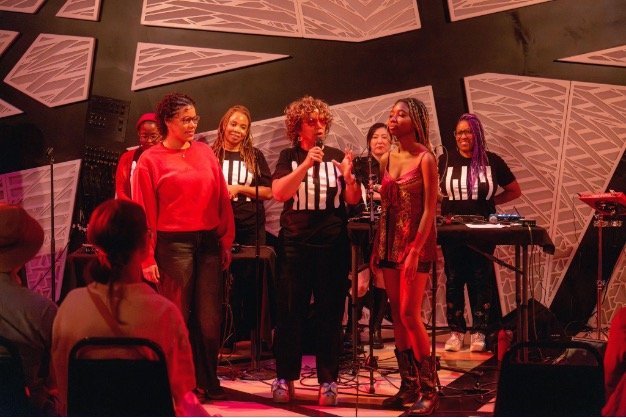
Around the same time, a local music education nonprofit, Willie Mae Rock Camp, founded in the 2000s and named after legendary blues singer Willie Mae Thornton, was looking for an executive director. When Sci was asked to put her name forward, she declined. The music camp’s model didn’t chime with her. After some encouragement, she pitched her alternative vision: more electronic music, more tech, and many more children of color. Impressed, the board appointed Sci in June 2020.
“The efforts of my family and ancestors taught me to meet the moment with my head up,” Sci told me years later, surrounded by experimental audio equipment in the organization’s then-newly acquired Creative Sound Lab. Since becoming ED, she has led a fourfold increase both in revenue and in the number of youth participating.
In 2020—in the midst of the pandemic and at the height of a resurgent Black Lives Matter movement—a window of opportunity cracked open for leaders of color in the nonprofit sector. Alongside grief in families’ homes and anger on our streets, change was in the air. People of color nationwide rose to the helm of nonprofits—often for the first time in their careers. Others were driven to start something new out of frustration with the status quo. Corporations made unprecedented financial commitments to racial justice projects and Black leadership.
However, in the years since, philanthropic interest in racial justice has cratered and DEI initiatives have faced considerable backlash. Working as a nonprofit consultant in New York in recent years, I’ve seen the conditions deteriorate dramatically for these new EDs and CEOs. They’ve faced gnarly obstacles. But the leaders of color who rose through the crises of that year, like Sci, are forging on.
We Get to Kick You Out Now
When journalist and equity consultant Dax-Devlon Ross asked, “You know how many LinkedIn profiles I saw change in that time period?” I knew exactly what he was talking about.
The nonprofit sector churn at the beginning of the 2020s was dizzying. In the five years after the outbreak of COVID-19, leadership changed at over half of America’s top 20 nonprofits ranked by amount of private donations.1
It was an expedited generational turn, with boomer leaders taking the pandemic as a nudge to exit the workforce. For the first time, the faces I saw in the social media posts—announcements of new CEOs, promotions, new DEI positions in the C-suite—were mostly Black and Brown.
Ross was familiar with the typical resistance to Black leadership, as a Black man and a former nonprofit ED himself: Well, how are they going to raise money? “That argument became less valuable in 2020,” he told me. “Those people became commodities. They actually became a draw.”
The great leadership reshuffle of 2020 wasn’t always voluntary or amicable. The pandemic’s arrival and the ensuing lockdowns produced the conditions for society to reflect deeply on itself—ugly inequities and all. Then, the BLM movement created a permission structure for dissent. Social media posts calling out (mostly White) authority figures ricocheted across the internet. Many nonprofit teams became restive, as the heat of protest spread from the streets to Zoom team meetings. Another Black nonprofit consultant, Brooke Richie-Babbage, remembered that “White leaders were, in some cases, unceremoniously kicked out.”
“There was permission, all of a sudden, to say to leaders sitting in seats people felt they hadn’t earned: ‘We get to kick you out now. This doesn’t have to be organic,’ ” she explained.
For many, these changes at the top were long overdue. For people of color, they created openings for personal growth and representation. Renewed leadership also presented an opportunity to challenge the nonprofit industrial complex and drive toward racial justice with new vigor and new strategy.
From the Scorched Earth, Green Shoots
“It was a car with some really great miles, a beautiful body, a nice paint job—but an engine that needed to be rebuilt,” Sci told me about taking over at Willie Mae Rock Camp.
Soon after being handed the keys, she launched a year-round program of tuition-free music education and new programming to help young people manage the many traumas of the pandemic. She took the number of partner locations from two to 15. She secured the organization’s first physical space and turned it into a high-tech hub, where a neon sign displays the initiative’s new philosophy: Mess around, find out. She welcomed many more children of color into the program. In 2025, Willie Mae Rock Camp’s 20th year of operations, over 90 percent of their 700 participants are girls and gender-expansive kids of color.
In addition to leadership changes at existing nonprofits, a crop of startups were born in the COVID-19 era. The number of nonprofits in the United States grew by a striking 13 percent in a single year after the pandemic hit.

Amrita Doshi had long been interested in tackling domestic violence, motivated by her own experience as a survivor. As lockdowns were applied early in 2020, there was a spike in gender-based violence—a shadow pandemic, as Doshi and others have described it. In conversation with various South Asian women’s groups, she identified a need for a national voice for the sector. “This work started as grassroots organizing and activism,” Doshi explained to me about the origin of the modern gender justice field in the 1980s.
By the late 2010s, state-funded direct-service models were prevalent, and the radical origins of the movement had been lost, it seemed. The public discourse of 2020 challenged anti-Blackness and casteism within some of these groups, and it brought up questions about the sector’s reliance on the carceral system. Doshi cofounded South Asian SOAR to convene nonprofits and survivors to act together as a movement against gender-based violence, aided by $1 million in trust-based philanthropy for its first four years of operations. The start-up nonprofit became a forum for the field to ask itself some tough questions and rediscover its activist roots.
Sign up for our free newsletters
Subscribe to NPQ's newsletters to have our top stories delivered directly to your inbox.
By signing up, you agree to our privacy policy and terms of use, and to receive messages from NPQ and our partners.
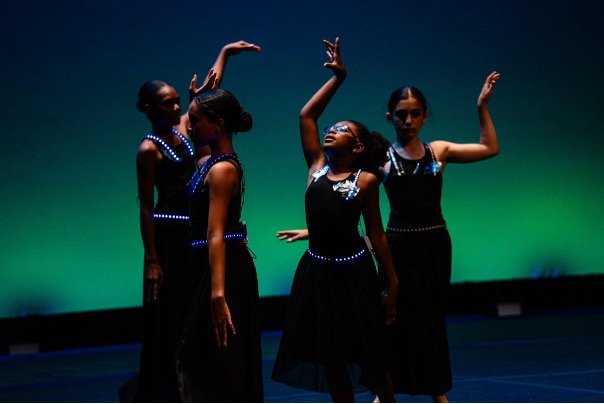
For many existing racial equity organizations, 2020 was a pivot point in their growth trajectory. STEM From Dance was founded in 2012 by Yamilée Toussaint, a Haitian American MIT graduate and former classroom teacher, to help girls of color break into STEM industries. After seven years of operating at a small scale, the organization’s budget tripled in 2020—to just under $1 million.
Thinking back on that growth spurt, she reckons most of that new income was baked in before the murder of George Floyd sparked a surge of philanthropy to Black-led organizations. But she acknowledges the surge of philanthropy to Black-led organizations that followed may have played a part: “Maybe the yeses were easier to make because of what was happening in society.”
That same year, she saw more established Black-led STEM education nonprofits receive very big gifts from corporate donors.
Funders were unlikely to declare how the race of prospective grantees influenced their grantmaking decisions. But the data are clear. In 2020, foundations gave their highest annual dollar amount of $88.5 billion—a year-on-year increase of 17 percent. A Washington Post analysis revealed that $50 billion was pledged toward racial justice by large corporate donors alone.
As recounted so far, the quiet revolution in nonprofitland during the pandemic may suggest unequivocal progress: more women and people of color leading social impact organizations; new practices that corrected for some of the sector’s past failings; serious philanthropic money to fund growth. But the story was more complex than that.
“They were really set up to fail…if there’s no space as a leader of color to mess up…then you’re never going to succeed.”
The Black Leaders’ Burden
Having a non-White leader did not immunize nonprofit teams from the discord that took hold through the year. In a 2023 Nonprofit Quarterly Magazine article, Ross described a Black leader’s burden: “Just as these folks are assuming the mantle, they are being met with direct assaults on the established structures and forms of power.” Women of color, in particular, faced attacks from all sides—as described by Aria Florant and Vanessa Priya Daniel.
Many were in uncharted territory as their budgets grew stratospherically. Richie-Babbage told me there was scant support to ride the revolutionary wave. “They were really set up to fail,” she said, observing that nonprofit boards offered little mentorship or practical support to newly ordained leaders. She described the bind: “If there’s no space as a leader of color to mess up, to ask questions…then you’re never going to succeed.”
To be clear, Sci, Doshi, and Toussaint didn’t fail. But that doesn’t mean the ride was easy for them.
As Sci reflected on her fundraising successes at Willie Mae Rock Camp, she told me, “I’m dealing in numbers that I never dealt with, even in my own personal life as a musician.”
Regarding her own leadership, Doshi shared: “You feel like you’re facing the world’s attacks, you’re fighting for the last possible resources for your org, and you’re incredibly isolated.”
The strife of 2020 would portend the arrival of even stormier weather for leaders of color.
The Swift and Brutal Demise of DEI
“As a Black woman running an organization named after a Black woman serving primarily Black and Brown youth, it was disappointing to me how quickly the conversation moved on from Black Lives Matter,” Sci said.
Even after the philanthropic influx to racial justice projects in 2020, the gulf in financial support between White-led nonprofits and those led by people of color remained. By 2023, Congress had already grown skeptical about the billion dollar pledges corporate America made at the apex of the BLM uprisings. Conservatives steadily poisoned concepts created to advance civil rights—identity politics; critical race theory; diversity, equity, and inclusion. Then Trump won back the White House and the abolition of DEI initiatives became a federal imperative. Many corporations swiftly fell in line and some philanthropists capitulated, too.
Sci told me, “2020 was a wave and we rode it but now the tide is out.” Speaking about running an equity-focused organization in 2025, Toussaint said, “It’s a minefield. You don’t know where the money is gonna go dry, where you’re gonna hear crickets.” And many nonprofits have found out that supporting Palestinian liberation is a red flag for some funders. This is all at a time when organizations’ beneficiaries are facing grave threats to their freedom and security.
“As a Black woman…it was disappointing to me how quickly the conversation moved on from Black Lives Matter.”
“We just started rolling out a legal hotline and we’re getting reports of abusers threatening to call ICE on their survivor,” Doshi told me, giving just one such example.
The breakneck reversal in public sentiment about racial equity and collapse in material conditions for the most marginalized came terrifyingly fast. From today’s vantage point, the through the portal opportunity of 2020, as described by Arundhati Roy, looks chimerical.
A Glitch in the Matrix
In June 2025, I facilitated STEM From Dance’s team retreat in North Carolina. One of our sessions was focused on navigating uncertain times. After Toussaint talked about the realities of fundraising in the Trump 2.0 era, I commented on how incredibly hard it must be. She seemed unfazed though. In that moment, I became very aware of my Whiteness. How naive my outrage must have looked to someone who has always been at the sharp end of American racism.
America didn’t become racist in November 2016, when voters replaced the first Black president with Donald Trump. It didn’t become anti-racist in summer 2020. History can’t be erased: This is a country built on stolen land and stolen labor. The thread of White supremacy is woven throughout US history—confronted and forced to mutate, but fundamentally unbroken. Liberation struggles, whether in the form of mass movements or nonprofits, have always been contested—through White supremacist terrorism, state surveillance and economic discrimination. Black leadership in America is always under siege. Perhaps 2020 was just a temporary disruption to the status quo, a glitch in the matrix.
In a conversation weeks after the STEM From Dance retreat, Toussaint told me about growing up as a Black girl in White institutions, becoming adept at code-switching. That adaptability served her well when terms like “DEI” and “racial justice” were redacted rapidly from the lexicon of American philanthropy. “Tell me what you need me to say. You want me to talk about ‘belonging’? I will say it! It may not be that far off what we actually want to do,” she told me. Her laser focus on getting more girls into STEM bestows her with an extraordinary pragmatism.
Precious Progress
For those few febrile months of spring and summer 2020, racial equity was the conversation on everyone’s lips and in everyone’s feeds. Spotlights shone on Black and Brown entrepreneurs, and dollars flowed into their nonprofits’ accounts. It may have been a fleeting moment but the shifts in societal discourse, nonprofit leadership, and philanthropic practice yielded something. New racial justice leaders emerged, nonprofits formed with fresh analyses of injustice, initiatives grew. The story wasn’t just about discord and abdication; it was also about creation.
True, the gains of that year have been tempered by the caprices of donors fiercely suppressed by right-wing forces since then, but not everything good has been razed. Many of the leaders who rose through the pandemic are still in the struggle today—and that is precious progress.
Sci, Doshi, and Toussaint face America’s original sin with clear eyes. They grab every opportunity to leap forward in the good times, then show tenacity and mettle in the bad. There is inspiration to be drawn from them: Sci’s futurism, Doshi’s systemic analysis, Toussaint’s practicality.
The corporate DEI statements, gushing Instagram posts, and multimillion dollar donations have long faded from view, but these women of color leaders keep on keeping on. The challenge to the rest of us—the staff, the consultants, the funders, and policymakers—in 2025 is: Are we still with them?
Note
- There were 12 CEO or ED transitions between January 1, 2020, and Dec 31, 2024 among the 20 charities with the highest amount of private financial contributions.