

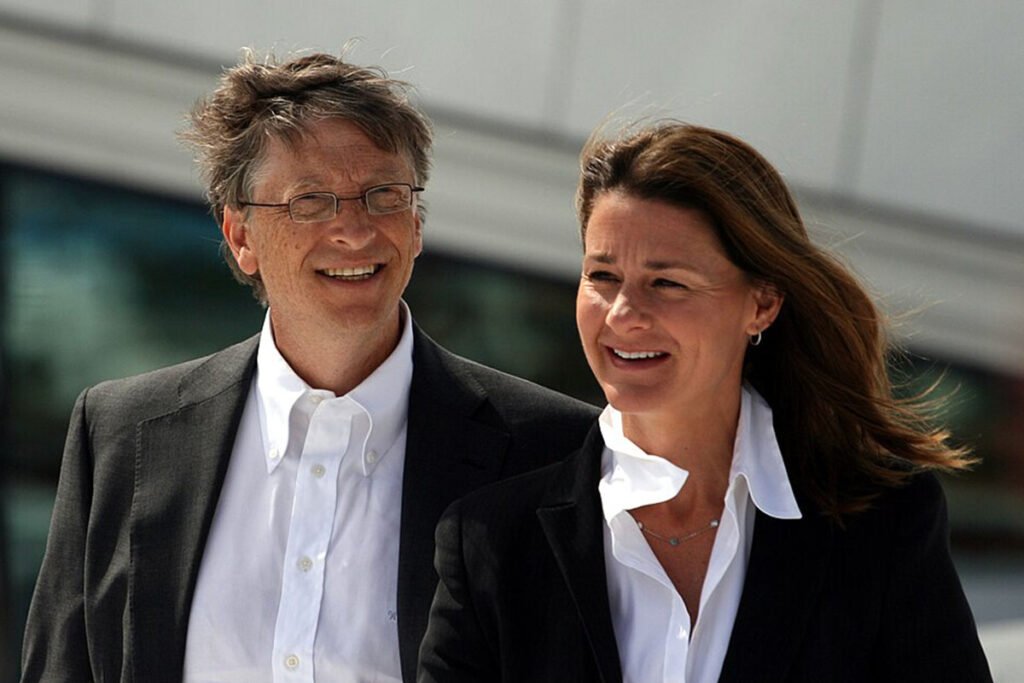
At the time, The New York Times called the 2010 creation of what became known as The Giving Pledge, “The biggest event in philanthropy this year…a commitment by 40 of the wealthiest Americans to give away at least half of their fortunes, about $600 billion.”
Started by Bill Gates, along with his then-wife Melinda French Gates and Warren Buffett, more wealthy people continue to sign on every year. As an Institute for Policy Studies (IPS) report entitled The Giving Pledge at 15 details, the initial group of 40 people quickly increased to 57 by the end of 2010.
Today, a total of 256 individuals, couples, and families have signed the pledge, of whom 194 are from the United States and 110 are US-based billionaires. This means that more than an eighth of the 876 billionaires in the United States—with a combined wealth of $1.7 trillion—have agreed to give away at least half their fortunes by the time of their death.
Sadly, however, the results have been disappointing, especially when compared to what their large wealth holdings would suggest. According to the report’s authors Chuck Collins, Bella DeVaan, Helen Flannery, and Dan Petegorsky, “giving pledger” gifts after 15 years total $206 billion—far shy of the $600 billion originally anticipated.
More than an eighth of the 876 billionaires in the United States…have agreed to give away at least half their fortunes by the time of their death.
Of that $206 billion, about $164 billion went to foundations and $5 billion to donor-advised funds. As a result, only $37 billion has gone directly to nonprofits. Of course, grants to foundations do create or increase endowments that support annual giving. Even so, the results are, broadly speaking, less than inspiring.
What explains this? In their report, Collins and his coauthors break down some of the challenges. These include the slippery nature of the pledge itself and the ongoing impact of a society and economy that favors an ever-increasing concentration of wealth.
You Can’t Cheat Death, but You Can Cheat the Pledge
The home page of The Giving Pledge states: “The Giving Pledge is a promise by the world’s wealthiest philanthropists to give the majority of their wealth to charitable causes in their lifetime or wills.”
The pledge, of course, is voluntary. But another challenge is that pledge fulfillment is set far in the future—after death. Even if the pledges were not fully voluntary, enforcement after death would be exceedingly difficult.
But the long time horizon has two additional effects. One is that it is very easy to defer giving. There are, for instance, no benchmarks to determine whether or not you are on the path to realizing your pledge.
A second effect is that pledgers have a long runway to alter their decision—or to find financial workarounds that allow for technical compliance with the pledge while keeping most assets in family hands.
To date, according to the IPS report, of the 22 pledgers who have died, eight genuinely met their pledge and 13 did not. (One additional person lost their fortune for reasons other than charitable giving before death.)
Sign up for our free newsletters
Subscribe to NPQ's newsletters to have our top stories delivered directly to your inbox.
By signing up, you agree to our privacy policy and terms of use, and to receive messages from NPQ and our partners.
The reasons pledgers fall short of their commitments can be complicated. The IPS report outlines some of these stories. For instance, much of the estate of Paul Allen—cofounder of Microsoft with Bill Gates and a pledger who is listed as having donated only 18 percent of assets as of his death in 2018—is tied up in a trust that is presently controlled by his sister Jody; it is conceivable but remains to be seen whether she will ultimately honor her brother’s original pledge of donating 50 percent of his assets to nonprofits.
Another example is Albert Lee Ueltschi, a founder of FlightSafety International, who died in 2012 a month after signing The Giving Pledge. As Philanthropy News Digest detailed in 2015—and this gets at the sometimes nebulous nature of these pledges—Ueltschi was in technical compliance with his pledge, “but only because he had provided for various beneficiaries through a variety of tax-planning vehicles and, as a result, much of his estimated $4 billion fortune isn’t legally his.” In its report, IPS estimates that Ueltschi’s actual giving amounted to 16 percent of assets, well short of the 50 percent pledged.
Pledgers have a long runway…to find financial workarounds that allow for technical compliance with the pledge while keeping most assets in family hands.
Swimming Upstream
An additional challenge with The Giving Pledge is that wealth inequality in the US economy is getting increasingly severe, meaning that except among the most generous donors, wealth accumulation typically outpaces giving.
For example, among the 32 billionaires who signed onto the pledge in its first year of existence in 2010, collective wealth has increased by 166 percent after accounting for inflation. Warren Buffett, for instance, a person who makes the IPS report’s list of “bold and direct” pledgers who has “given away more than a third of his wealth” while still living nonetheless has seen his after-inflation wealth more than double between 2010 and 2025.
Bill Gates, another person on the report’s “bold and direct” pledgers list has likewise given away over a third of his wealth, only to see his inflation-adjusted net worth continue to climb, albeit at a slower pace than Buffett.
All told, the 32 people who signed pledge in 2010 and who remain billionaires today have combined total wealth of $908 billion. Of the 32, 24 have more wealth in 2025 than in 2010, even after adjusting for inflation. Only one set of the 2010 signers still living—Laura and John Arnold—have actually exceeded giving more than 50 percent of their assets away during their lifetimes.
No voluntary pledge system can replace the need to build a more just economic system.…But a revised version of The Giving Pledge might help.
According to Collins and his coauthors, if the other 31 pledgers “decided to fully fulfill their pledges today—to give additional donations that would round up their giving to 50 percent of their current net worth—it would amount to an additional $367 billion.” To get a sense of scale, total individual giving to nonprofits in 2024, according to Giving USA, totaled $392.45 billion.
A Feeney Pledge?
There was exactly one person among the initial 2010 pledgers who gave away nearly 100 percent of his assets. That person was the late Chuck Feeney. Feeney, famously, preached the gospel of “giving while living.” And he was good to his word.
As Collins and his coauthors detailed, “Chuck Feeney, the cofounder of the Duty Free Shoppers Group…gave away his $8 billion fortune over 22 years in an effective and focused manner through his Atlantic Philanthropies foundation. Before he died in 2023 Feeney was no longer a billionaire and lived in a modest apartment in San Francisco.”
Of course, Feeney is exceptional, even if there are echoes, perhaps, in the giving of other philanthropists alive today, such as MacKenzie Scott.
The authors of the IPS report clearly recognize the limits of philanthropy. No voluntary pledge scheme can replace the need to build a more just economic system, including “taxing wealth at a fair rate to prevent these fortunes from accumulating in the first place.” But a revised version of The Giving Pledge might help.
As they wrote, “We propose the adoption and encouragement of a Feeney Giving Pledge, a call for Pledgers to pay their fair share of taxes, give money away while alive, and empower organizations led by non-billionaires to solve the urgent problems of our day.”
It is unclear how many current pledge signers would sign on to the stricter pledge that the authors propose. But due to the seemingly endless rising wealth of so many signers, The Giving Pledge of today often fuels cynicism rather than inspiring giving. A giving pledge with teeth, even if it had fewer signers, might be well worth pursuing.