
Editors’ Note: This article was originally written for the Spring 2025 issue of Nonprofit Quarterly Magazine, “How Women of Color in the South Are Reclaiming Space.”
To build a more just world, people must reflect on how they arrived at this moment of taking up space on stolen land.
The journey of Native communities across Turtle Island—like my community—is a story of resilience, resistance, and survival in the face of relentless colonization. It is also a story deeply tied to the land, its spiritual significance, and the intricate governance, stewardship, and cultural systems that sustained our ancestors for millennia.
The land is where our ancestors walked…is the foundation of our identity, community, and ways of knowing.
The story I share here is my own—one of excavating the past and returning to the land.
How We Got Here
There are many Native peoples, but one common thread is that for us land is not merely a resource but a sacred entity—a living, breathing relative imbued with spiritual, cultural, and practical meaning. The land is where our ancestors walked, our ceremonies were performed, and the wisdom of countless generations is inscribed. It is the foundation of our identity, community, and ways of knowing.
When White settler-colonizers arrived, they disrupted and dismantled our way of life. They failed or refused to see the sophisticated governance structures, sustainable stewardship practices, and rich cultures that flourished here long before their arrival. Instead, they imposed their worldview, treating the land as a commodity to be owned, divided, and exploited—with little regard for the people who lived in harmony with it.
Combatting Erasure
In public schools, we have been taught a version of history shaped by the victors—a narrative that glorifies conquest while silencing those who endured its consequences. This “winner’s version” of history rarely tells the whole truth, leaving out critical perspectives and erasing the experiences of Indigenous peoples.
To understand the roots of present challenges for my nation, the Occaneechi people, we must journey back to 1676 when disdain and hostility toward Native peoples were rapidly growing among colonists. Native peoples were framed as “savages,” deemed less than human, and denied the right to their land and resources. This dehumanizing belief system, ingrained in colonial expansion, laid the foundation for widespread violence, exploitation, and cultural erasure.
Bacon’s Rebellion in Virginia, which took place in 1676, is often portrayed in textbooks as the first popular uprising against English tyranny. It’s frequently hailed as a precursor to the American Revolution.
The loss of language, stories, and ceremonies is not just a loss of cultural knowledge; it is a loss of connection.
Yet beneath this narrative lies the reality that Native peoples were scapegoated and targeted during the rebellion. The colonists’ frustrations with their government became an excuse to attack and dispossess Native communities, further entrenching the idea that Native lives and lands were expendable for colonists’ benefit.
Meanwhile, tribal histories are erased. In the 1780s, after decades of displacement and violence, the Occaneechi people returned home one last time, only to find their ancestral lands occupied by settlers.
With little choice, they acculturated and resettled about 15 miles away from our community’s former home in what today is the town of Hillsborough, in northeast Alamance County. This forced adaptation began a long struggle to preserve identity and culture in the face of erasure.
The erasure of our identities is far more profound than many realize. Here in the Southeast, Indigenous peoples were systematically stripped of their identity and autonomy through apprenticeships and being bound out to families as indentured servants. With forced sterilization and legal prohibitions on ceremonies, they sought to erase us not just physically, but spiritually and culturally.
These practices tore children from their communities and placed them in environments designed to sever their connections to their heritage. The impact of this cultural genocide reverberates today.
While many of our traditions have been reclaimed and revitalized, the losses we have endured remain a profound wound. The loss of language, stories, and ceremonies is not just a loss of cultural knowledge; it is a loss of connection—connection to our ancestors, to our identity, and to the spiritual practices that sustained us.
Sign up for our free newsletters
Subscribe to NPQ's newsletters to have our top stories delivered directly to your inbox.
By signing up, you agree to our privacy policy and terms of use, and to receive messages from NPQ and our partners.
For me, growing up in rural North Carolina, we lived in an unincorporated town called Pleasant Grove. It was a community with deep roots, where the land held stories, and the people remembered who they were.
But like so many Indigenous communities, Pleasant Grove is changing rapidly. What was once a tight-knit Indigenous community is now fading as people forget—or are never taught—who they are and where they come from. The story of Pleasant Grove mirrors a larger truth: the ongoing struggle of Indigenous peoples to protect their history, culture, and way of life from being overshadowed and erased.
Rebuilding Community
Eight years ago, I decided to leave a secure, well-paying job at the US Department of Defense in Washington, DC, and return to the farm where I was raised in Pleasant Grove.
The transition was hard—job opportunities were scarce, and the outlook was uncertain—but my family was happy, strengthening me. I resolved to reintegrate into my community and contribute to its growth. But what I found upon my return was heartbreaking: the culture I grew up with had faded away.
The connections that once defined us—visiting extended cousins, aunts, and uncles; sharing meals; and celebrating our hidden collective identity—had died out with my grandparent’s generation. The pride we once took in keeping our families and traditions alive had eroded. I didn’t fully understand why, but I could feel the weight of history in every missing moment, every unspoken story, and every lost piece of our identity.
The effects of colonization continued to ripple through our community, manifesting in deep and systemic challenges. Limited access to healthcare—compounded by poverty, lack of infrastructure, and food insecurity—had left lasting scars. Chronic illnesses and mental health struggles, often rooted in intergenerational trauma, persisted. And beyond these immediate issues, external threats loomed large. Extractive industries like the Mountain Valley Pipeline and Transco Williams Pipelines endangered what little land remained to us—desecrating sacred sites, polluting waters, and disrupting ecosystems that our ancestors had cared for generations.
The Land Spoke to Me
The land has always spoken to me. Every time the wind blew, it carried a message—a reassurance that this was where I was meant to be. It told me that the time to reclaim space was now, that the pull I felt homeward was no coincidence but a call to return.
When I lived in Washington, DC, I felt a constant homesickness that I couldn’t quite put into words. Every visit back home filled me with a fleeting sense of peace, but I felt a deep and aching loss each time I left.
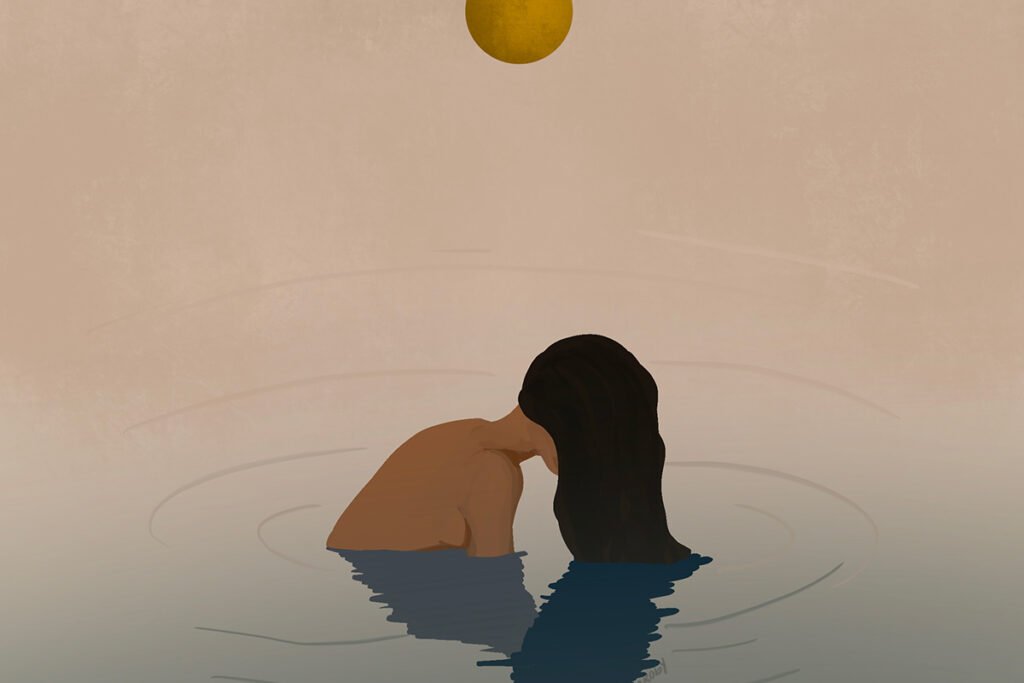
I never truly understood that feeling until my husband shared with me a Lakota word: otiwate. Otiwate, he explained, is built around the sacredness of water—a connection that begins at childbirth and flows through life to the preparation of the body for the spirit world. That word unlocked something for me: the feeling in my body, the longing in my spirit, was my own otiwate—my sacred connection to the land and the water, calling me back home.
I understood my homesickness wasn’t just about missing a physical place. It was about my deep spiritual bond with the land I was born on, the place that holds my family’s stories, struggles, and resilience. It was a longing to reclaim the space that colonization and modernity had tried to sever me from—a longing to return to my roots, to reconnect with the Earth that had nurtured me and my ancestors.
The work of reconnection is not easy. But in the last eight years, I have witnessed a powerful movement emerging in my community. We lead efforts to protect the land and water, revitalize our culture, and assert our sovereignty. From organizing resistance against pipelines to reclaiming languages, we are working to ensure that future generations inherit not only the struggles but also the strength, knowledge, and resilience of our ancestors.
Reclaiming space…means fighting for the land and water, protecting the sacred, and revitalizing the practices that make us whole.
Reclaiming Space
This work is more than activism—it’s about a reclamation of space and identity on stolen land. It is a commitment to healing and justice rooted in recognizing the journey that brought us to this moment. To understand where we are today is to honor the sacrifices and victories that shaped this moment and to embrace the deep connections between our past, present, and future.
Reclaiming space means challenging the narratives that erased us and amplifying the truth of our resilience. It means fighting for the land and water, protecting the sacred, and revitalizing the practices that make us whole.
Reclaiming space also means pushing for justice through land back movements, sovereignty protections, and revitalizing our languages and cultures. It means fully recognizing Indigenous peoples’ dignity, humanity, and contributions. And, in so doing, it means working to restore balance not only for communities but for the Earth itself.