logo logo
Donate
    • Membership
    • Donate
  • Social Justice
    • Racial Justice
    • Climate Justice
    • Disability Justice
    • Economic Justice
    • Food Justice
    • Health Justice
    • Immigration
    • LGBTQ+
  • Civic News
  • Nonprofit Leadership
    • Board Governance
    • Equity-Centered Management
    • Finances
    • Fundraising
    • Human Resources
    • Organizational Culture
    • Philanthropy
    • Power Dynamics
    • Strategic Planning
    • Technology
  • Columns
    • Ask Rhea!
    • Ask a Nonprofit Expert
    • Economy Remix
    • Gathering in Support of Democracy
    • Humans of Nonprofits
    • The Impact Algorithm
    • Living the Question
    • Nonprofit Hiring Trends & Tactics
    • Notes from the Frontlines
    • Parables of Earth
    • Re-imagining Philanthropy
    • State of the Movements
    • We Stood Up
    • The Unexpected Value of Volunteers
  • CONTENT TYPES
  • Leading Edge Membership
  • Newsletters
  • Webinars

Armed Teachers? One South Dakota School District is Close

Michael Wyland
March 17, 2016

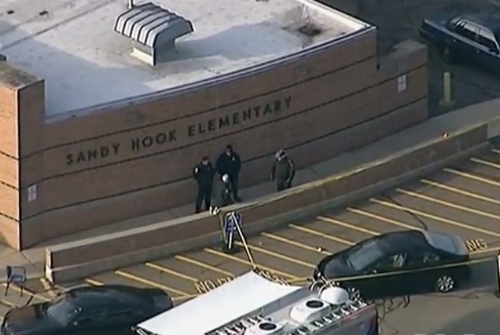
Police_at_Sandy_Hook

March 14, 2016; KELO-TV (Sioux Falls, SD)

In 2013, NPQ reported on South Dakota’s decision to allow school district staff or volunteers to be armed while performing their duties. The “school sentinel” bill was enacted in response to the massacre at Sandy Hook Elementary School in Connecticut and other cases of gun violence on school grounds. No school districts chose to implement the law—until now.

Tri-Valley School District, about 10 miles north of Sioux Falls, has a population of about 5,500 and teaches just over 800 students. Despite its proximity to the state’s largest city, it has no local police force or school patrols. There is a sheriff’s deputy that acts as a school resource officer “most of the time,” according to district officials. In the event of trouble, the school does have a lockdown “panic button,” but officials fear county law enforcement would not be able to respond in force in a timely manner to protect students and staff. Fears of school violence and previous planning steps have led the school board to provisionally approve a school sentinel program as the next step in what is hoped to be providing a safer campus.

Sign up for our free newsletters

Subscribe to NPQ's newsletters to have our top stories delivered directly to your inbox.

By signing up, you agree to our privacy policy and terms of use, and to receive messages from NPQ and our partners.

If given final approval next month (as currently appears likely), the district’s school sentinel policy would require individuals to apply, undergo psychological evaluation, secure a concealed weapons permit, and complete state law enforcement training. The final step is approval by the school board.

Three aspects of the proposed policy are unsettling. First, the identities of Tri-Valley’s school sentinels will be kept secret. The superintendent and school board will know, but the public will not. It’s not clear whether even the building principal and staff will know who is authorized to be armed on campus. Second, the weapon used by the school sentinel will likely be in a locked cabinet, not with the person. While this might sound safer than carrying a weapon when among students, it means that quick reaction to threat situations—the purpose of the policy—might not be possible. Third, while discussion surrounding the policy assumes the sentinel or sentinels will be employees, the policy itself refers only to “individuals,” leaving open the possibility of volunteers being authorized.

We understand the desire to keep children safe, but is this the best way? Imagine a nightmare scenario where one or more armed people storm the school. Staff see one person—staff or school volunteer—scrambling to get to wherever their weapon is locked up, apparently not following procedure by sheltering in place or protecting students in their classroom. They may not even be able to access their weapon, depending on where the shooters are located and how the anticipated school lockdown protocol works. Assuming the sentinel is able to retrieve the weapon, the sentinel attempts to defend the staff and students, who don’t immediately know the sentinel’s identity and only see a person in street clothes with a gun in their school during a shootout, hostage situation, or similar tragedy in progress. When law enforcement arrive on the scene, they also will likely not be immediately aware of the sentinel’s identity. Even if the superintendent is able to communicate with law enforcement, communication takes time and, besides, law enforcement protocols tend not to distinguish between armed civilians at a crime scene.

The district superintendent has sent a letter to parents about the proposed policy. The school board has not yet heard public input yet, but it may well hear concerns before it takes final action.—Michael Wyland


Our Voices Are Our Power.

Journalism, nonprofits, and multiracial democracy are under attack. At NPQ, we fight back by sharing stories and essential insights from nonprofit leaders and workers—and we pay every contributor.

Can you help us protect nonprofit voices?

Your support keeps truth alive when it matters most.
Every single dollar makes a difference.

Donate now
logo logo logo logo logo
About the author
Michael Wyland

Michael L. Wyland currently serves as an editorial advisory board member and consulting editor to The Nonprofit Quarterly, with more than 400 articles published since 2012. A partner in the consulting firm of Sumption & Wyland, he has more than thirty years of experience in corporate and government public policy, management, and administration.

More about: Gun ControlNonprofit NewsPolicy
See comments

You might also like
Disability Groups Are Standing United for Trans Rights. That Hasn’t Always Been the Case.
Sara Luterman
New Student Loan Limits Could Threaten Diversity in Nursing and Public Health Programs
Lauren Nuttall
‘I’m Heartbroken’: Trans Kansans Reckon with Their Driver’s Licenses Being Invalidated
Sherman Smith and Morgan Chilson
After Years of Waiting, She Wanted to Start Gender-Affirming Care. Politics Interfered.
Orion Rummler
In the Face of Authoritarianism, Connection Is Resistance
EJ Juárez
Nonprofits Can Help Fight Trump’s Persecution of Immigrants
Matthew Rozsa

Upcoming Webinars

Group Created with Sketch.
March 26, 2:00 pm ET

Learn Out Loud

How Every Philanthropy, Nonprofit, and Community Member Can Leverage Power in Our Fight Against ICE

Register
Group Created with Sketch.
April 23, 2:00 pm ET

Receiving & Giving Feedback

Essential Practices for Healthy Organizations and Communities

Register

    
You might also like
A person at a march holds a sign with the blue, pink, and white trans flag that reads “We See You, We’ve Got You”
Disability Groups Are Standing United for Trans Rights. That...
Sara Luterman
Yellow CLOSED sign hanging in a dusty shop window, conveying themes of business failure, recession, and economic downturn.
Nonprofits in Limbo as Flipcause Bankruptcy Unfolds
Lauren Girardin
A close shot of the front of the US Department of Education in Washington, DC.
New Student Loan Limits Could Threaten Diversity in Nursing...
Lauren Nuttall

Like what you see?

Subscribe to the NPQ newsletter to have our top stories delivered directly to your inbox.

See our newsletters

By signing up, you agree to our privacy policy and terms of use, and to receive messages from NPQ and our partners.

  • About
  • Advertise
  • Careers
  • Contact
  • Copyright
  • Donate
  • Editorial Policy
  • Funders
  • Submissions

We are using cookies to give you the best experience on our website.


Nonprofit Quarterly | Civic News. Empowering Nonprofits. Advancing Justice.
Powered by  GDPR Cookie Compliance
Privacy Overview

This website uses cookies so that we can provide you with the best user experience possible. Cookie information is stored in your browser and performs functions such as recognising you when you return to our website and helping our team to understand which sections of the website you find most interesting and useful.

Strictly Necessary Cookies

Strictly Necessary Cookie should be enabled at all times so that we can save your preferences for cookie settings.