logo logo
giving banner
Donate
    • Membership
    • Donate
  • Social Justice
    • Racial Justice
    • Climate Justice
    • Disability Justice
    • Economic Justice
    • Food Justice
    • Health Justice
    • Immigration
    • LGBTQ+
  • Civic News
  • Nonprofit Leadership
    • Board Governance
    • Equity-Centered Management
    • Finances
    • Fundraising
    • Human Resources
    • Organizational Culture
    • Philanthropy
    • Power Dynamics
    • Strategic Planning
    • Technology
  • Columns
    • Ask Rhea!
    • Ask a Nonprofit Expert
    • Economy Remix
    • Gathering in Support of Democracy
    • Humans of Nonprofits
    • The Impact Algorithm
    • Living the Question
    • Nonprofit Hiring Trends & Tactics
    • Notes from the Frontlines
    • Parables of Earth
    • Re-imagining Philanthropy
    • State of the Movements
    • We Stood Up
    • The Unexpected Value of Volunteers
  • CONTENT TYPES
  • Leading Edge Membership
  • Newsletters
  • Webinars

A Nonprofit Theater in Alaska Seeks a Path to Financial Sustainability

Steve Dubb
August 21, 2018

August 16, 2018; American Theatre

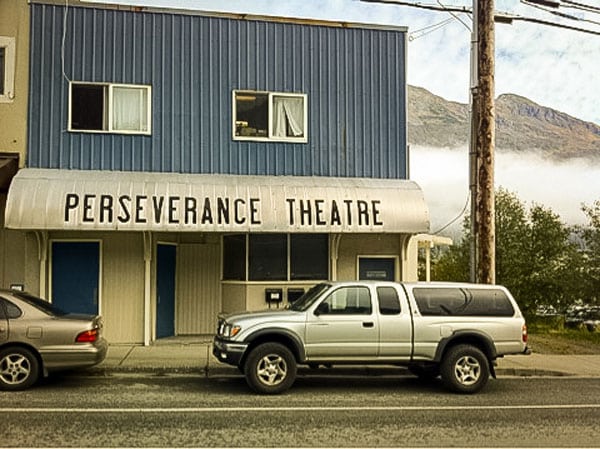
The Perseverance Theatre, founded in 1979 by Molly Smith, who left two decades ago to become the artistic director of Washington DC’s Arena Stage theater company, will launch its 40th anniversary season starting in October. But it almost didn’t get there.

Perseverance, writes Diep Tran in American Theatre, has performed since 2014 in two cities: “Juneau, its home base, and in Anchorage, 848 miles away. The theatre also does an annual tour to rural communities in Alaska and runs an art education program for youth and adults.”

This past spring, however, Tran notes, the theater “company had been forced to cancel its spring show…had furloughed several employees, and was more than $200,000 in debt.” The risk of going under was real.

But then the arts community responded. Tran explains:

A philanthropist and longtime friend of artistic director Art Rotch donated $200,000. A Perseverance subscriber gave another $207,000. A number of other large donations from the Doris Duke Charitable Foundation and other donors added up to $650,000, allowing the theatre to pay off its debts and build up a cash reserve, which had been depleted after years of budget shortfalls. The donors also issued a challenge to Perseverance’s donor base: to raise $100,000 more by September 30th. So far, the theatre has raised half.

But how did the nonprofit theater get into financial trouble in the first place? Rotch, the theater’s artistic director, explains that an expansion of the theater to Anchorage nearly sunk the nonprofit.

Sign up for our free newsletters

Subscribe to NPQ's newsletters to have our top stories delivered directly to your inbox.

By signing up, you agree to our privacy policy and terms of use, and to receive messages from NPQ and our partners.

Juneau, although the state’s capital city, is a small community of just over 32,000 people. That makes it hard to keep a nonprofit theater going. Perseverance, Rotch remarks, “has survived by the passion of those who have been involved, not because it has a solid business model.” Adding shows in Anchorage, home to over 294,000 residents, seemed like an obvious way to find “a scale that would get the whole state invested and get enough people in the seats.”

That idea may prove wise in the long term. But in the short run it created all sorts of problems. As Tran explains, performing in Anchorage required the theater “to truck crew, set, and artists through Canada, then via a ferry to the second location.” Tran adds, “Though the cost of performing in Anchorage was offset by ticket revenue, Rotch didn’t factor in the rising costs of production and some budgeted grants that didn’t come through.” According to its Form 990 filings, the nonprofit, which had been near breakeven (a $2,400 loss on $1.384 million in revenues in 2013), was $272,000 in the red in 2014 and ran a $450,000 deficit in 2015.

The theater, notes Tran, recovered and posted “a small surplus this past season.” But, by that point, its cash reserves were gone. The new influx of money lets the nonprofit restore its reserves and plan more effectively for the future.

This has involved adding two critical roles to staff—the theater’s first director of engagement and outreach, and a managing director. One of the conditions that donors placed on the new funds was that the money raised be used to support key hires that can help the theater develop a long-term sustainable business model. The outreach director was hired in June. The managing director hire was announced earlier this month.

“For the past 10 years,” Tran notes, “artistic director Rotch had been overseeing both the art and money side at the theatre.” While donors pushed for the hire, Rotch says that he’s happy to have “a second pair of hands” to help run the theater.

Joshua Midgett, formerly of the Contemporary American Theater Festival in West Virginia, is the new managing director. Midgett grew up in Juneau. In West Virginia, Midgett helped the festival go from a “five-figure operating deficit” to a “six-figure operating surplus,” Tran writes.

In Alaska, Midgett tells Tran that he wants to generate revenue less from foundations and more from “audience contributions, subscriptions, and other earned income.” Midgett adds that with the theater now having dedicated staff for building the patron base, development, and budget management, the business side is in much better shape.

“Part of the theatre’s five-year plan,” Tran writes, “is to increase audience attendance by 50 percent, to 30,000 annually.” Education and outreach are part of this, of course. One strategy, notes Tran, is “to expand the theater’s education and touring programs, to place them directly in schools and community centers,” which the theater hopes will ultimately generate more patrons. This year’s season begins with Our Town by Thornton Wilder and includes five shows in Juneau and Anchorage.—Steve Dubb


Our Voices Are Our Power.

Journalism, nonprofits, and multiracial democracy are under attack. At NPQ, we fight back by sharing stories and essential insights from nonprofit leaders and workers—and we pay every contributor.

Can you help us protect nonprofit voices?

Your support keeps truth alive when it matters most.
Every single dollar makes a difference.

Donate now
logo logo logo logo logo
About the author
Steve Dubb

Steve Dubb is senior editor of economic justice at NPQ, where he writes articles (including NPQ’s Economy Remix column), moderates Remaking the Economy webinars, and works to cultivate voices from the field and help them reach a broader audience. In particular, he is always looking for stories that illustrate ways to build a more just economy—whether from the labor movement or from cooperatives and other forms of solidarity economy organizing—as well as articles that offer thoughtful and incisive critiques of capitalism. Prior to coming to NPQ in 2017, Steve worked with cooperatives and nonprofits for over two decades, including twelve years at The Democracy Collaborative and three years as executive director of NASCO (North American Students of Cooperation). In his work, Steve has authored, co-authored, and edited numerous reports; participated in and facilitated learning cohorts; designed community building strategies; and helped build the field of community wealth building. Most recently, Steve coedited (with Raymond Foxworth) Invisible No More: Voices from Native America (Island Press, 2023). Steve is also the lead author of Building Wealth: The Asset-Based Approach to Solving Social and Economic Problems (Aspen 2005) and coauthor (with Rita Hodges) of The Road Half Traveled: University Engagement at a Crossroads, published by MSU Press in 2012. In 2016, Steve curated and authored Conversations on Community Wealth Building, a collection of interviews of community builders that Steve had conducted over the previous decade.

More about: Equity-Centered ManagementFinancial SustainabilityNonprofit News
See comments

Call to action
You might also like
The Struggle for Long-Term Care, Nonprofits, and What Economic Justice Requires
James A. Lomastro
Nonprofit Budgeting in a Maelstrom
Isaiah Thompson
How Nonprofits Can Strengthen Their Finances in Turbulent Times
Ted Siefer
Why Nonprofit Control of Information Technology Matters
James A. Lomastro
What Are Key Performance Indicators (KPIs) to Measure Nonprofit Success?
Jeanne Bell
Rethinking Nonprofit Survival: Why Partnership Is the New Leadership
Michael Anderson, Rumbidzai Mufuka and Adelaide Rohrssen

Upcoming Webinars

Group Created with Sketch.
January 29th, 2:00 pm ET

Participatory Decision-making

When & How to Apply Inclusive Decision-making Methods

Register
Group Created with Sketch.
February 26th, 2:00 pm ET

Understanding Reduction in Force (RIF) Law

Clear Guidance for Values-centered Nonprofits

Register

    
You might also like
A red circle overlayed on a yellow background with three multi-colored dots on each side. In the center it reads, " Isaiah Thompson: Staff Picks for 2025"
Staff Picks for 2025: Isaiah Thompson
Isaiah Thompson
Staff Picks for 2025: Steve Dubb
Steve Dubb
A red circle overlayed on a yellow background with three multi-colored dots on each side. In the center it reads, "Alison Stine: Staff Picks for 2025"
Staff Picks for 2025: Alison Stine
Alison Stine

Like what you see?

Subscribe to the NPQ newsletter to have our top stories delivered directly to your inbox.

See our newsletters

By signing up, you agree to our privacy policy and terms of use, and to receive messages from NPQ and our partners.

  • About
  • Advertise
  • Careers
  • Contact
  • Copyright
  • Donate
  • Editorial Policy
  • Funders
  • Submissions

We are using cookies to give you the best experience on our website.


Nonprofit Quarterly | Civic News. Empowering Nonprofits. Advancing Justice.
Powered by  GDPR Cookie Compliance
Privacy Overview

This website uses cookies so that we can provide you with the best user experience possible. Cookie information is stored in your browser and performs functions such as recognising you when you return to our website and helping our team to understand which sections of the website you find most interesting and useful.

Strictly Necessary Cookies

Strictly Necessary Cookie should be enabled at all times so that we can save your preferences for cookie settings.