logo logo
giving banner
Donate
    • Membership
    • Donate
  • Social Justice
    • Racial Justice
    • Climate Justice
    • Disability Justice
    • Economic Justice
    • Food Justice
    • Health Justice
    • Immigration
    • LGBTQ+
  • Civic News
  • Nonprofit Leadership
    • Board Governance
    • Equity-Centered Management
    • Finances
    • Fundraising
    • Human Resources
    • Organizational Culture
    • Philanthropy
    • Power Dynamics
    • Strategic Planning
    • Technology
  • Columns
    • Ask Rhea!
    • Ask a Nonprofit Expert
    • Economy Remix
    • Gathering in Support of Democracy
    • Humans of Nonprofits
    • The Impact Algorithm
    • Living the Question
    • Nonprofit Hiring Trends & Tactics
    • Notes from the Frontlines
    • Parables of Earth
    • Re-imagining Philanthropy
    • State of the Movements
    • We Stood Up
    • The Unexpected Value of Volunteers
  • CONTENT TYPES
  • Leading Edge Membership
  • Newsletters
  • Webinars

Can Management Principles from Zappos’ Holacracy Teach Nonprofits?

Ruth McCambridge
January 2, 2014


Zappos

December 30, 2013; Quartz

For anyone who is a fan of participatory management, chaotic thinking, etc., this new experiment in the corporate sector will seem like another step in what has been a twenty-five year journey to replace the industrial model hierarchy with something more suited to the twenty-first century workplace. We’d love to hear what you think about this.

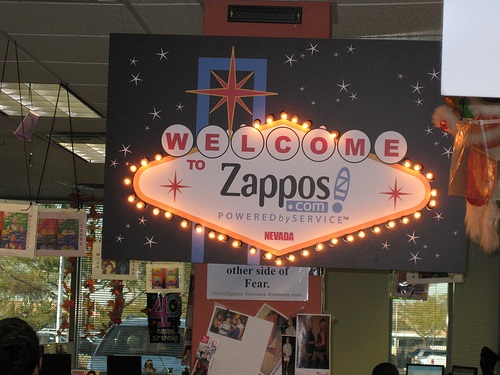
Zappos, the online retail outlet, is notable from the outside for outstanding customer service that leaves the buyer with the sense of being listened to while at the same time being served with enormous efficiency. Now, CEO Tony Hsieh has plans to transform Zappos through implementing a “self-governing” operating system with no job titles and no managers.

The system is called a “holacracy” based on the Greek word holon—a whole that’s part of a greater whole. The “holarchy” will distribute power more evenly among the corporation’s 1500 employees, and organization will be done through 400 different circles in which employees can have any number of roles. All of this is aided by and aimed at producing “radical transparency,” and Hsieh believes that it will result in high adaptability, saying, “Darwin said that it’s not the fastest or strongest that survive. It’s the ones most adaptive to change.”

Sign up for our free newsletters

Subscribe to NPQ's newsletters to have our top stories delivered directly to your inbox.

By signing up, you agree to our privacy policy and terms of use, and to receive messages from NPQ and our partners.

Hsieh is being helped in this venture by Brian Robertson from the management consultancy HolacracyOne. “Zappos’ focus on core values and culture has done a remarkably good job of getting around the limits of a conventional corporate structure,” says Robertson, “Leaders that already understand the limits of conventional structures are the ones that are attracted to holacracy.”

Free Download: 10 Ways to Kill Your Nonprofit
“We’re classically trained to think of ‘work’ in the traditional paradigm,” says John Bunch, who, along with Alexis Gonzales-Black, is leading the transition to holacracy at Zappos. “One of the core principles is people taking personal accountability for their work. It’s not leaderless. There are certainly people who hold a bigger scope of purpose for the organization than others. What it does do is distribute leadership into each role. Everybody is expected to lead and be an entrepreneur in their own roles, and holacracy empowers them to do so.”

John Bunch, who is working to help implement the change, says the system is “politics-free [and] quickly evolving to define and operate the purpose of the organization, responding to market and real-world conditions in real time. It’s creating a structure in which people have flexibility to pursue what they’re passionate about.”

Robertson says that “a high capacity to see the complex systems at play in their organizations,” can aid the success of holocracy. “It’s not linear or a matter of just following the logical argument; it’s seeing the cloud of interconnections and influences, beyond just cause and effect thinking.”—Ruth McCambridge


Our Voices Are Our Power.

Journalism, nonprofits, and multiracial democracy are under attack. At NPQ, we fight back by sharing stories and essential insights from nonprofit leaders and workers—and we pay every contributor.

Can you help us protect nonprofit voices?

Your support keeps truth alive when it matters most.
Every single dollar makes a difference.

Donate now
logo logo logo logo logo
About the author
Ruth McCambridge

Ruth is Editor Emerita of the Nonprofit Quarterly. Her background includes forty-five years of experience in nonprofits, primarily in organizations that mix grassroots community work with policy change. Beginning in the mid-1980s, Ruth spent a decade at the Boston Foundation, developing and implementing capacity building programs and advocating for grantmaking attention to constituent involvement.

More about: Corporate Social ResponsibilityEquity-Centered ManagementNonprofit NewsOrganizational Culture
See comments

You might also like
GivingTuesday: Ride the Wave, Don’t Fight It
Rhea Wong
Rethinking Nonprofit Survival: Why Partnership Is the New Leadership
Michael Anderson, Rumbidzai Mufuka and Adelaide Rohrssen
What Do You Do When Your Nonprofit Staff Want Raises We Can’t Afford?
Sara Hudson
Can We All Become Nonprofit Consultants?
Michelle Flores Vryn
From Wish List to Reality: Managing Tech Change in Nonprofits
Afua Bruce
Forget the Silent Auction: How to Focus Your Fundraising Energy
Rhea Wong

Upcoming Webinars

Group Created with Sketch.
January 29th, 2:00 pm ET

Participatory Decision-making

When & How to Apply Inclusive Decision-making Methods

Register
Group Created with Sketch.
February 26th, 2:00 pm ET

Understanding Reduction in Force (RIF) Law

Clear Guidance for Values-centered Nonprofits

Register

    
You might also like
Angle from inside of a wave tunnel, with a surfer riding a wave. The words "ride the wave, don't fight it" are super imposed on the image.
GivingTuesday: Ride the Wave, Don’t Fight It
Rhea Wong
Two people shaking hands in agreement.
Rethinking Nonprofit Survival: Why Partnership Is the New...
Michael Anderson, Rumbidzai Mufuka and Adelaide Rohrssen
A long table with Eiffel chairs sits in an empty meeting room.
What Do You Do When Your Nonprofit Staff Want Raises We...
Sara Hudson

Like what you see?

Subscribe to the NPQ newsletter to have our top stories delivered directly to your inbox.

See our newsletters

By signing up, you agree to our privacy policy and terms of use, and to receive messages from NPQ and our partners.

  • About
  • Advertise
  • Careers
  • Contact
  • Copyright
  • Donate
  • Editorial Policy
  • Funders
  • Submissions

We are using cookies to give you the best experience on our website.


Nonprofit Quarterly | Civic News. Empowering Nonprofits. Advancing Justice.
Powered by  GDPR Cookie Compliance
Privacy Overview

This website uses cookies so that we can provide you with the best user experience possible. Cookie information is stored in your browser and performs functions such as recognising you when you return to our website and helping our team to understand which sections of the website you find most interesting and useful.

Strictly Necessary Cookies

Strictly Necessary Cookie should be enabled at all times so that we can save your preferences for cookie settings.