logo logo
giving banner
Donate
    • Membership
    • Donate
  • Social Justice
    • Racial Justice
    • Climate Justice
    • Disability Justice
    • Economic Justice
    • Food Justice
    • Health Justice
    • Immigration
    • LGBTQ+
  • Civic News
  • Nonprofit Leadership
    • Board Governance
    • Equity-Centered Management
    • Finances
    • Fundraising
    • Human Resources
    • Organizational Culture
    • Philanthropy
    • Power Dynamics
    • Strategic Planning
    • Technology
  • Columns
    • Ask Rhea!
    • Ask a Nonprofit Expert
    • Economy Remix
    • Gathering in Support of Democracy
    • Humans of Nonprofits
    • The Impact Algorithm
    • Living the Question
    • Nonprofit Hiring Trends & Tactics
    • Notes from the Frontlines
    • Parables of Earth
    • Re-imagining Philanthropy
    • State of the Movements
    • We Stood Up
    • The Unexpected Value of Volunteers
  • CONTENT TYPES
  • Leading Edge Membership
  • Newsletters
  • Webinars

“Communicate, Run, Vote!”—Will Women’s March Energy Flip Congress?

Carole Levine
February 6, 2018
Public domain, via Wikimedia Commons

January 26, 2018; The Conversation

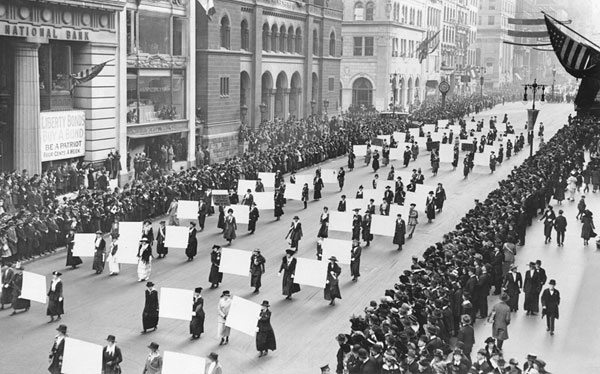
Women and girls at the Women’s March to the Polls last month carried many great signs, but one that resonated was carried by a young girl in Wonder Woman regalia. It read: “Voting Is My Super Power.” It brought back memories of the women whose protests and marches of nearly a century ago led to the ratification of the 19th Amendment, giving women full suffrage rights, and laid the groundwork for the continuing work on women’s rights that echoed in the speeches and was evident on the signs at the women’s marches in January 2017 and again last month. The question that remains, now that the marchers have come home is, “What’s next?” How can marchers capitalize on the enthusiasm and momentum?

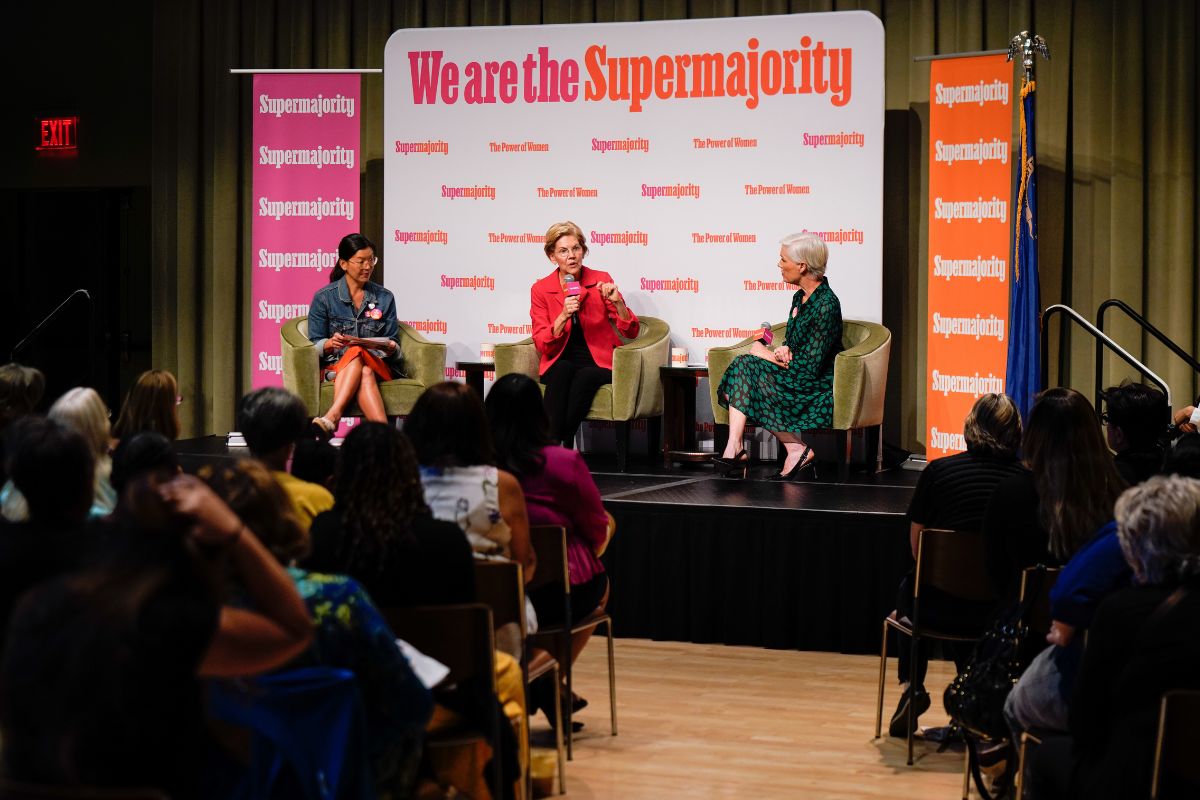
Since the January 2017 Women’s March, the focus has been on getting women to engage in electoral politics and take seats where they can hold power and make decisions. The numbers speak for themselves. On January 30th, Now This News tweeted:

💪🏽 390 women are running for House seats
💪🏽 50 women are running for the Senate
💪🏽 79 women are considering running for governorships
💪🏽 Thousands more are seeking state and local offices pic.twitter.com/REFVCvHHu1

— NowThis (@nowthisnews) January 30, 2018

Today, we are seeing more women at podiums and on the stump. But to move the needle to change the ways our government functions, some lessons can be drawn from the suffragettes. In her article in The Conversation, Liette Gidlow points to three strategies that were central when the 19th Amendment was adopted and the League of Women Voters began as a nonprofit, nonpartisan organization working to promote voting. Those strategies—Communicate, Run, Vote—are at the core of what will be key to the success or failure of the follow-up to the Women’s Marches.

Considering early communication work prior to Twitter, Instagram, Facebook, and other social media, early feminists cleverly captured the market of what was then the modern media: radio, telephones, and glossy print magazines.

Sign up for our free newsletters

Subscribe to NPQ's newsletters to have our top stories delivered directly to your inbox.

By signing up, you agree to our privacy policy and terms of use, and to receive messages from NPQ and our partners.

In 1928, for example, the league partnered with the fledgling NBC radio network to bring its “Citizenship School of the Air” to 15 million listeners. At a time when callers couldn’t dial direct, telephone operators—an overwhelmingly female labor force—reminded election-day callers in 1924 to be sure to vote. Articles and ads in women’s magazines such as the Ladies’ Home Journal nudged millions of its female readers to take advantage of their newfound right to vote.

Today, the communication options are many and varied and can reach different audiences. But reaching them and turning those connections into actual votes on Election Day are not always the same, as the data will show.

As more women are running for office, more enthusiasm will build. Linking that to communications and the “get out the vote” process becomes essential. Voter turnout, especially among women, is key. Gidlow offers advice based on lessons learned by the League of Women Voters in the 1920s:

Based on two decades of research on US history and women’s politics, I believe that today’s female activists can succeed where their foremothers failed.

That is because geography determines who gets to vote for a given candidate. Votes are tallied by precincts, making social media followers from far-flung locations less relevant than they may appear. To translate what looks like overwhelming public support for feminist causes into a winning streak in the 2018 midterm elections, activists must win what political professionals call the “ground game.”

That means organizers will have to identify their potential supporters, precinct by precinct, and register them to vote. They’ll need to communicate with identified supporters repeatedly about shared concerns through traditional and social media channels, direct mail and—above all—in person.

If voting is, indeed, to be women’s superpower, then there is work to be done. And it cannot just be done via social media and the ease of a keyboard relationship. It will take the hard work of organizing and door-to-door outreach and actually ensuring that people get to the polls. It will mean showing up. Being a superhero is never easy. The women who struggled and fought to get us the right to vote were the first superheroes. Are we ready to build on that tradition?—Carole Levine


Our Voices Are Our Power.

Journalism, nonprofits, and multiracial democracy are under attack. At NPQ, we fight back by sharing stories and essential insights from nonprofit leaders and workers—and we pay every contributor.

Can you help us protect nonprofit voices?

Your support keeps truth alive when it matters most.
Every single dollar makes a difference.

Donate now
logo logo logo logo logo
About the author
Carole Levine

Carole Levine is a principal consultant at Levine Partners, providing consulting services to small and medium-sized nonprofit organizations. She has held senior management positions in four national nonprofits: The National PTA (Deputy Executive Director); Communities in Schools (Vice President of Expansion and Technical Assistance); The Family Resource Coalition (Director of Technical Assistance); and National Lekotek Center (Director of Development). Carole holds a BA in education and political science from Washington University, and an M.Ed. in Early Childhood Leadership and Advocacy from National Louis University. Carole has served on the boards of numerous organizations, holding national positions on the board of National Council of Jewish Women and on the International Council of Jewish Women. She is currently the Chair of Courts Matter Illinois, serves on the board of Chicago Women Take Action and is active on the Promote the Vote Illinois Coalition. Carole is passionate about purposeful work, justice for all, advocacy and her family (which includes 6 amazing grandchildren!).

More about: FeminismNonprofit News
See comments

Call to action
You might also like
We Stood Up: Organizing at a Feminist Nonprofit
Nina Yeboah
Black Women’s Unemployment Signals Trouble for All
Jhumpa Bhattacharya and Anne Price
Gender Inequality Needs a Platform at Climate Talks
Diana Ionescu
Young, Queer, and Threatened for Climate Activism
Sherwood Hines
Social Media in 1970—The National Student Strike Information Center
Katherine Ann Power
New Coloring Book Seeks to Help Black Women Care for and Make Time for Themselves
Rebekah Barber and Oludara Adeeyo

Upcoming Webinars

Group Created with Sketch.
January 29th, 2:00 pm ET

Participatory Decision-making

When & How to Apply Inclusive Decision-making Methods

Register
Group Created with Sketch.
February 26th, 2:00 pm ET

Understanding Reduction in Force (RIF) Law

Clear Guidance for Values-centered Nonprofits

Register

    
You might also like
A red circle overlayed on a yellow background with three multi-colored dots on each side. In the center it reads, " Isaiah Thompson: Staff Picks for 2025"
Staff Picks for 2025: Isaiah Thompson
Isaiah Thompson
Staff Picks for 2025: Steve Dubb
Steve Dubb
A red circle overlayed on a yellow background with three multi-colored dots on each side. In the center it reads, "Alison Stine: Staff Picks for 2025"
Staff Picks for 2025: Alison Stine
Alison Stine

Like what you see?

Subscribe to the NPQ newsletter to have our top stories delivered directly to your inbox.

See our newsletters

By signing up, you agree to our privacy policy and terms of use, and to receive messages from NPQ and our partners.

  • About
  • Advertise
  • Careers
  • Contact
  • Copyright
  • Donate
  • Editorial Policy
  • Funders
  • Submissions

We are using cookies to give you the best experience on our website.


Nonprofit Quarterly | Civic News. Empowering Nonprofits. Advancing Justice.
Powered by  GDPR Cookie Compliance
Privacy Overview

This website uses cookies so that we can provide you with the best user experience possible. Cookie information is stored in your browser and performs functions such as recognising you when you return to our website and helping our team to understand which sections of the website you find most interesting and useful.

Strictly Necessary Cookies

Strictly Necessary Cookie should be enabled at all times so that we can save your preferences for cookie settings.