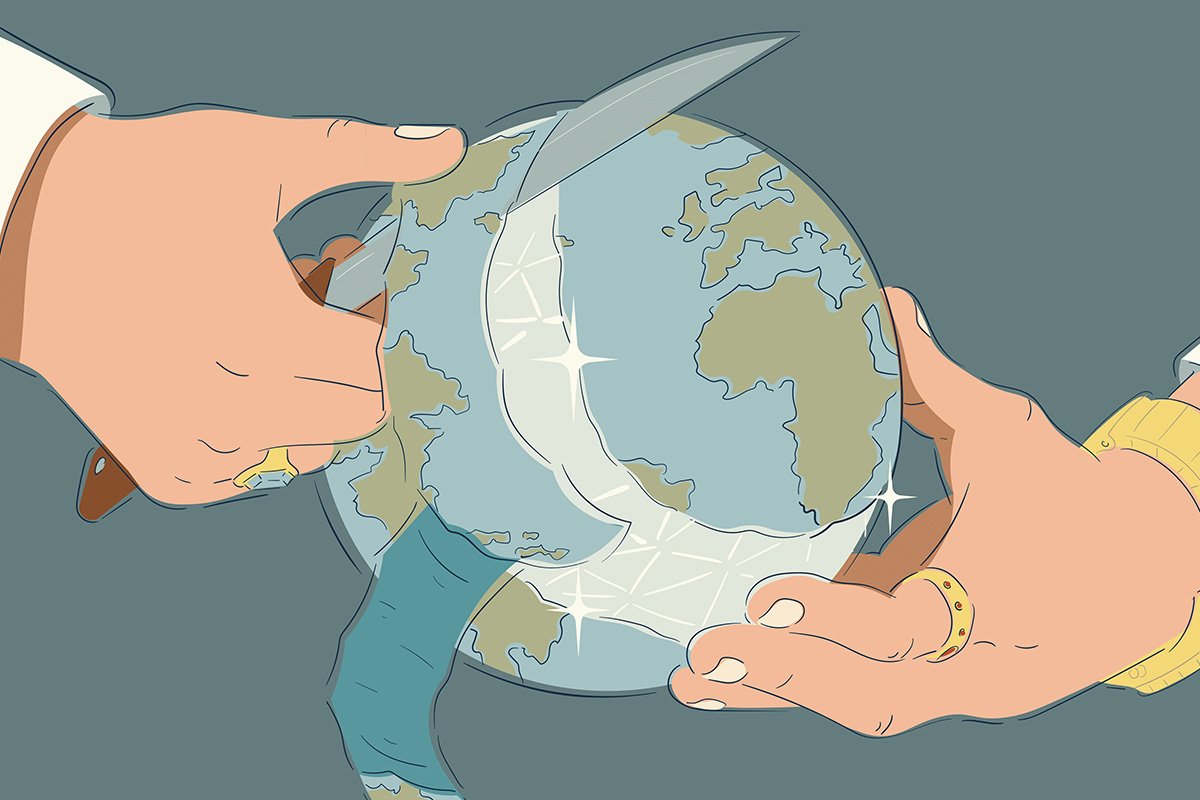
Degrowth is defined as the intentional downscaling of global resource consumption for the purpose of achieving ecological sustainability and social justice. In doing so, degrowth challenges the idea of economic growth itself.
Our current economy transforms nature into material goods and waste. The seemingly endless push for economic growth accelerates that.
Yet growth often fails to make societies happier or more fulfilled. Indeed, a 2023 The Club of Rome report noted, “GDP [gross domestic product] growth after a certain point has not created greater wellbeing, but has instead increased inequality between the richest and the poorest, created social tensions and led to environmental tipping points.” The United States, for example, scores far lower on the United Nations Human Development Index—which measures quality of life, especially in education and health—than many other ostensibly less wealthy countries.
“Growth after a certain point has not created greater wellbeing, but has instead increased inequality between the richest and the poorest.”
Degrowth invites people to reimagine prosperity altogether. Instead of adopting the dominant paradigm of constant expansion, scaling, and efficiency as an end in and of itself, degrowth principles encourage people to center collective wellbeing, equity, belonging, deep democracy, and ecological balance in human and economic activity. It takes seriously the notion that the economy, a word rooted in the two Greek words eco (home) and nomos (management), should be about managing our collective home.
A Rediscovery of Ancestral Values
As Emilia Reyes of Feminist Action Nexus detailed in a 2024 primer on degrowth, communities throughout the Global South and Indigenous nations have long practiced relational and productive ways of living to ensure harmony across different spheres of life, centering collective wellbeing within a larger ecological balance.
Degrowth, then, is not a new invention but an effort to align people in the Global North, particularly within White and academic spaces, with the longstanding wisdom and practices of Abya Yala (an Indigenous term for the Americas meaning “living land” or “land that flourishes”) and beyond.
If anything, degrowth helps people in the Global North rediscover the invitation they have for so long ignored: to learn from and stand alongside those communities that have long sustained life within ecological limits. Through renewed dialogue, there is an opportunity for these worldviews and practices to take their rightful seat at the tables of power, shaping economic and political systems that reflect interdependence rather than domination.
Degrowth may have first taken root in academia, but it has grown to be a broad social movement. In July 2025, over 100 degrowth advocates came together in a convening known as DeSchool in Chicago.
As Anna Prouty of Degrowth Institute shared in her reflections on the convening, the degrowth movement is “a network woven of dynamic, interacting pieces” that evolve with changing contexts. Strategies, languages, and priorities vary—and at times even enter in conflict—but these tensions are also a reflection of the movement’s dynamism and breadth.
Considerations for Today
Degrowth may sound theoretical, but its relevance is clear as today’s capitalist economy continues to wreak havoc on the global climate and the environment.
The degrowth movement aims to support community efforts…while linking them up with a broader—indeed, global—framework.
From wildfires to floods, climate-related disasters are increasing in frequency and intensity. From 2005’s Hurricane Katrina that inundated New Orleans and the Gulf Coast, to more recent disasters such as Hurricane Maria in Puerto Rico, the wildfires in Los Angeles, the fire in Lahaina on Maui, or the massive flooding wrought by Hurricane Helene in western North Carolina, the indicators of the climate crisis are hardly abating.
Community measures can make a difference. Puerto Rico offers an example: Five years after Hurricane Maria, Hurricane Fiona knocked out power to much of the archipelago. But in Castañer, a small rural community, resident Sonia Sanchez was able to continue her electricity-dependent pulmonary treatment. This was due to the fact that after Hurricane Maria, the community had built the Microrred de la Montaña (Mountain Microgrid) to prepare for the next disaster. The degrowth movement aims to support community efforts like these, while linking them up with a broader—indeed, global—framework.
Central to this framework is thinking through how people can organize to slow and mitigate current trends that threaten to overwhelm what the Stockholm Resilience Centre has outlined as the nine planetary boundaries—without compromising equity or social justice. These boundaries are:
Sign up for our free newsletters
Subscribe to NPQ's newsletters to have our top stories delivered directly to your inbox.
By signing up, you agree to our privacy policy and terms of use, and to receive messages from NPQ and our partners.
- Climate change
- Change in biosphere integrity (biodiversity loss and species extinction)
- Stratospheric ozone depletion
- Ocean acidification
- Biogeochemical flows (phosphorus and nitrogen cycles)
- Land-system change (for example, deforestation)
- Freshwater change
- Atmospheric aerosol loading (microscopic particles in the atmosphere that affect climate and living organisms)
- Introduction of novel entities (such as organic pollutants, radioactive materials, nanomaterials, and microplastics)
Exceeding planetary ecological limits not only means the loss of irreplaceable life supports for the natural world—threatening everything from polar ice caps to entire species—but also increases the risk of disasters. The climate clock, an illustrative gauge used in global climate movements, makes tangible the threat posed by surpassing one key planetary boundary, climate change.
However, by contextualizing climate change among the eight other boundaries, degrowth offers a broader framework for understanding how to achieve sustainability. All proposals to mitigate and survive climate change, while maintaining accelerating economic growth, promise irreversible damage from surpassing the other boundaries in the myopic race to beat the one.
Brass Tacks: How to Put a Degrowth Frame into Motion
Degrowth employs a dual power framework. On the one hand, it calls for centralized cooperation to navigate bounds like the planetary boundaries. On the other hand, degrowth advocates recognize the value of more widely distributed power that facilitates effective local responses. The late Elinor Ostrom, the first woman to ever win the Nobel Prize in Economics, emphasized the value of local institutions in managing what she labeled “common-pool resources.”
“Degrowth is about transitions and alternatives, creating smaller-scale economies that meet real human and ecological needs.”
Under this framework, resources would be redirected toward local preparedness and collective ownership, as communities would become first responders to both ecological and social crises. If disasters are the meeting point of hazards and inequality, degrowth is disaster prevention at the root level—it curbs the extractive economic activities that heighten both hazard exposure and vulnerability.
In a recent report, John Mulrow, director of the Degrowth Institute, outlined some of the fundamental elements of a degrowth approach:
- [Orientation of the economy toward] resource conservation, environmental protection, [and] ecological health
- Not economic restraint across the board, but rather a rebalancing of priorities
- A smaller, more just economy…combining local efforts with a global reduction in pollution, emissions, and consumption
- Restrictions on advertising, caps on fossil fuel use, and work-life balance incentives
- Economic downscaling for the wealthy, but also economic opportunity for many more
- Growth in some industries—especially ecological restoration, alternative energy, and active transportation—and contraction in others
In her reflections from the Chicago conference, Prouty offered some additional tenets and ideas about how to implement what is often called a just transition. As she wrote:
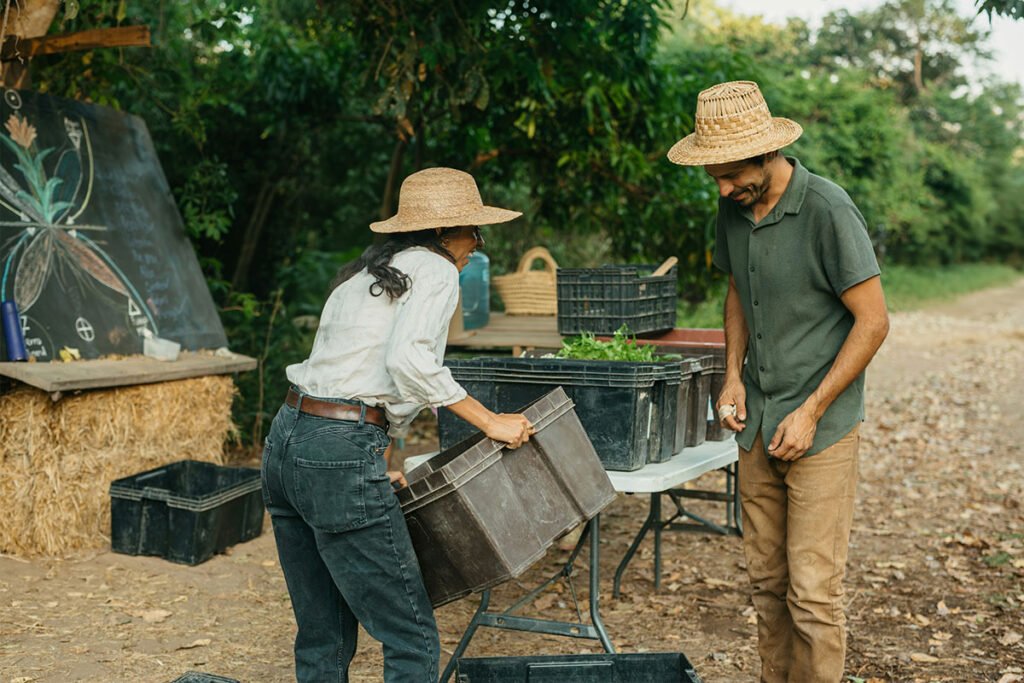
We need to challenge the fossil fuel industry, like working to shut down dangerous and destructive pipelines. We need to push back against authoritarianism and capitalism by building robust mutual aid networks.…We need to develop institutions for community self-management and autonomy over our resources like food and energy. We need to liberate the ways we meet our needs from the clutches of markets, by provisioning things like food for ourselves and our communities without reliance on market forces. We need worker cooperatives, time banks and community-owned businesses that center the real needs of people and bring back democratic control over the economy. Degrowth is about transitions and alternatives, creating smaller-scale economies that meet real human and ecological needs.
Degrowth Resources: Where to Learn More
Meanwhile, the field continues to evolve. For those new to the topic, Jason Hickel’s Less Is More offers a powerful introduction, while Erik Assadourian’s chapter in 2012 State of the World: Moving Toward Sustainable Prosperity provides a concise overview of degrowth. For the academically inclined, two master’s degree programs—one online and another in Barcelona—offer opportunities to study degrowth and its intersections with political ecology, environmental justice, ecology, economics, and policy.
Those eager to reimagine business can explore a degrowth business incubator being developed in New Hampshire; those curious about finance and post-growth economics might look to the Arketa Institute. The Earth Month Convergence is an annual event in New York state where grassroots leaders can get involved. Researchers can join the Degrowth Research Network Collaboration Circle or contribute to the movement’s academic journal, which facilitates scholarly exchange and interdisciplinary dialogue. Emerging from the 2025 conference, the Degrowth Research Network offers a broad, interdisciplinary circle of scholars exploring practical, place-based strategies such as local provisioning and food systems, mutual aid networks, collaborative and democratic governance, rural and urban equity, and more.
From Theory to Practice
Degrowth is more than theory—it is lived practice. It is only by integrating the dual goals of ecological sustainability and social justice—and by confronting the unequal exchange between the Global North and Global South that underwrites the illusion of perpetual growth—that progress toward an equitable global economy that respects our planet’s limits can occur.
Degrowth isn’t about lowering the quality of life—to the contrary, it’s about redesigning the global economy to foster sustainable human wellbeing for this and many future generations.
As disasters multiply, society faces a choice between managed downscaling that centers justice or unmanaged collapse that multiplies harm. The work begins wherever we teach, budget, or build.