
logo logo
Donate
    • Membership
    • Donate
  • Social Justice
    • Racial Justice
    • Climate Justice
    • Disability Justice
    • Economic Justice
    • Food Justice
    • Health Justice
    • Immigration
    • LGBTQ+
  • Civic News
  • Nonprofit Leadership
    • Board Governance
    • Equity-Centered Management
    • Finances
    • Fundraising
    • Human Resources
    • Organizational Culture
    • Philanthropy
    • Power Dynamics
    • Strategic Planning
    • Technology
  • Columns
    • Ask Rhea!
    • Ask a Nonprofit Expert
    • Gathering in Support of Democracy
    • Hope in the Dark
    • Humans of Nonprofits
    • Inside the States
    • In Defense of Civil Society
    • The Myth of Heroic Leadership
    • Notes from the Frontlines
    • Notes from the Long Arc
    • Reimagining Philanthropy
    • The Unexpected Value of Volunteers
    • We Stood Up
  • Newsletters
  • NPQ Online Events
    • Learn Out Loud
    • Leading Edge Webinars
    • Partner Events
    • On Demand
  • Leading Edge Membership

Diane Ravitch Takes Down Gates Foundation Role in U.S. Education

Rick Cohen
July 10, 2012


Ravitch

July 5, 2012; Source: Diane Ravitch’s Blog

If you don’t know who Diane Ravitch is, you should. Be assured that the die-hard advocates of privatized approaches to education reform know this brilliant New York University education professor, who was once seen as generally supportive of the conservative critique of public education, but has drifted to being equally critical of charter schools and school vouchers. (See her 2010 book, The Death and Life of the Great American School System: How Testing and Choice Are Undermining Education, and NPQ articles on her here, here, here, here, here, here, and here).

The July 5 entry in her personal blog is titled, “I Am Puzzled by the Gates Foundation,” a commentary on a guest column by “Chemtchr” in Anthony Cody’s column for Education Week discussing the “leveraged philanthropy” model of the Bill & Melinda Gates Foundation.

Chemtchr takes off on the Foundation’s concept of leverage, which, in her mind, seems to be significantly focused on public-private partnerships in which the partner is a large corporate behemoth as interested in profits as it might be in social good, the latter suffering at the expense of maximum profits. She ticks off Gates Foundation partnerships Monsanto (on sustainable agriculture), GlaxoSmithKline (vaccination), Pearson Education (a British education services firm Gates has apparently recruited on U.S. school reform), and others. She also notes that Gates grants or investments that “are positioned to leverage control of policy analysis and news outlets,” such as the Foundation’s sponsorship of the Guardian’s coverage of global development issues and its partial funding of Education Week itself on education reform. It is a devastating critique, not that it suggests that Gates intentionally promotes corporate profits, but that the Foundation’s leveraged philanthropy takes it that way nonetheless.

Sign up for our free newsletters

Subscribe to NPQ's newsletters to have our top stories delivered directly to your inbox.

By signing up, you agree to our privacy policy and terms of use, and to receive messages from NPQ and our partners.

Ravitch responds to Chemtchr by focusing on the Foundation’s education leverage. While she assumes correctly that the richest man in the world doesn’t need to pursue profits through his philanthropy, Ravitch takes on the Foundation’s education strategy and concludes, “I think their efforts to ‘reform’ education are woefully mistaken.” In three paragraphs, she lays out her own devastating critique of the Gates Foundation:

“I am puzzled by their funding of ‘astroturf’ groups of young teachers who insist that they don’t want any job protections, don’t want to be rewarded for their experience (of which they have little) or for any additional degrees, and certainly don’t want to be represented by a collective bargaining unit.

I am puzzled by their funding of groups that are promoting an anti-teacher, anti-public education agenda in state after state. And I am puzzled by the hundreds of millions they have poured into the quixotic search to guarantee that every single classroom has a teacher that knows how to raise test scores.

Sometimes I wonder if anyone at the Gates Foundation has any vision of what good education is, or whether they think that getting higher test scores is the same as getting a good education. I wonder if they ever think about their role in demoralizing and destabilizing the education profession.”

Addressing the influence of Gates’ discretionary grantmaking, Ravitch adds, “They want accountability for teachers, but who holds them accountable?… They may be well-meaning but they are misinformed, and they are inflicting incalculable damage on our public schools and on the education profession.”—Rick Cohen


Our Voices Are Our Power.

Journalism, nonprofits, and multiracial democracy are under attack. At NPQ, we fight back by sharing stories and essential insights from nonprofit leaders and workers—and we pay every contributor.

Can you help us protect nonprofit voices?

Your support keeps truth alive when it matters most.
Every single dollar makes a difference.

Donate now
logo logo logo logo logo
About the author
Rick Cohen

Rick joined NPQ in 2006, after almost eight years as the executive director of the National Committee for Responsive Philanthropy (NCRP). Before that he played various roles as a community worker and advisor to others doing community work. He also worked in government. Cohen pursued investigative and analytical articles, advocated for increased philanthropic giving and access for disenfranchised constituencies, and promoted increased philanthropic and nonprofit accountability.

More about: EducationFoundationsNonprofit NewsPhilanthropy
See comments

Stuffing-1
You might also like
The case for co-governance for public education
James Haslam, Leigh Kennedy, Mike Matsuda and Mike Woodward
To preserve our democracy, philanthropy must invest in Black women
Chanceé Lundy
Can a deck of cards interrupt bias in grantmaking?
Devyn Taylor
A campaign saying ‘NO MORE’ to a violent and corrupt prison system in Alabama
Kindred Motes and Daniel Forkkio
How can nonprofits do more with less? Try addressing multiple issues at once
Zanny Merullo
Why philanthropy must close the digital resilience gap before AI makes it impossible
Jessica Walton and Jean Westrick

Upcoming Webinars

Group Created with Sketch.
December 3, 2:00 pm ET

After the Midterms

What’s Next for Nonprofits?

Register
Group Created with Sketch.
January 28, 2:00 pm ET

Democratic Staff Structures

Weaving Shared Leadership and Union Practice in Nonprofits

Register
You might also like
A Black, bald man (aprent) with glasses sits at a desk with a child with curly hair across from a brunette woman (teacher) with glasses. The three are in a brightly lit classroom.
The case for co-governance for public education
James Haslam, Leigh Kennedy, Mike Matsuda and Mike Woodward
A Black woman with cropped hair and a white turtleneck smiling broadly as she looks away from the camera.
To preserve our democracy, philanthropy must invest in Black...
Chanceé Lundy
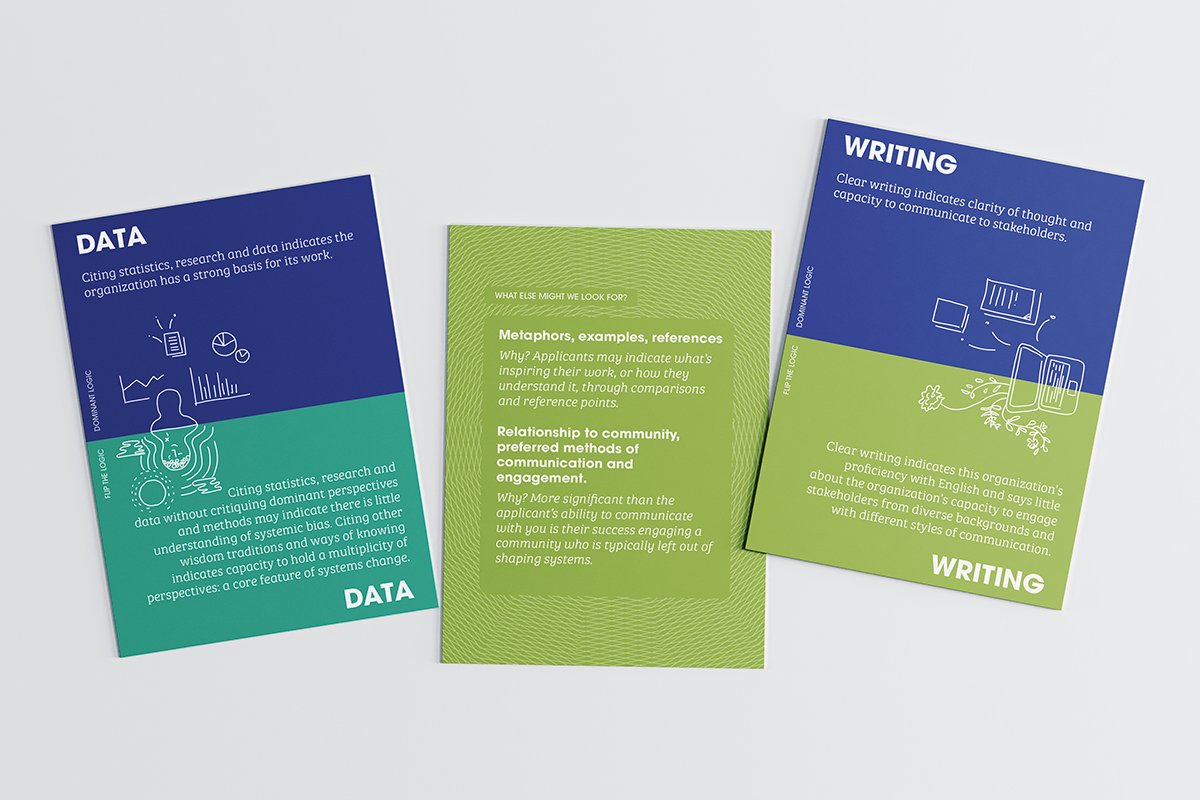
“Flippin’ Logics Cards” identify eight “dominant logics,” or recurring assumptions and ways of thinking that can shape how reviewers interpret an application.
Can a deck of cards interrupt bias in grantmaking?
Devyn Taylor

Like what you see?

Subscribe to the NPQ newsletter to have our top stories delivered directly to your inbox.

See our newsletters

By signing up, you agree to our privacy policy and terms of use, and to receive messages from NPQ and our partners.

  • About
  • Advertise
  • Careers
  • Contact
  • Copyright
  • Donate
  • Funders
  • Editorial Policy
  • Media Relations
  • Privacy Policy
  • Submissions

We are using cookies to give you the best experience on our website.


Nonprofit Quarterly | Civic News. Empowering Nonprofits. Advancing Justice.
Powered by  GDPR Cookie Compliance
Privacy Overview

This website uses cookies so that we can provide you with the best user experience possible. Cookie information is stored in your browser and performs functions such as recognising you when you return to our website and helping our team to understand which sections of the website you find most interesting and useful.

Strictly Necessary Cookies

Strictly Necessary Cookie should be enabled at all times so that we can save your preferences for cookie settings.