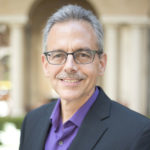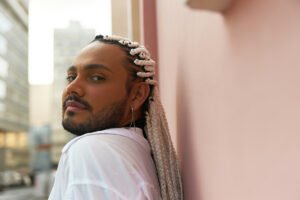


Manuel Pastor—a member of NPQ’s economic justice advisory committee, University of Southern California professor, and director of the USC Equity Research Institute—talks with Carmen Rojas, a former student of his and now CEO of Marguerite Casey Foundation, about movements, social justice philanthropy, and how to contain rising authoritarianism. [Disclosure: NPQ is a grantee of the Marguerite Casey Foundation].
Manuel Pastor: Hi, Carmen. I’m glad to be with you today. I feel like readers of NPQ are going to be interested in the decision the Marguerite Casey Foundation, which you lead, has made to increase its spending at this moment.
But I wanted to start further back. Because this is an extraordinary moment. We’re used to a certain back and forth ideologically, but we’re not as accustomed to a full-on rise of White supremacy, a wholehearted attempt to consolidate authoritarian power. How were you thinking about things last year? What scenario planning was going on?
Carmen Rojas: We were preparing for this moment, in earnest, starting in February 2024. Everything we heard from our grant recipients sounded radically different from what we were hearing from the media and from progressive philanthropy. Communities were already struggling in places like Arizona, Texas, Tennessee, even while organizations were winning certain social justice victories.
“As a Latin Americanist in terms of my studies—and as a Latina with parents from Venezuela and Nicaragua—this moment here is not new to many of us.”
And so, institutionally, we asked a few questions: First, how do we safeguard our ability to continue to make grants? How do we make commitments to our grant recipients today that we are able to fulfill tomorrow? Second, what big interventions could we make as a single institution to help ring the alarm about what was likely to happen? This was right after Project 2025 was released, and so I read it, a few folks on our staff read it, and we recognized that it was not a dreaming document—it was an action plan. There was no wavering in their voice. It was not dramatic. For its authors, this plan was the most logical next step.
We asked: What does this plan mean for us as an institution which is unapologetically committed to racial and economic justice, unapologetically committed to imagining a government that should be for and by the people, unapologetically committed to fighting exploitation in all of its forms? We knew we couldn’t go it alone. In May 2024, we started a summer school web learning series that focused on Project 2025 with preparation for a possible future; 1,400 people showed up.
Personally, as a Latin Americanist in terms of my studies—and as a Latina with parents from Venezuela and Nicaragua—this moment here is not new to many of us. I don’t think that there’s anybody more sensitive to these shifts than the kid of Venezuelan and Nicaraguan immigrants. In both places we experienced firsthand the swiftness with which the consolidation of authoritarian forces can take place.
Institutionally, we were having pretty robust and hard conversations. We needed to change in order to anticipate the harm—and to plan for actions that would keep as many people alive as possible.
MP: There’s a science fiction writer, William Gibson, who is reputed to have said, “The future is already here, it’s just not evenly distributed.” So, authoritarianism was already happening in Texas and Florida and Alabama. And I think there’s something important about having an actual, close, and authentic relationship to the grassroots, because, like you, I could hear the rumblings last summer. Even undocumented immigrants were complaining about the new immigrants and persuading their mixed status relatives to vote for Trump. The threats were out there. So, for Marguerite Casey, this idea of being close to the grantees and listening to them feels like an important North Star.
CR: Absolutely. And it’s less about being close and more about listening. If you get money from Marguerite Casey Foundation, I don’t have a romantic or nostalgic view that “we’re going to be in a partnership.” I’m clear that there’s an asymmetry of power and resources. And I have a very materialist point of view about what we are. At our best, we move the most money with the greatest ease to our grant recipients. When you do that, it turns out that people trust you. When you are clear about why you do or don’t offer a grant, when you commit to supporting people and actually deliver on that, when you’re not asking people for an extraordinary amount of time and resources that are not compensated, people will tell you what is happening in their communities.
We have far underestimated people’s suffering. Conservative forces have been really effective at weaponizing that suffering—and creating harm—while liberals were having a conversation that ignored or downplayed the reality that a majority of Americans live paycheck to paycheck.
Over the last couple of years, I’ve been noting and naming my own place in the world, and how different it is from the vast majority of my people. This is an important signifier for us as an institution, to actually listen to our grant recipients like Adelina Nicholls from the Georgia Latino Alliance for Human Rights (GLAHR) who knows what Southern Latinos are facing. For a long time, we have been focused on big policy gains that are far removed from el cotidiano, the day to day, of living a dignified life.
“We have far underestimated people’s suffering….Liberals [have]…downplayed the reality that a majority of Americans live paycheck to paycheck.”
MP: A few things you said resonate. First, it’s important to point the finger at Project 2025. But it’s also important to look in the mirror and ask: Where did we come up short? Similarly, it’s important to talk about this president as a particular individual, but that takes us away from talking about: Why were people so susceptible to hate and xenophobia?
CR: Daniel Martinez HoSang spends a lot of time studying the multiracial right. He described going to a Turning Point USA Conference with one of his graduate students who was a Black, queer woman. She was nervous about going to this meeting—and then she was shocked by how welcoming people were. We have these caricatures about what the right wing is, that they’ll start with the ideas and the hate—and instead they start with belonging.
They start with belonging and then inculcate people in a set of beliefs. It often feels like progressives do the exact opposite: You have to adhere to rigid beliefs and then you belong. I just don’t know if that’s been effective.
I think it’s Barbara Smith from the Combahee River Collective who says we kept the identity and let go of the politics. I do feel like we have overindexed on a set of identity experiences and underindexed on being able to train, understand, and bring people together into a political experience and understanding that helps to unify us in a meaningful way.
MP: I want to talk a little bit about philanthropy. You noted that you’ve been thinking about this changing environment since February 2024. But I have the sense that after November 2024, a large swath of philanthropy was kind of paralyzed. I feel like people are shaking it off now—maybe a little late but good. But did you have that sense, too?
CR: Some people were ready, and some were not. While there has been an important and unprecedented coalescence around protecting our freedom to give, there are places of concern. First, I think that there’s a tacit belief that philanthropy or charity is a natural part of a functioning democracy—that we are somehow a natural expression of democratic governance. And limited problematizing of our existence or rightsizing our role.
Second, there is an unfounded belief that if progressive funders align with conservative philanthropy, we will be able to advance agendas rooted in equity or justice. In doing this, we make some of the richest and most powerful people proxies for some of the poorest and least powerful, which I believe will have long-term negative consequences for all of us.
“There’s a tacit belief that philanthropy or charity is a natural part of a functioning democracy….And limited problematizing of our existence.”
The third thing is that some people believe philanthropy to be inherently apolitical. But that confuses being nonpartisan with being non-ideological or nonpolitical. We get to be the stewards of resources and have the ability to inform conversations, support work, create greater symmetry in fights for public resources. And that’s a political act—there is nothing apolitical about that. But that’s not partisan. You don’t have to be a Democrat or Republican to do any of those things. And many people are awakening to that.
MP: So, let’s talk about the big news, which is that your foundation really stepped up its spending. It’s a $130 million dollar commitment, up from your usual grantmaking range of $23 to $57 million. That’s a huge increase. Can you talk a little bit about what went into that decision? How did the board become convinced and comfortable?
CR: Every year we do a stress test on our endowment and use the 2008 financial crash as the scenario we are planning for and our commitment to fulfill existing grant commitments as the target. With that information, at our November board meeting, we started to have a real conversation about the window of time in which autocracy cements itself into the body politic. We felt that in the first year, helping normal people who don’t work in foundations or at nonprofits—librarians, teachers, garbage collectors, people who clean our parks—understand that what is happening around them is not normal is important. Being able to call out the ways that this government is overstepping and weaponizing its power is critical.
With this context and our commitment to exist in perpetuity, we landed on a $130 million payout. As of August, $95 million of that $130 million is out the door.
Sign up for our free newsletters
Subscribe to NPQ's newsletters to have our top stories delivered directly to your inbox.
By signing up, you agree to our privacy policy and terms of use, and to receive messages from NPQ and our partners.
We gave every one of our existing grant recipients more money. We wanted to fortify the institutions and organizations that we have already been committed to. We also wanted to invest in the information ecosystem so that it was trustworthy, fact checked, and responsive to people’s actual experiences. We supported organizations like the National Trust for Local News, More Perfect Union, and Así Veo las Cosas (The Way I See Things, with journalist Jorge Ramos).
We then made some investments into projects that would help our grant recipients. An example is that we support a number of tenant unions across the country. So we made a grant to the national Tenant Union Federation to work with Matt Desmond and the Eviction Lab to identify major private equity landlords that were profiting from making people’s lives impossible for a national campaign.
MP: The way I understand it, in the past Marguerite Casey has operated by developing long-term relationships with groups and sticking with them. So, in this new infusion, you stayed in that lane by giving people more resources. But you also had to expand to the new—and you had to do it quickly. How did you figure out what’s new and where you want to go?
CR: We know that community organizing works. Organizing happens with or without philanthropy. People come together wherever they are, and say, this is some bullshit. The “this” is the apartment with no hot water at market rate rent or the job that asks you to come in and work but doesn’t pay you overtime, or the politician that is using your tax dollars to line the pockets of their friends while cutting your healthcare or your kids’ school lunch. People come together every day because they believe their lives should be better. The gap that I have always seen in the nonprofit and philanthropic sector is that we invest a lot in talking to ourselves and not a lot in talking to normal people.
A second thing is being able to understand what’s missing in your work. You know, Jorge Ramos left Univision after Univision was bought. I reached out and asked, “What was he planning to do?” And he said “Well, I can’t do anything for the next little bit.” And I said, “But in your dream life, what? You are the most trusted voice for Latinos.” Time and again, everybody, my 15-year-old cousins to my 84-year-old mom, all know who Jorge Ramos is. The fact that he did not have a platform with which to actually help people make sense of their experience was a loss. We supported him to build up this new social media news infrastructure, to fill in for what’s missing.
Philanthropic institutions are overwhelmingly investment institutions. At our best, we give out 5 percent of our resources. But 95 percent influence the market around us. Why don’t we use it as a tool to actually transform the economy for good?
When the Los Angeles Times was for sale, I was surprised that every foundation in Los Angeles didn’t get together and buy it—and convert it into a nonprofit or public benefit corporation. The fact that we don’t aspire to do things that other financial institutions do—like buy social media platforms—is a deficit for us. We are also investors.
MP: How’s the rest of philanthropy reacting to what you did? Are people asking you questions, looking for guidance, excited by the example?
CR: People are overwhelmingly supportive. We’re not the only institution that has increased their payout and I am grateful not to be alone. This is a moment in which the conversations philanthropy has been having since 2020 about risk are becoming real.
If this is an actual crisis we are confronting—in which graduate students to señoras (respected women in the community) are being picked up by masked agents of the state, in which people are going to be kicked off their primary source of healthcare, in which hundreds of thousands of people lose their jobs and we lose core functions of our federal government—then let’s act like it.
And the important message to philanthropy is to do our only job, which is to move money and do so in ways that are bold and actually bolster communities on the front lines. I want to make sure we use these resources to keep as many people alive and safe as possible.
MP: So let me pull an Ezra Klein. What are you reading?
CR: I’m reading three books. In my town we have a Latina book club, and we’re reading a book called Rizos, which is a graphic novel about a young Dominican girl who loves her curly hair.
I’m reading The Light of the World by Elizabeth Alexander. It’s so important in this moment to remember that today people are falling in love, people are losing the people they love, that we don’t stop being human beings. This is the third time I’ve read this book, and every time I read it, it just reminds me of the power in my heart.
And I’m reading Outclassed by Joan Williams. Everybody who cares about this moment should read this book. It’s such an important intervention: It marries data, narrative, and really powerful introspection. She has such a refreshing voice.
MP: I’m also reading Outclassed. It struck me that identity politics sometimes assumes identity is preexisting rather than constructed. And due to the focus on race, ethnicity, gender, and sexuality, it seems to have left aside the idea that class is culture.
But class is a particular culture with particular values.
I have written about how I grew up working-class in a multiracial suburb east of East Los Angeles. I don’t pretend that I am in that class now—I am a fancy-ass professor. But you know our values growing up were simple. First, work: You were supposed to contribute. Second, craft: You were supposed to be good at what you did, whether you were a janitor or a carpenter or a doctor—and all craft was to be respected. Third, solidarity: You were supposed to stand with the people you worked and lived with.
That’s a culture. It’s not just eating frijoles negros at Thanksgiving or the language my parents spoke. Those values were culture, and it doesn’t get fully appreciated.
CR: I grew up in East San Jose. I go back home, and the thing that is most striking to me is the way Williams talks about the identity of class migrants. She so aptly describes the ways we can trick ourselves into believing that we know those people the best because we were once those people.
I’ve thought a lot about the rupture, of me being the one who went to college and got a job like this one. When I talk to my family about it, they’re like, “Estás loca,” you’re crazy.
MP: Let’s close. In Los Angeles where I’ve been spending time over the last month divided between street actions and police protests, running data on undocumented [people] to provide it to movement folks and policymakers, writing articles to try to provide some framing about how the hot rage of protest can be translated into the cold anger of strategy, folks have asked, aren’t you tired?
“These things can be changed when people come together and fight in solidarity for the future that we want.”
And I’ve said, “Well, this is the moment I’ve been training for, this is the moment to bring all that to bear.”
So, let’s talk a little bit about you. This is a moment that it seems like you were born for, and here you are leading an institution to meet the moment with courage. How’d you get here?
CR: Ay, you know….You were my professor. I’ve known you since I was 19 years old. I just turned 48, imagínate. You know, the gift for me about people like you, and [San Francisco Foundation CEO] Fred Blackwell, and a lot of people in my life is that they saw more space in the world for me than I could have ever have imagined for myself.
The other thing that I cannot discount that prepared me is that my academic work was almost entirely outside of the United States.
To be a Latin Americanist—and look at the place that I’m from with a view from the outside in—helps settle my spirit in understanding that these things happen. We are not impervious or impenetrable to these moments. And more importantly, understanding that these things can be changed when people come together and fight in solidarity for the future that we want.
There was a time in Chile where the normal course of action was kidnapping kids. People got together in the worst of possible conditions to fight back, and Pinochet was brought down.
And now it’s our time.
MP: I totally get what you’re saying. There are disappearances and overreach occurring right now. But one unfortunate lesson from those Latin American experiences of the 1970s, 1980s, and 1990s is that most of those dictatorships came down not just because of struggle but because they economically imploded. And that might be the course we’re on too.
But let’s end on a more positive note. I hope the readers catch a glimpse of not just your strategic thinking but of your commitment to struggle and joy.
CR: Imagine that we still know each other right now! Aquí andamos y no nos vamos. (We’re here, and we’re not leaving).
To quote Angela Davis, freedom is a constant struggle. When you’re oriented that way, it’s not about wins and losses. It’s about the long arc of history. We may not be at the end—and that has to be okay.