Editors’ Note: This article was originally written for the Spring 2025 issue of Nonprofit Quarterly Magazine, “How Women of Color in the South Are Reclaiming Space.”
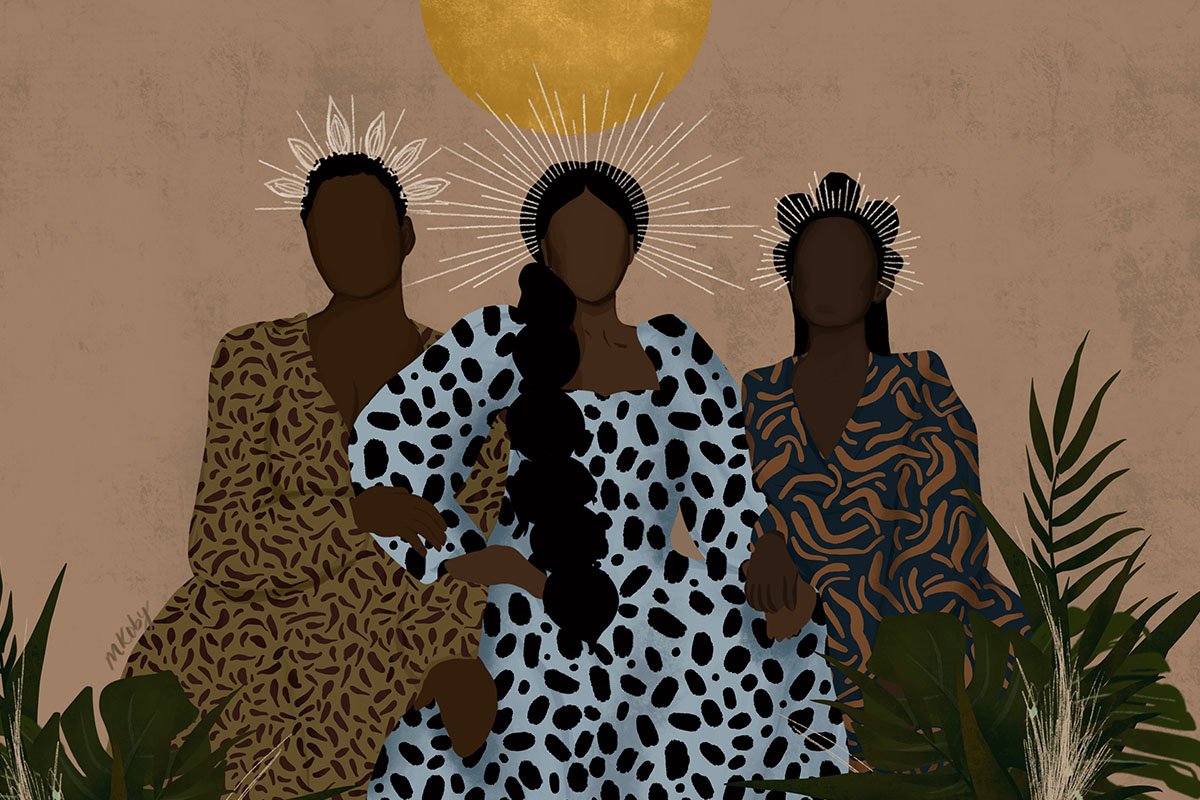
Protecting each other is what we’ve always had to do as Black women in the South. Black women have long been the backbone of our families and communities, often stepping into roles that require us to advocate for ourselves and those around us in ways our peers do not understand.
As federal support systems for low-income families are pulled back, it is vital for people operating in nonprofit and movement spaces to look inward and strengthen community-based solutions.
The Magnolia Mother’s Trust (MMT) that I help lead in Jackson, MS, is one such example. This initiative, now in its sixth cycle, offers the longest-running guaranteed-income program in the country, providing low-income Black mothers living in subsidized housing with $1,000 monthly for 12 months, no strings attached.
Why a Guaranteed Income Matters
The checks MMT provides enable the women who participate in the program to make their own decisions about what best suits their families’ health, education, and overall wellbeing. It is a homegrown idea, brought to us by the mothers themselves.
Our country’s history is replete with examples of people who, when faced with seemingly insurmountable odds and uncertainty, stepped forward.
The results of getting out of the way and just letting these women do what they already have the skills and wisdom to do have been transformative. Mothers report increased food security, improved financial stability, and the ability to save for emergencies—outcomes that are critical as we face an uncertain economic landscape.
My hope is to grow this approach well beyond Jackson. And in many ways, it has: The expanded child tax credit, briefly implemented by the federal government during the COVID-19 pandemic, was inspired by programs like MMT; it dramatically reduced child poverty, from 12.6 percent in 2019 to 5.2 percent in 2021.
Alas, after the program lapsed, child poverty climbed back to a pre-pandemic level of 12.4 percent.
The Lessons of History
The world feels uncertain right now. Budgets are being squeezed, the very idea of diversity and equity feels like a federal thought crime—some days, injustice seems to make the louder noise.
What gives me hope—what makes me believe we’re not just enduring this season but are prepared for it—is that we have a blueprint for hard times. Our country’s history is replete with examples of people who, when faced with seemingly insurmountable odds and uncertainty, stepped forward with nothing but courage, unity, and a deep sense of shared responsibility.
We can look back to 1961, to a group of people who changed the trajectory of our country—the Freedom Riders. These were ordinary people, Black and White, many of them young students, who made the conscious choice to get on buses headed south to challenge the segregated status quo. They were not celebrities or people with power in the traditional sense. They didn’t have guarantees of safety or certainty. But they had each other and the belief that, if they acted together, their courage could become a wildfire of change.
Imagine the fear, the uncertainty these riders must have felt as they traveled through places that were, by law and by custom, hostile to their very presence. The great statesman John Lewis, then just a college student; Albert Bigelow, an older White ally; and Genevieve Hughes, a young White woman from the North, all sitting shoulder to shoulder in a “Whites only” waiting room, defying not just custom but risking the threat of real violence.
And violence did come. Their bus was set aflame in Alabama; they were beaten, spit on, arrested. They might have stopped there, but they didn’t. Residents and students in Nashville chose to continue the ride. Through pain, jail, and fear, they carried that torch. Their bravery, that collaboration across race, generation, and background, became the blueprint for the world that would follow—almost immediately in federal regulations banning segregation in transportation terminals, and later with the Civil Rights Act, the Voting Rights Act, and countless smaller freedoms that would have seemed impossible just one generation prior.
The spirit Black women in the South have always had…can help inspire us all in these times of upheaval.
Sign up for our free newsletters
Subscribe to NPQ's newsletters to have our top stories delivered directly to your inbox.
By signing up, you agree to our privacy policy and terms of use, and to receive messages from NPQ and our partners.
The civil rights movement was driven by thousands of ordinary people, each playing their part, often without recognition. It was fueled by community—by neighbors, church groups, teachers, social workers, and public service staff, showing up with whatever tools they had, making a way when it looked like there was none.
Like many Black women in the South, my family was among them. My grandmother, Dr. L.C. Dorsey, a former sharecropper in the heart of the Mississippi Delta, was told over and over that healthcare reform simply wasn’t possible for Black families. Institutions were against her, resources were nonexistent, and common wisdom was to “know your place.” But she refused to accept the boundaries others set for her. She gathered allies, she educated herself and others, and she bravely spoke truth to power.
There was no guarantee she’d create any change—but she believed that trying was better than resignation, that even a spark could light the way for those who would follow. And she was right. Because of her refusal to give up, families in our region received care and support that hadn’t existed before. Her efforts helped open the first federally qualified health center in the Mississippi Delta. Sometimes, all it takes is one person, refusing to accept “no”—one person who believes that, by stepping up, others will find the courage to follow. That is the spirit Black women in the South have always had, one that can help inspire us all in these times of upheaval.
The Role of Philanthropy
Reclaiming space, particularly in this moment, requires resources. As federal support dwindles, philanthropy-backed programs like MMT become lifelines for many families. Ensuring programs like this continue in the next two to four years of projected federal disinvestment in poor communities is critical not just financially, but from a mindset perspective as well.
As families in our programs tell us, navigating traditional safety-net programs is often dehumanizing and strips recipients of their agency. Receiving support in a nonjudgmental and compassionate way has transformed how many of them interact with and understand policies, and how they see themselves.
By stepping up when government steps down, philanthropy can work with community partners to ensure that families receive the help they need without being beholden to political posturing.
Addressing Systemic Inequities
The systemic inequities that Black women face, particularly in the South, are deeply entrenched in toxic narratives around who our government and society view as deserving of dignity.
In Mississippi, Black women earn only 56 cents for every dollar earned by White men, the largest such gap in the country. This disparity contributes to a cycle of poverty that is nearly impossible to break without support, and with a federal minimum wage of $7.25, even working overtime is not enough to cover basic living expenses.
Providing direct financial support is a vital tool to challenge inequities head-on. By centering programs around the needs of those most affected by poverty—which in the South is unequivocally Black mothers and their children—nonprofits and movement groups can begin to dismantle the barriers that have historically kept Black women from thriving.
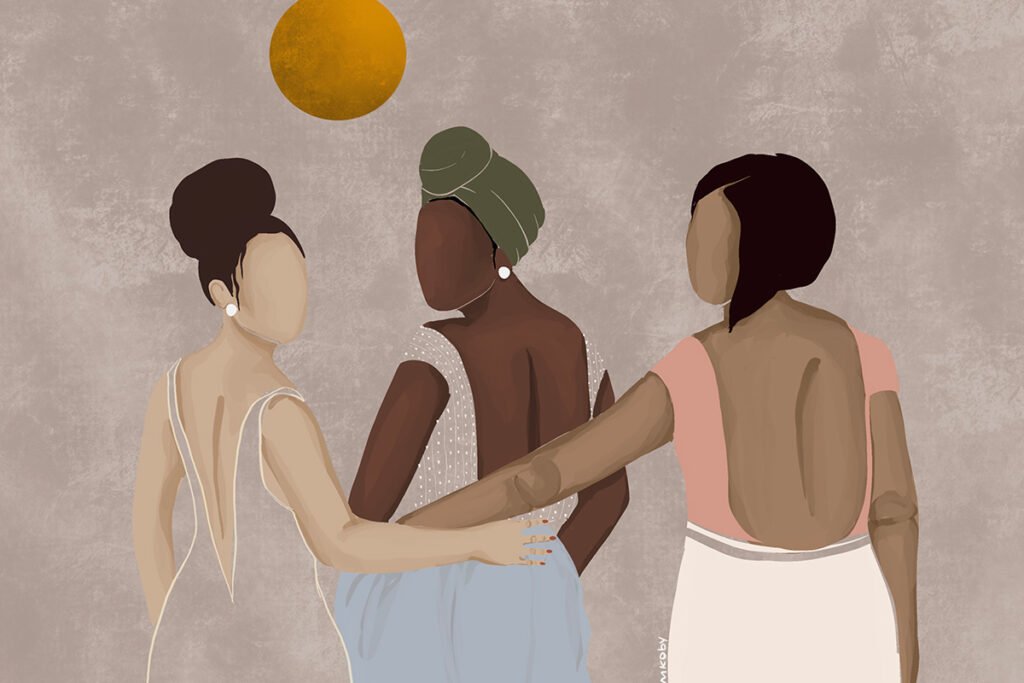
In this effort, community solidarity becomes paramount. Protecting each other means recognizing our shared struggles and working collaboratively toward solutions that uplift us all. This sense of community not only enhances individual resilience but also strengthens collective efforts against systemic oppression.
As Black women in the South, we have always relied on one another for support—whether through family ties or community networks. In light of recent political shifts, it is vital that we continue this tradition by investing in each other’s wellbeing.
- As advocates for social justice and equity, we must continue to uplift initiatives centered on our community while also pushing for systemic changes.
A Call to Action
The next several years will undoubtedly present many challenges. However, this time is also an opportunity for nonprofits and movement groups to double down and reclaim our space through protective measures.
As advocates for social justice and equity, we must continue to uplift initiatives centered on our community while also pushing for systemic changes at all levels of government. This includes advocating for policies that address racial and gender disparities in economic opportunities and ensuring that community voices are heard in decision-making processes.
Reclaiming space by protecting it is not just about surviving; it’s about thriving despite adversity. By investing in community-driven solutions and supporting one another as Black women in the South, we can heed the lessons of our ancestors, create pathways out of poverty, and build a future where all families have the resources they need to succeed. Let us stand together in this fight—not just for ourselves but for generations to come.